Gao Bei, Chi Liang, Mahbub Ridwan, Bian Xiaoming, Tu Pengcheng, Ru Hongyu, Lu Kun
Department of Environmental Health Science, University of Georgia , Athens, Georgia 30602, United States.
Department of Environmental Sciences and Engineering, University of North Carolina at Chapel Hill , Chapel Hill, North Carolina 27599, United States.
Chem Res Toxicol. 2017 Apr 17;30(4):996-1005. doi: 10.1021/acs.chemrestox.6b00401. Epub 2017 Mar 16.
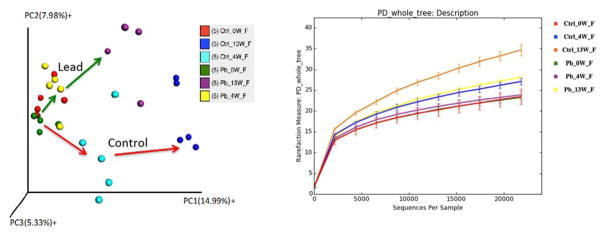
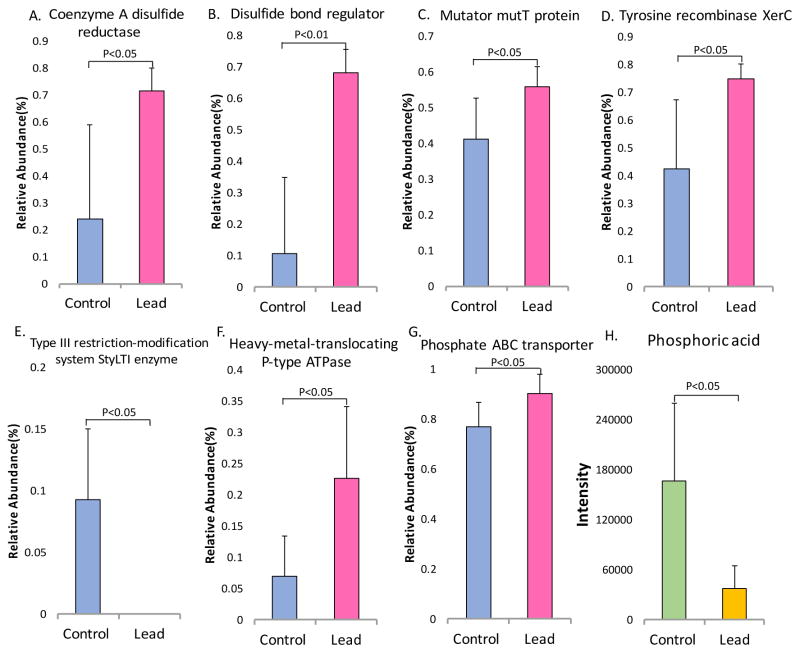
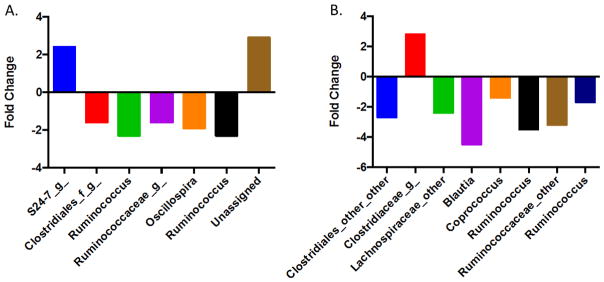
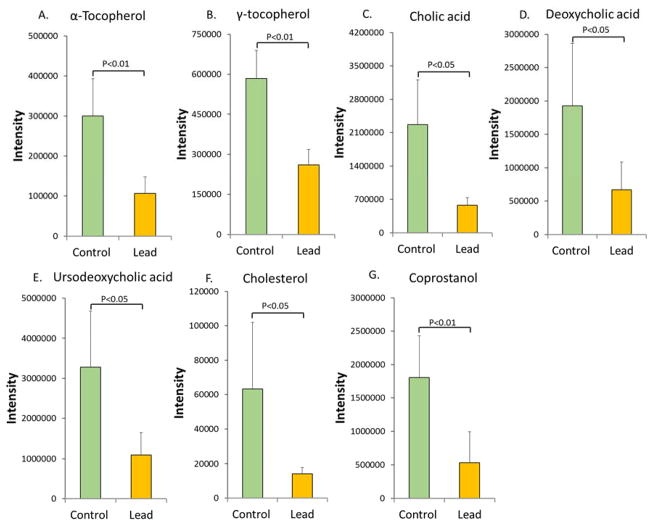
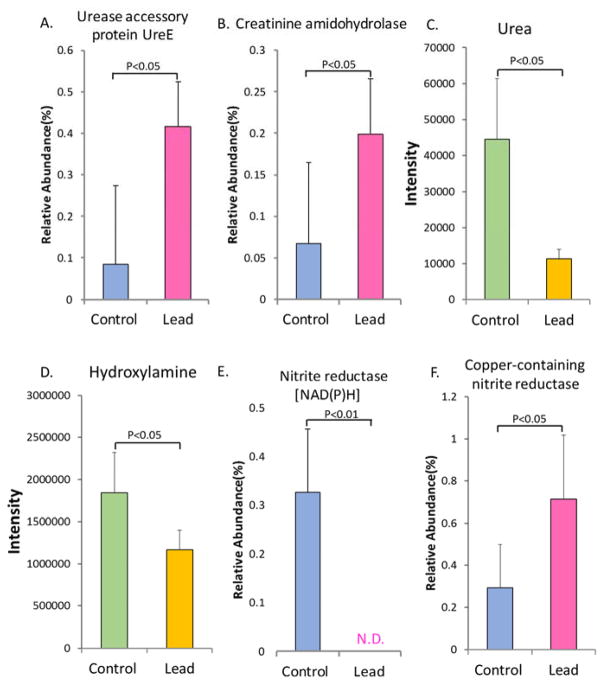
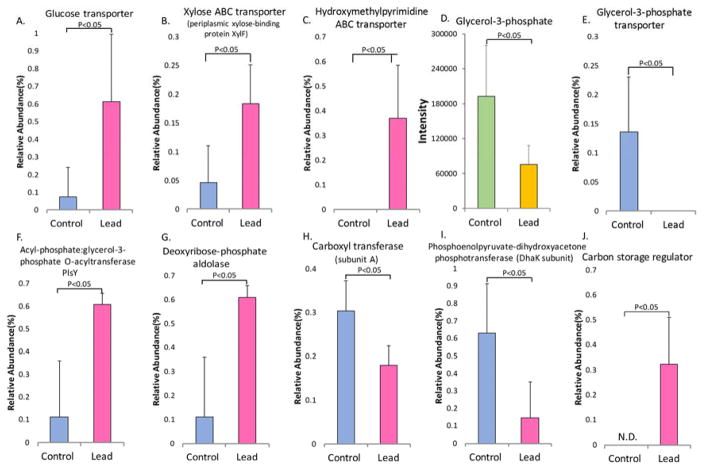
Lead exposure remains a global public health issue, and the recent Flint water crisis has renewed public concern about lead toxicity. The toxicity of lead has been well established in a variety of systems and organs. The gut microbiome has been shown to be highly involved in many critical physiological processes, including food digestion, immune system development, and metabolic homeostasis. However, despite the key role of the gut microbiome in human health, the functional impact of lead exposure on the gut microbiome has not been studied. The aim of this study is to define gut microbiome toxicity induced by lead exposure in C57BL/6 mice using multiomics approaches, including 16S rRNA sequencing, whole genome metagenomics sequencing, and gas chromatography-mass spectrometry (GC-MS) metabolomics. 16S rRNA sequencing revealed that lead exposure altered the gut microbiome trajectory and phylogenetic diversity. Metagenomics sequencing and metabolomics profiling showed that numerous metabolic pathways, including vitamin E, bile acids, nitrogen metabolism, energy metabolism, oxidative stress, and the defense/detoxification mechanism, were significantly disturbed by lead exposure. These perturbed molecules and pathways may have important implications for lead toxicity in the host. Taken together, these results demonstrated that lead exposure not only altered the gut microbiome community structures/diversity but also greatly affected metabolic functions, leading to gut microbiome toxicity.
铅暴露仍然是一个全球性的公共卫生问题,最近弗林特市的水危机再次引发了公众对铅毒性的关注。铅的毒性在多种系统和器官中已得到充分证实。肠道微生物群已被证明高度参与许多关键的生理过程,包括食物消化、免疫系统发育和代谢稳态。然而,尽管肠道微生物群在人类健康中起着关键作用,但铅暴露对肠道微生物群的功能影响尚未得到研究。本研究的目的是使用多组学方法,包括16S rRNA测序、全基因组宏基因组测序和气相色谱-质谱联用(GC-MS)代谢组学,来确定C57BL/6小鼠中铅暴露诱导的肠道微生物群毒性。16S rRNA测序显示,铅暴露改变了肠道微生物群的轨迹和系统发育多样性。宏基因组测序和代谢组学分析表明,包括维生素E、胆汁酸、氮代谢、能量代谢、氧化应激和防御/解毒机制在内的许多代谢途径都受到铅暴露的显著干扰。这些受到干扰的分子和途径可能对宿主中的铅毒性具有重要影响。综上所述,这些结果表明,铅暴露不仅改变了肠道微生物群的群落结构/多样性,还极大地影响了代谢功能,导致肠道微生物群毒性。