Zhao Jiangnan, Tan Yan, Wang Li, Su Xin, Shi Yi
Department of Respiratory and Critical Medicine, Jinling Hospital, Medical School of Nanjing University, No. 305 Zhongshan East Road, Nanjing, 210000, China.
Department of Respiratory Medicine, Nanjing First Hospital, Nanjing Medical University, Nanjing, 210000, China.
J Transl Med. 2020 Apr 6;18(1):156. doi: 10.1186/s12967-020-02322-y.
Sphingosine-1-phosphate (S1P) is a signaling phospholipid involved in pathophysiologic progression of acute respiratory distress syndrome (ARDS) through its roles in endothelial barrier function and immune modulation. We hypothesized that decreased serum S1P level is associated with the clinical outcomes of ARDS and polymorphisms in the S1P gene are associated with serum S1P levels.
This multicenter prospective study includes ARDS patients and healthy blood donors as controls. Serum S1P levels were quantified using enzyme-linked immunosorbent assays. Eight tag single nucleotide polymorphisms (SNPs) in the S1P gene were detected, and their associations with S1P levels were evaluated.
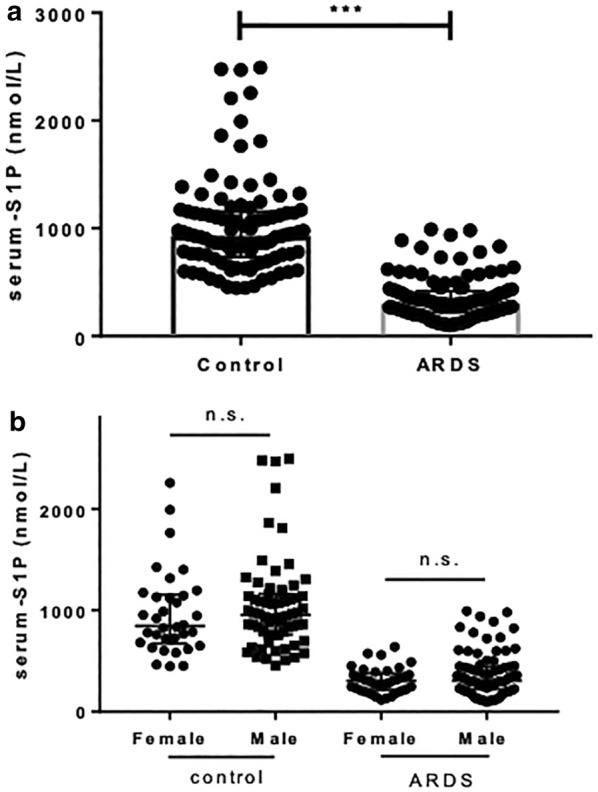
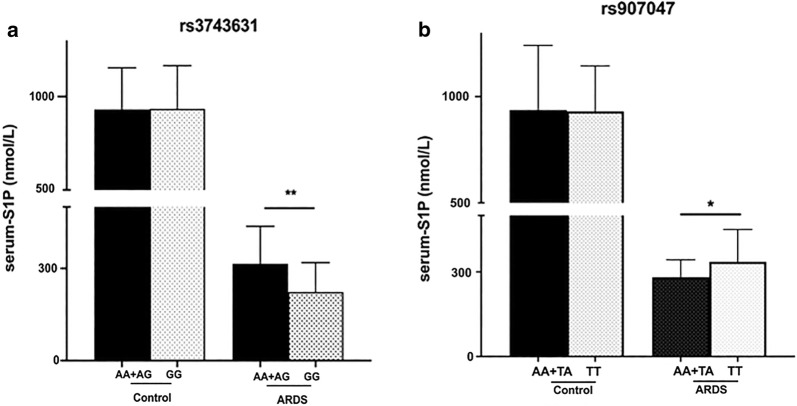
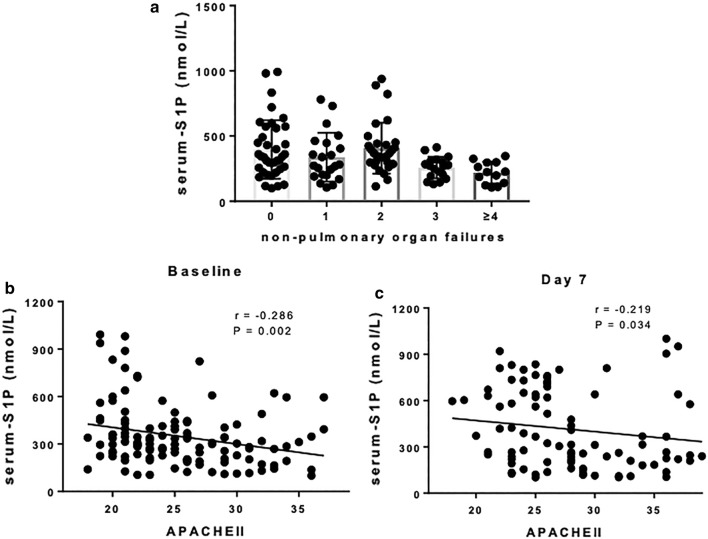
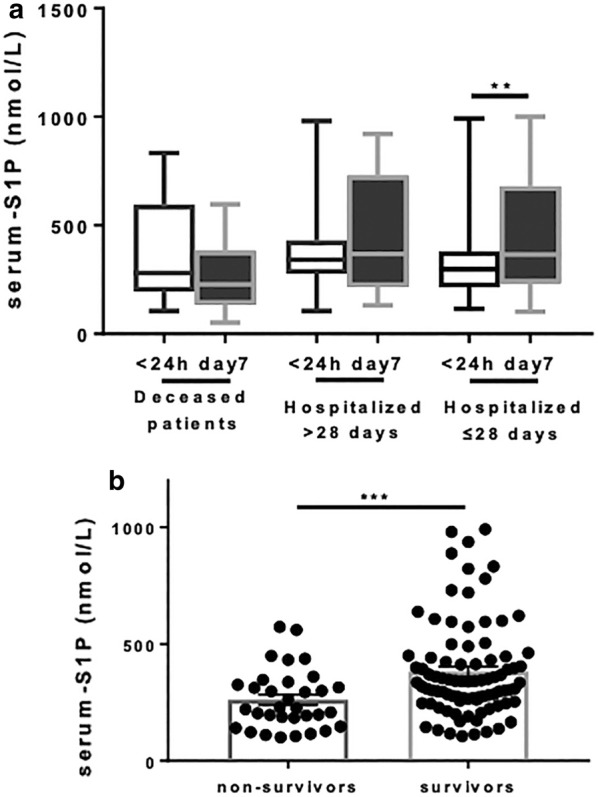
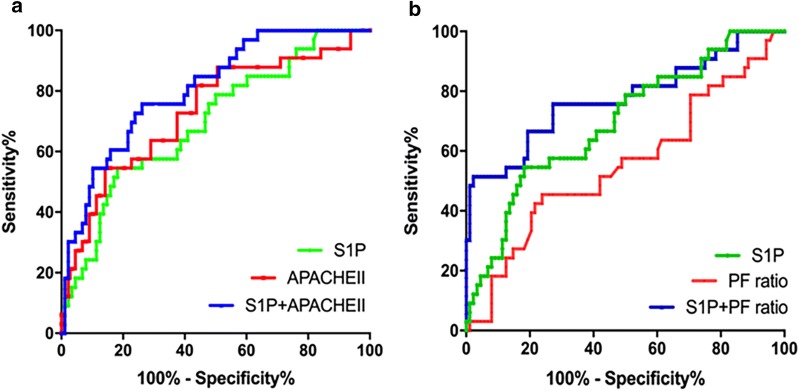
A total of 121 ARDS patients and 100 healthy individuals were enrolled. Serum S1P levels were lower in ARDS patients than in controls (P < 0.001). Decreased S1P levels correlated with more organ dysfunction and higher Acute Physiology and Chronic Health Evaluation II scores. Changes in S1P levels in ARDS patients were associated with the clinical outcomes. The recessive model for SNP rs3743631 suggests that GG homozygote is associate with a higher risk for ARDS. The dominant model for SNP rs907045 suggests that AA or TA genotype might increase the risk for ARDS. In ARDS patients, the rs3743631 GG genotype showed lower S1P levels than those harboring AG and AA genotypes. The serum S1P levels of rs907045 AA or TA genotype patients were lower than those of TT genotype.
Serum S1P levels are dramatically decreased in ARDS patients. Reduced S1P levels are associated with worse clinical outcomes. There is a significant association between S1P rs3743631, rs907045 polymorphisms and susceptibility of ARDS.
鞘氨醇-1-磷酸(S1P)是一种信号磷脂,通过在内皮屏障功能和免疫调节中的作用参与急性呼吸窘迫综合征(ARDS)的病理生理进展。我们假设血清S1P水平降低与ARDS的临床结局相关,且S1P基因多态性与血清S1P水平相关。
这项多中心前瞻性研究纳入了ARDS患者和作为对照的健康献血者。使用酶联免疫吸附测定法定量血清S1P水平。检测了S1P基因中的8个标签单核苷酸多态性(SNP),并评估了它们与S1P水平的关联。
共纳入121例ARDS患者和100名健康个体。ARDS患者的血清S1P水平低于对照组(P < 0.001)。S1P水平降低与更多器官功能障碍和更高的急性生理与慢性健康状况评价II(APACHE II)评分相关。ARDS患者S1P水平的变化与临床结局相关。SNP rs3743631的隐性模型表明,GG纯合子与ARDS风险较高相关。SNP rs907045的显性模型表明,AA或TA基因型可能增加ARDS风险。在ARDS患者中,rs3743631 GG基因型的S1P水平低于携带AG和AA基因型的患者。rs907045 AA或TA基因型患者的血清S1P水平低于TT基因型患者。
ARDS患者的血清S1P水平显著降低。S1P水平降低与更差的临床结局相关。S1P rs3743631、rs907045多态性与ARDS易感性之间存在显著关联。