National Institute for Health Research Applied Research Collaboration West (NIHR ARC West), University Hospitals Bristol NHS Foundation Trust, Bristol; Population Health Sciences, Bristol Medical School, University of Bristol, Bristol.
West of England Academic Health Science Network, Bristol.
Br J Gen Pract. 2020 May 28;70(695):e374-e380. doi: 10.3399/bjgp20X709337. Print 2020 Jun.
NHS England has mandated use of the National Early Warning Score (NEWS), more recently NEWS2, in acute settings, and suggested its use in primary care. However, there is reluctance from GPs to adopt NEWS/NEWS2.
To assess whether NEWS calculated at the point of GP referral into hospital is associated with outcomes in secondary care.
An observational study using routinely collected data from primary and secondary care.
NEWS values were prospectively collected for 13 047 GP referrals into acute care between July 2017 and December 2018. NEWS values were examined and multivariate linear and logistic regression used to assess associations with process measures and clinical outcomes.
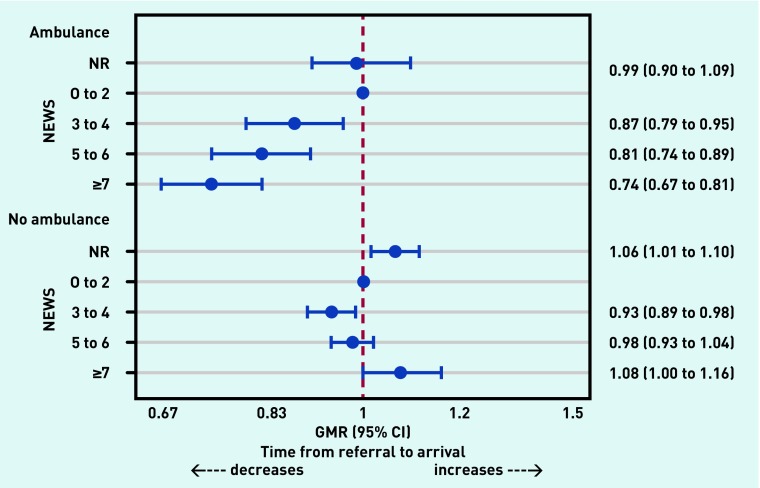
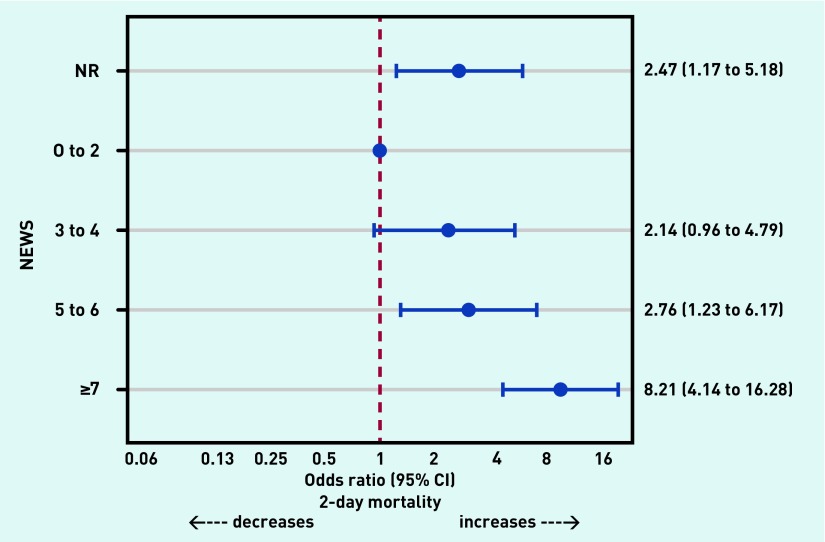
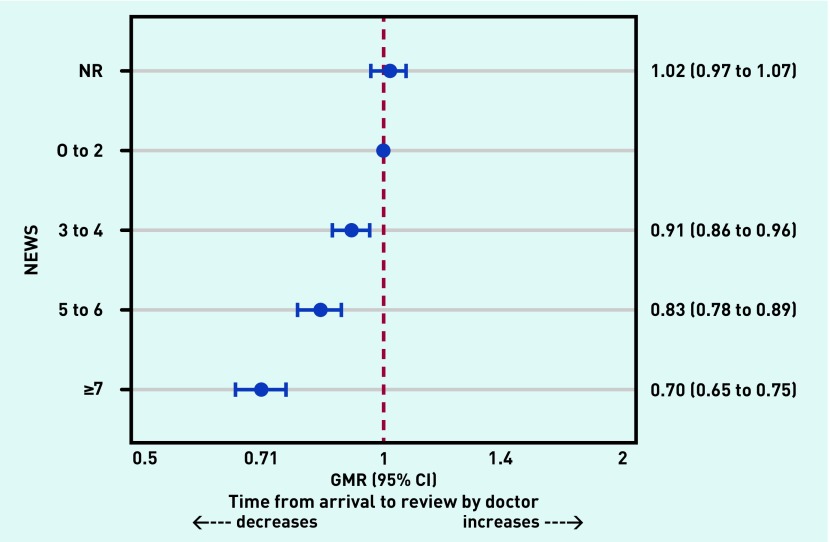
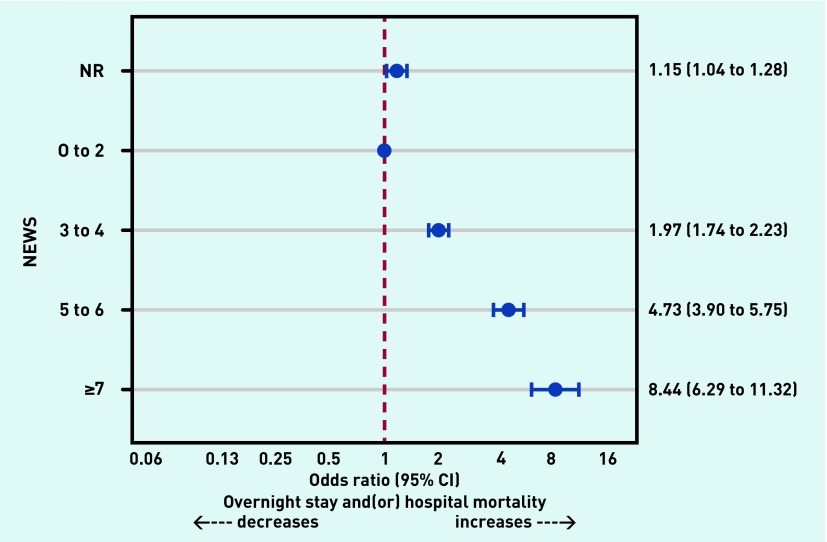
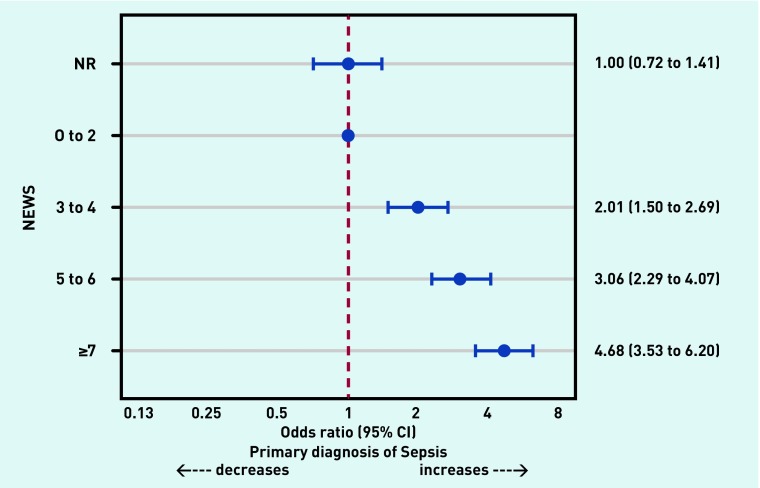
Higher NEWS values were associated with faster conveyance for patients travelling by ambulance, for example, median 94 minutes (interquartile range [IQR] 69-139) for NEWS ≥7; median 132 minutes, (IQR 84-236) for NEWS = 0 to 2); faster time from hospital arrival to medical review (54 minutes [IQR 25-114] for NEWS ≥7; 78 minutes [IQR 34-158] for NEWS = 0 to 2); as well as increased length of stay (5 days [IQR 2-11] versus 1 day [IQR 0-5]); intensive care unit admissions (2.0% versus 0.5%); sepsis diagnosis (11.7% versus 2.5%); and mortality, for example, 30-day mortality 12.0% versus 4.1% for NEWS ≥7 versus NEWS = 0 to 2, respectively. On average, for patients referred without a NEWS value (NEWS = NR), most clinical outcomes were comparable with patients with NEWS = 3 to 4, but ambulance conveyance time and time to medical review were comparable with patients with NEWS = 0 to 2.
This study has demonstrated that higher NEWS values calculated at GP referral into hospital are associated with a faster medical review and poorer clinical outcomes.
英国国家医疗服务体系(NHS England)已强制在急症环境中使用国家早期预警评分(NEWS),最近还推荐在初级保健中使用 NEWS2,但全科医生不愿采用 NEWS/NEWS2。
评估在 GP 转至医院时计算的 NEWS 是否与二级保健的结果相关。
一项使用初级和二级保健中常规收集的数据进行的观察性研究。
前瞻性收集 2017 年 7 月至 2018 年 12 月期间 13047 例 GP 转至急症护理的 NEWS 值。检查 NEWS 值,并使用多元线性和逻辑回归评估与流程测量和临床结果的关联。
较高的 NEWS 值与患者乘坐救护车的转运速度更快相关,例如,NEWS ≥7 的中位数为 94 分钟(四分位距 [IQR] 69-139);NEWS = 0 至 2 的中位数为 132 分钟(IQR 84-236);从医院到达至医疗审查的时间更快(NEWS ≥7 的中位数为 54 分钟 [IQR 25-114];NEWS = 0 至 2 的中位数为 78 分钟 [IQR 34-158]);住院时间延长(5 天 [IQR 2-11] 与 1 天 [IQR 0-5]);重症监护病房入院(2.0%与 0.5%);败血症诊断(11.7%与 2.5%);死亡率,例如,30 天死亡率,NEWS ≥7 为 12.0%,NEWS = 0 至 2 为 4.1%。平均而言,对于没有 NEWS 值(NEWS = NR)的转介患者,大多数临床结果与 NEWS = 3 至 4 的患者相当,但救护车转运时间和医疗审查时间与 NEWS = 0 至 2 的患者相当。
本研究表明,在 GP 转至医院时计算的较高 NEWS 值与更快的医疗审查和较差的临床结果相关。