Department of Obstetrics and Gynecology, Affiliated Hospital of North Sichuan Medical College, Nanchong, Sichuan, China (mainland).
Department of Obstetrics and Gynecology, University Medical Center Regensburg, Regensburg, Germany.
Med Sci Monit. 2020 Apr 7;26:e921370. doi: 10.12659/MSM.921370.
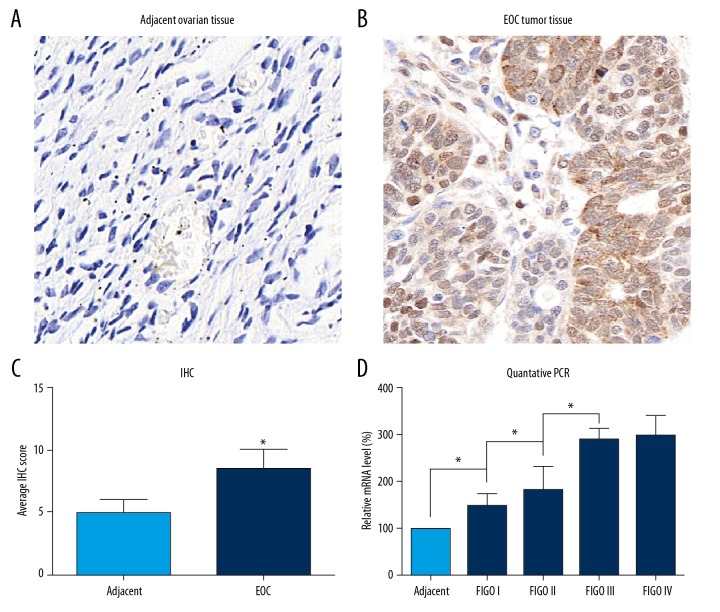
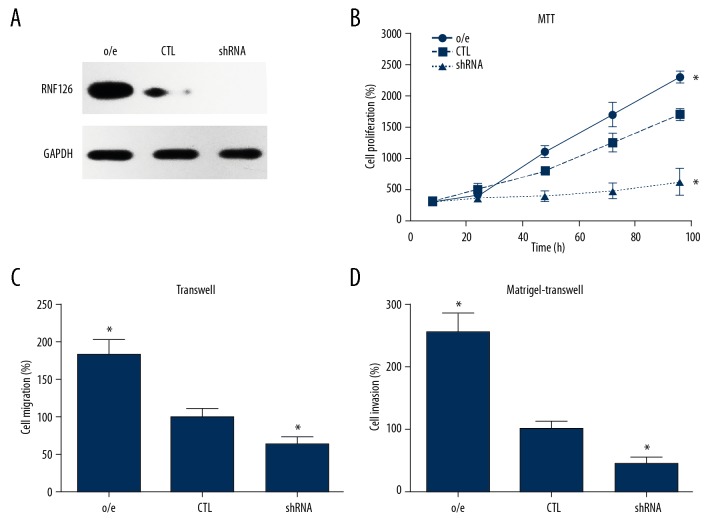
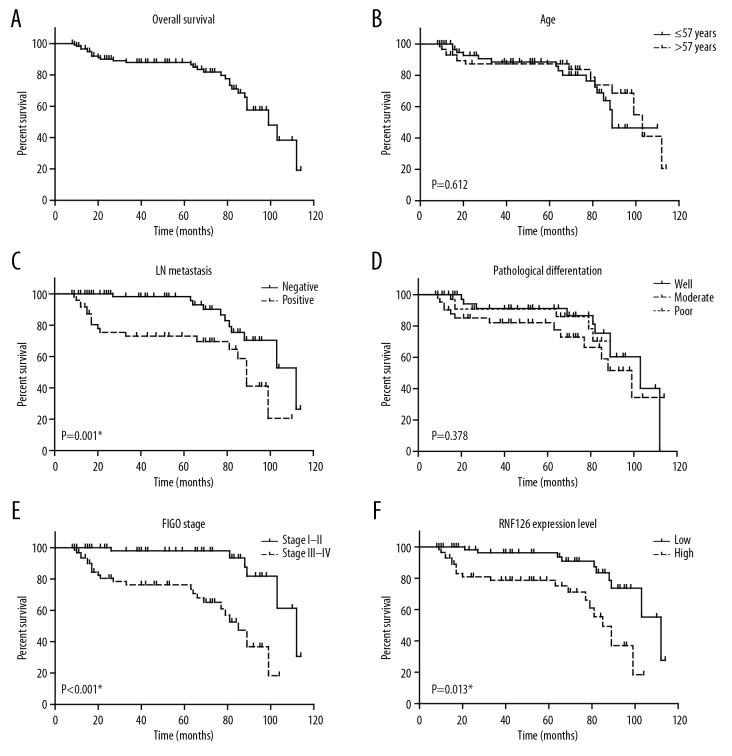
BACKGROUND Ovarian cancer (OC) is one of the leading causes of cancer-related mortality worldwide. The clinical outcome of EOC remains unsatisfactory with current therapeutic approaches such as surgery and platinum/taxane-based chemotherapy. Therefore, novel prognostic markers and personalized therapies targeting specific molecules are urgently needed. Here, we explored whether RNF126, an E3 ubiquitin ligase, is a potential biomarker for epithelial ovarian cancer (EOC). MATERIAL AND METHODS This was a retrospective cohort study of 122 EOC patients. The chi-square test was used to assess correlations between RNF126 level and clinical characteristics of enrolled patients. Univariate and multivariate analyses were performed to monitor the prognosis of enrolled patients. In addition, proliferation and invasion assays were conducted to assess the cellular effects of RNF126 on SKOV3 cell progression. RESULTS Immunohistochemistry analysis (IHC) revealed that RNF126 was upregulated in EOC tissues compared to adjacent ovarian tissues. In addition, RNF126 expression was remarkably associated with LN metastasis, pathological differentiation, and FIGO stage. RNF126 protein level was found to be an independent biomarker for predication of prognosis in ovarian cancer patients. Cellular results showed that RNF126 enhanced the proliferation and invasion abilities of SKOV3 cells. CONCLUSIONS Upregulated protein level of RNF126 in EOC tissues is a biomarker predicting poor outcomes of EOC patients.
卵巢癌(OC)是全球癌症相关死亡的主要原因之一。目前的治疗方法,如手术和铂类/紫杉醇为基础的化疗,仍然不能令人满意地改善上皮性卵巢癌(EOC)患者的临床结局。因此,迫切需要新的预后标志物和针对特定分子的个体化治疗方法。在这里,我们探讨了 E3 泛素连接酶 RNF126 是否是上皮性卵巢癌(EOC)的潜在生物标志物。
这是一项对 122 名 EOC 患者的回顾性队列研究。卡方检验用于评估 RNF126 水平与入组患者临床特征之间的相关性。进行单因素和多因素分析以监测入组患者的预后。此外,还进行了增殖和侵袭实验以评估 RNF126 对 SKOV3 细胞进展的细胞效应。
免疫组织化学分析(IHC)显示,与邻近卵巢组织相比,RNF126 在 EOC 组织中上调。此外,RNF126 的表达与 LN 转移、病理分化和 FIGO 分期显著相关。RNF126 蛋白水平被发现是预测卵巢癌患者预后的独立标志物。细胞结果表明,RNF126 增强了 SKOV3 细胞的增殖和侵袭能力。
EOC 组织中 RNF126 蛋白水平的上调是预测 EOC 患者不良结局的生物标志物。