Ünver Neşe, Yöyen Ermiş Diğdem, Weber Bahar Zehra, Esendağli Güneş
Department of Stem Cell Sciences, Graduate School of Health Sciences, Center for Stem Cell Research and Development,Hacettepe University, Ankara Turkey.
Department of Medical Biology, Faculty of Medicine, Lokman Hekim University, Ankara Turkey.
Turk J Biol. 2020 Apr 2;44(2):73-81. doi: 10.3906/biy-1912-21. eCollection 2020.
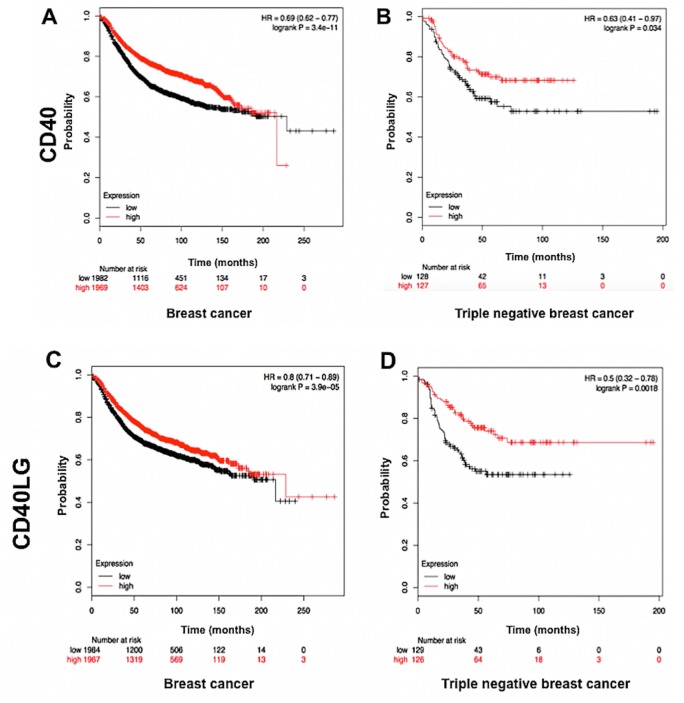
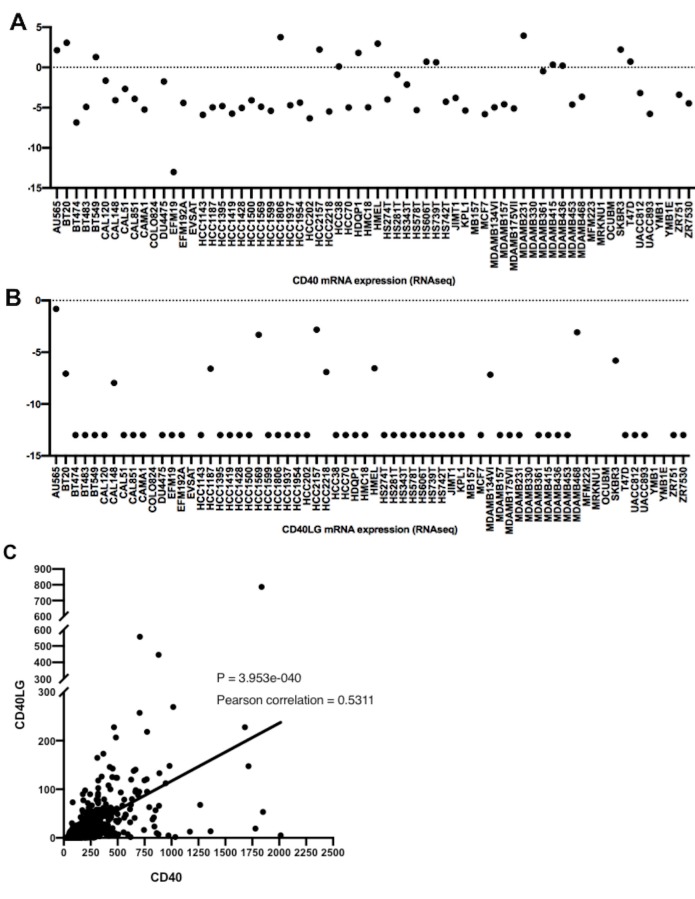
CD40 is an important tumor necrosis factor receptor (TNFR) family protein for the development of antitumor response against cancer cells, apart from its role in the regulation of the immune system as a costimulatory molecule. It is broadly expressed on the surface of immune cells and in diverse cancer types, including breast cancer. Here, we analyzed both CD40/CD40 ligand expression in breast cancer cells and tissues using public data sets and overall survival analysis in ungrouped breast cancer patients, as well as in the triple-negative breast cancer subtype. We detected CD40 gene expression along with its 3 different splice variants (variants 1-3), predominantly in the triple-negative subgroup of breast cancer cell lines. The results of the overall survival analysis showed that high CD40 gene expression, particularly in the triple-negative subgroup of breast cancer patients, is associated with better survival. In addition to the transcriptional levels of CD40 splice variants, investigation of protein levels of these variants will allow the categorization of breast cancer cells and reveal their potential as an immunotherapeutic target.
CD40是一种重要的肿瘤坏死因子受体(TNFR)家族蛋白,除了作为共刺激分子在免疫系统调节中发挥作用外,对于针对癌细胞的抗肿瘤反应的发展也很重要。它在免疫细胞表面和包括乳腺癌在内的多种癌症类型中广泛表达。在这里,我们使用公共数据集分析了乳腺癌细胞和组织中的CD40/CD40配体表达,并对未分组的乳腺癌患者以及三阴性乳腺癌亚型进行了总生存分析。我们检测到了CD40基因表达及其3种不同的剪接变体(变体1-3),主要存在于乳腺癌细胞系的三阴性亚组中。总生存分析结果表明,高CD40基因表达,特别是在乳腺癌患者的三阴性亚组中,与更好的生存相关。除了CD40剪接变体的转录水平外,对这些变体蛋白质水平的研究将有助于对乳腺癌细胞进行分类,并揭示它们作为免疫治疗靶点的潜力。