Tabana Yasser, Okoye Isobel S, Siraki Arno, Elahi Shokrollah, Barakat Khaled H
Faculty of Pharmacy and Pharmaceutical Sciences, University of Alberta, Edmonton, AB, Canada.
School of Dentistry, University of Alberta, Edmonton, AB, Canada.
Front Oncol. 2021 Mar 5;11:628138. doi: 10.3389/fonc.2021.628138. eCollection 2021.
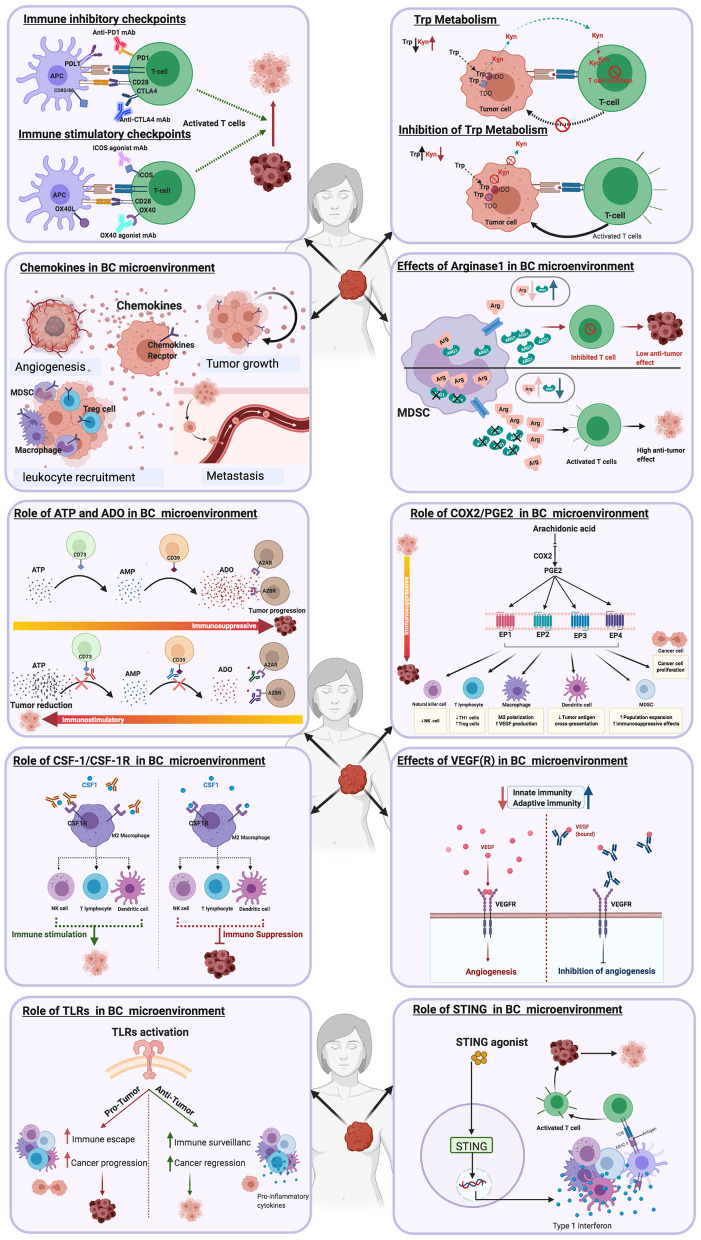
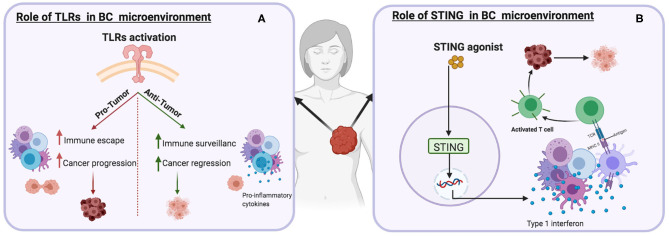
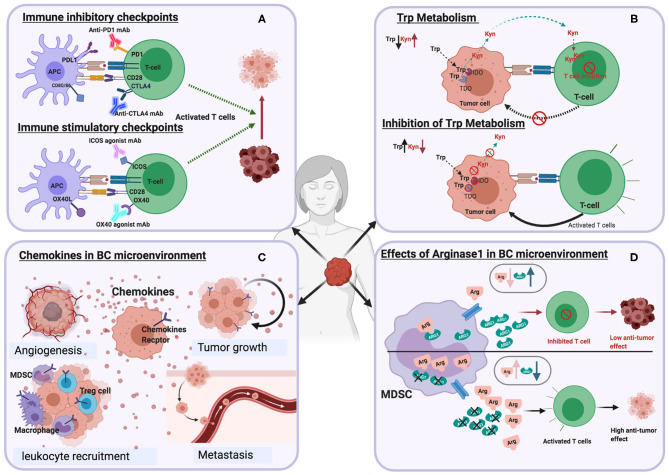
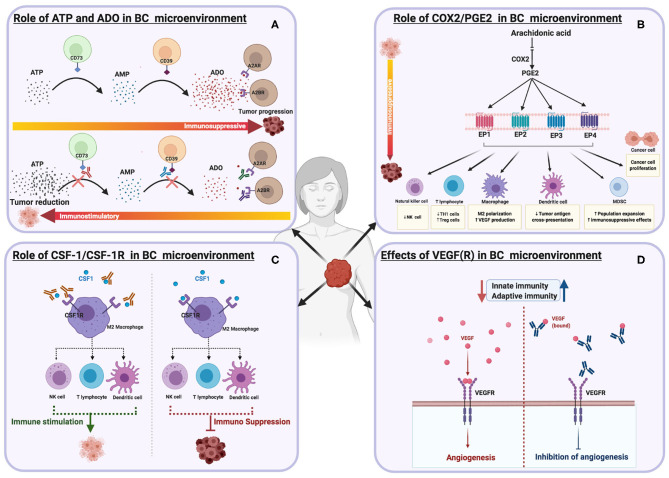
The burden of breast cancer is imposing a huge global problem. Drug discovery research and novel approaches to treat breast cancer have been carried out extensively over the last decades. Although immune checkpoint inhibitors are showing promising preclinical and clinical results in treating breast cancer, they are facing multiple limitations. From an immunological perspective, a recent report highlighted breast cancer as an "inflamed tumor" with an immunosuppressive microenvironment. Consequently, researchers have been focusing on identifying novel immunological targets that can the tumor immune microenvironment. In this context, several novel non-classical immune targets have been targeted to determine their ability to uncouple immunoregulatory pathways at play in the tumor microenvironment. This article will highlight strategies designed to increase the immunogenicity of the breast tumor microenvironment. It also addresses the latest studies on targets which can enhance immune responses to breast cancer and discusses examples of preclinical and clinical trial landscapes that utilize these targets.
乳腺癌负担已成为一个巨大的全球性问题。在过去几十年中,针对乳腺癌的药物研发研究和新治疗方法已广泛开展。尽管免疫检查点抑制剂在治疗乳腺癌方面显示出有前景的临床前和临床结果,但它们面临着多重限制。从免疫学角度来看,最近一份报告强调乳腺癌是一种具有免疫抑制微环境的“炎症性肿瘤”。因此,研究人员一直专注于识别能够调节肿瘤免疫微环境的新型免疫靶点。在此背景下,一些新型非经典免疫靶点已被作为目标,以确定它们解除在肿瘤微环境中起作用的免疫调节途径的能力。本文将重点介绍旨在提高乳腺肿瘤微环境免疫原性的策略。它还探讨了关于可增强对乳腺癌免疫反应的靶点的最新研究,并讨论了利用这些靶点的临床前和临床试验情况的实例。