Department of Urology and Renal Transplantation, La Conception University Hospital, Assistance Publique-Hôpitaux Marseille (APHM), Aix-Marseille Univ., Marseille, France.
C2VN, INSERM 1263, Aix-Marseille Univ, INRAE, Marseille, France.
Front Immunol. 2020 Mar 17;11:445. doi: 10.3389/fimmu.2020.00445. eCollection 2020.
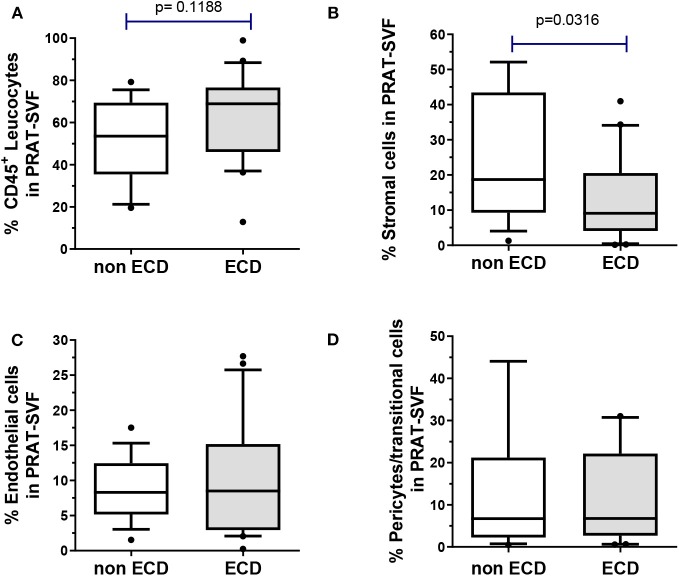
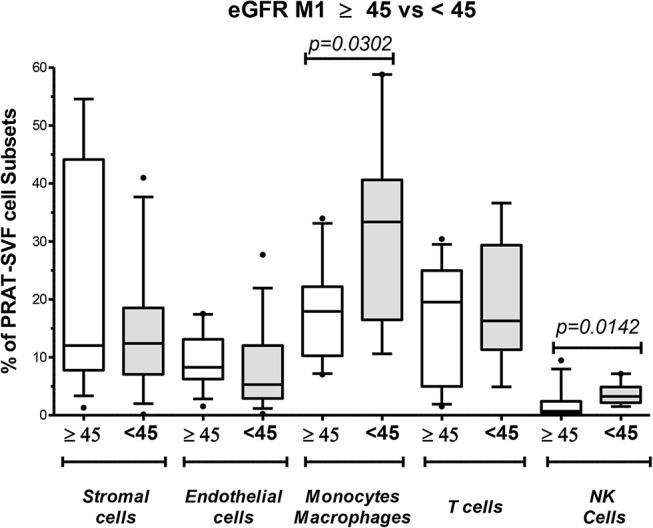
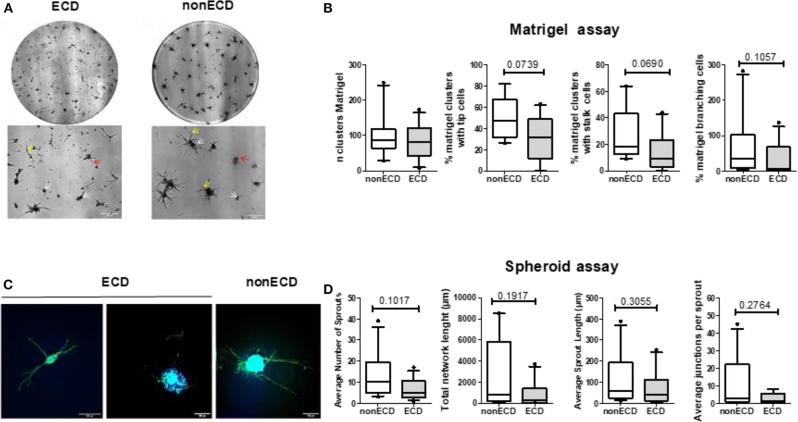
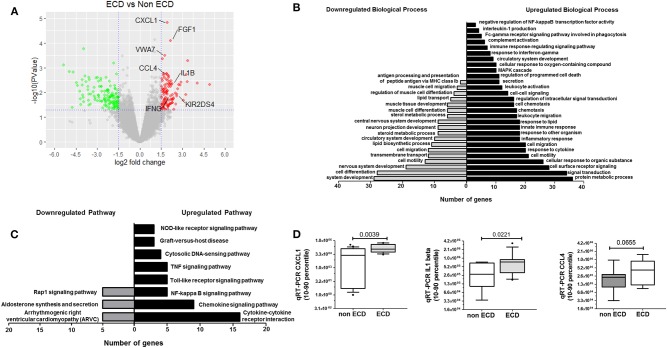
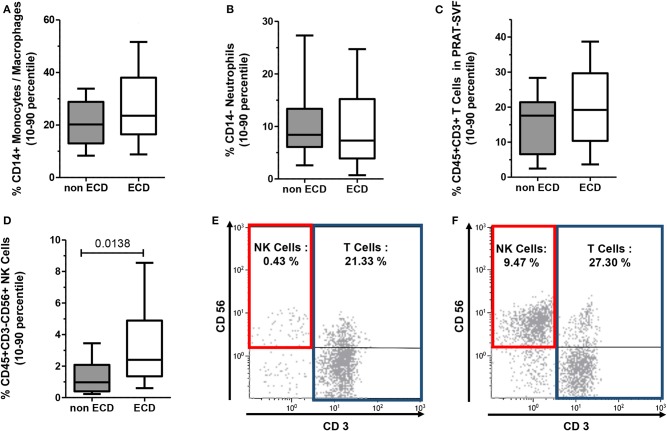
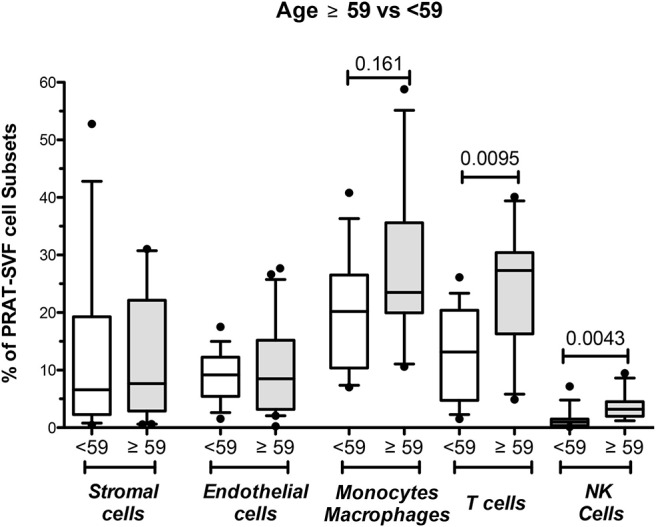
Better understanding of the contribution of donor aging and comorbidity factors of expanded criteria donors (ECD) to the clinical outcome of a transplant is a challenge in kidney transplantation. We investigated whether the features of donor-derived stromal vascular fraction of perirenal adipose tissue (PRAT-SVF) could be indicative of the deleterious impact of the ECD microenvironment on a renal transplant. A comparative analysis of cellular components, transcriptomic and vasculogenic profiles was performed in PRAT-SVF obtained from 22 optimal donors and 31 ECD deceased donors. We then investigated whether these parameters could be associated with donor aging and early allograft dysfunction. When compared with the PRAT-SVF of non-ECD donors, ECD PRAT-SVF displayed a lower proportion of stromal cells, a higher proportion of inflammatory NK cells. The global RNA sequencing approach indicated a differential molecular signature in the PRAT-SVF of ECD donors characterized by the over-expression of CXCL1 and IL1-β inflammatory transcripts. The vasculogenic activity of PRAT-SVF was highly variable but was not significantly affected in marginal donors. Periorgan recruitment of monocytes/macrophages and NK cells in PRAT-SVF was associated with donor aging. The presence of NK cell infiltrates was associated with lower PRAT-SVF angiogenic activity and with early allograft dysfunction evaluated on day 7 and at 1 month post-transplant. Our results indicate that human NK cell subsets are differentially recruited in the periorgan environment of aging kidney transplants. We provide novel evidence that PRAT-SVF represents a non-invasive and timely source of donor material with potential value to assess inflammatory features that impact organ quality and function.
更好地理解供体老化和扩大标准供体(ECD)的合并症因素对移植临床结果的贡献是肾移植面临的挑战。我们研究了肾周脂肪组织(PRAT)衍生的基质血管部分(SVF)的供体特征是否可以指示 ECD 微环境对肾移植的有害影响。对来自 22 个最佳供体和 31 个 ECD 已故供体的 PRAT-SVF 进行了细胞成分、转录组和血管生成特征的比较分析。然后,我们研究了这些参数是否与供体老化和早期移植物功能障碍有关。与非 ECD 供体的 PRAT-SVF 相比,ECD PRAT-SVF 显示出较低比例的基质细胞和较高比例的炎症性 NK 细胞。全局 RNA 测序方法表明,ECD 供体的 PRAT-SVF 具有不同的分子特征,其特征是 CXCL1 和 IL1-β 炎症转录物的过表达。PRAT-SVF 的血管生成活性高度可变,但在边缘供体中没有明显受到影响。PRAT-SVF 中单核细胞/巨噬细胞和 NK 细胞的外周募集与供体老化有关。NK 细胞浸润的存在与较低的 PRAT-SVF 血管生成活性以及在移植后第 7 天和 1 个月评估的早期移植物功能障碍有关。我们的结果表明,人类 NK 细胞亚群在老化肾移植的器官周围环境中被不同地募集。我们提供了新的证据,表明 PRAT-SVF 是一种非侵入性和及时的供体材料来源,具有评估影响器官质量和功能的炎症特征的潜在价值。