Hou Yonghui, Liu Ying, Li Minying, Ning Baile, Wen Zehuai, Fu Wenbin
The Second Affiliated Hospital of Guangzhou University of Chinese Medicine, Guangzhou, Guangdong, China.
The First Hospital of Shijiazhuang City, Shijiazhuang, Hebei, China.
Evid Based Complement Alternat Med. 2020 Mar 10;2020:5301568. doi: 10.1155/2020/5301568. eCollection 2020.
To systematically assess the efficacy of acupuncture combined with rehabilitation on unilateral neglect after stroke.
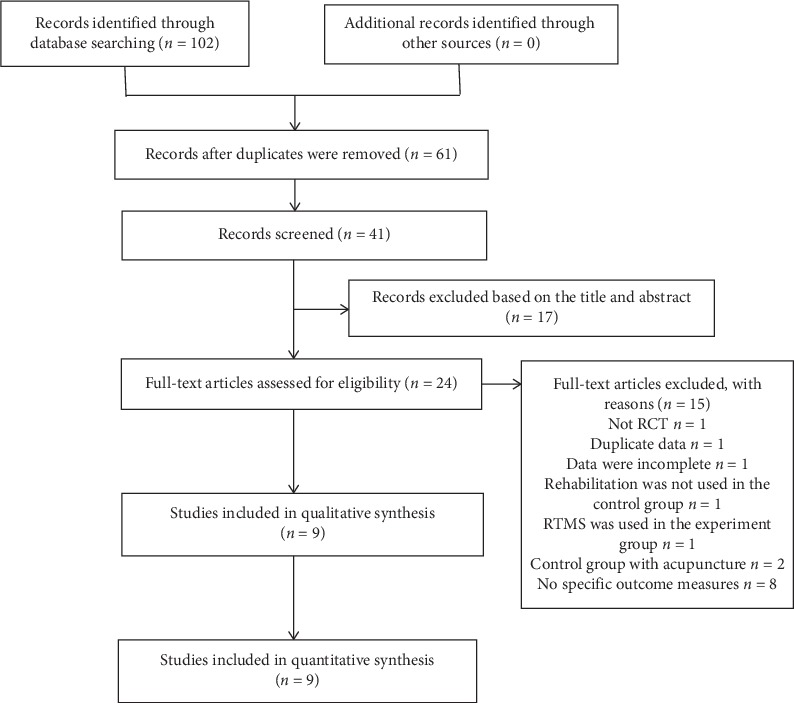
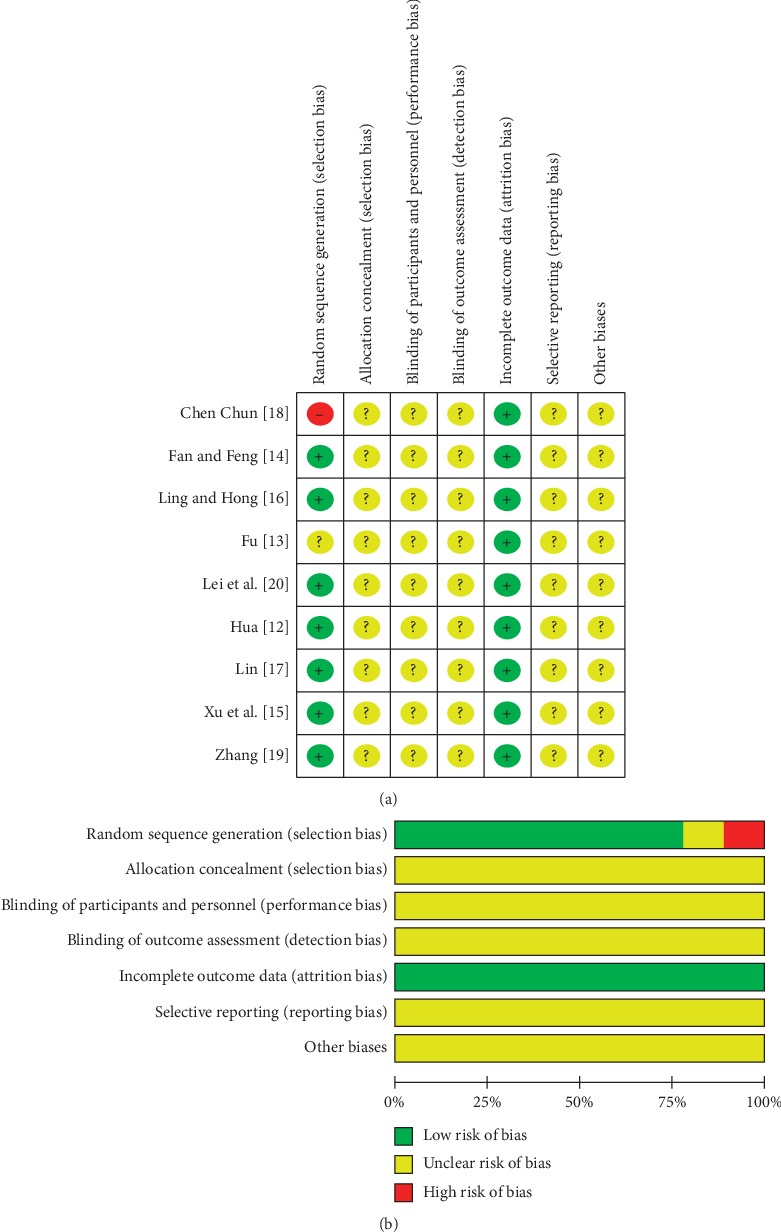
The Cochrane Library, PubMed, Excerpt Medical Database (EMBASE), China National Knowledge Infrastructure (CNKI), China Science and Technology Journal Database (VIP), Chinese Biomedical Literature Database (CBM), and Wan Fang databases were searched online for randomised controlled trials (RCTs) of acupuncture and its effects on unilateral neglect after stroke from their inception to September 2019. RCTs on acupuncture combined with rehabilitation in the experimental group for unilateral neglect compared with rehabilitation alone or rehabilitation plus sham acupuncture in the control group were included. Two authors separately screened the literature, extracted the data, and evaluated the quality of the included studies. Review Manager 5.3 software was used for the data analysis.
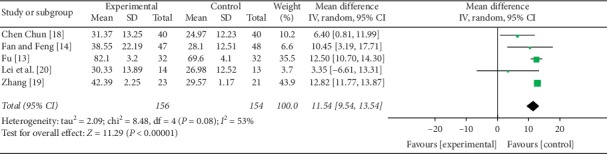
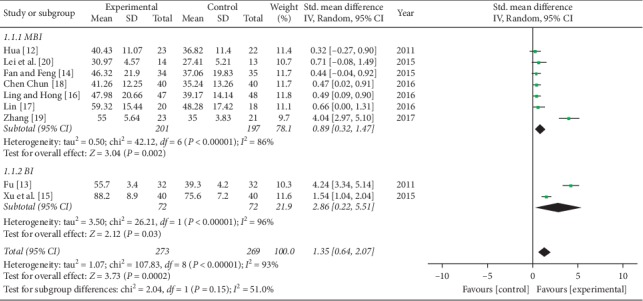
A total of 542 patients from nine RCTs were included. The meta-analysis showed that the experimental groups could significantly improve Fugl-Meyer Assessment (FMA) (MD = 11.54, 95% CI [9.54, 13.54], < 0.00001) and the ability of daily living (SMD = 1.35, 95% CI [0.64, 2.07], < 0.00001) and the ability of daily living (SMD = 1.35, 95% CI [0.64, 2.07], < 0.00001) when compared with the control groups. However, there was no significant difference in the drop of Catherine Bergego Scale (CBS) and Behavioural Inattention Test-conventional (BIT-C) between the two groups.
Acupuncture combined with rehabilitation was more effective in improving the motor function and the ability of daily living. Because of the limitations regarding the quantity and quality of the studies in this meta-analysis, high-quality and well-designed RCTs are necessary to validate the above conclusions.
系统评价针刺联合康复治疗对脑卒中后单侧空间忽略的疗效。
通过在线检索Cochrane图书馆、PubMed、荷兰医学文摘数据库(EMBASE)、中国知网(CNKI)、维普中文科技期刊数据库(VIP)、中国生物医学文献数据库(CBM)和万方数据库,收集从建库至2019年9月关于针刺及其对脑卒中后单侧空间忽略影响的随机对照试验(RCT)。纳入试验组为针刺联合康复治疗单侧空间忽略,对照组为单纯康复治疗或康复加假针刺的RCT。由两名作者分别进行文献筛选、数据提取并评估纳入研究的质量。采用RevMan 5.3软件进行数据分析。
共纳入9项RCT的542例患者。Meta分析结果显示,试验组与对照组相比,能显著改善Fugl-Meyer评估量表(FMA)(MD = 11.54,95%CI[9.54,13.54],P < 0.00001)和日常生活能力(SMD = 1.35,95%CI[0.64,2.07],P < 0.00001)。然而,两组间Catherine Bergego量表(CBS)评分及行为疏忽测试常规版(BIT-C)评分下降幅度差异无统计学意义。
针刺联合康复治疗在改善运动功能和日常生活能力方面更有效。由于本Meta分析纳入研究的数量和质量存在局限性,需要高质量、设计良好的RCT来验证上述结论。