Departement of Molecular Biology and Biochemistry, Xinxiang Medical University, Xinxiang, Henan, China 453003.
Experimental Teaching Center of Biology and Basic Medical Sciences, Sanquan College of Xinxiang Medical University, Xinxiang, Henan, China 453003.
Oxid Med Cell Longev. 2020 Mar 12;2020:9762390. doi: 10.1155/2020/9762390. eCollection 2020.
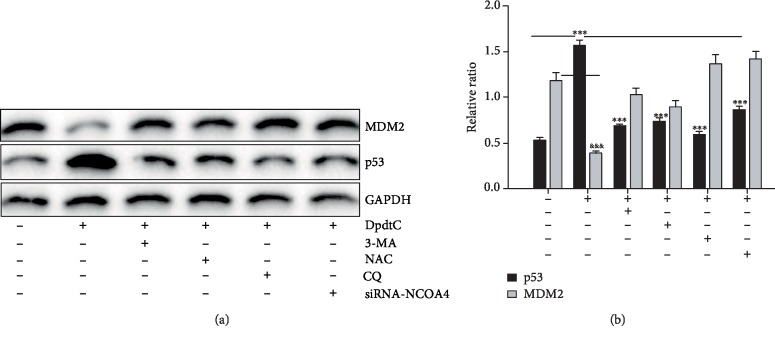
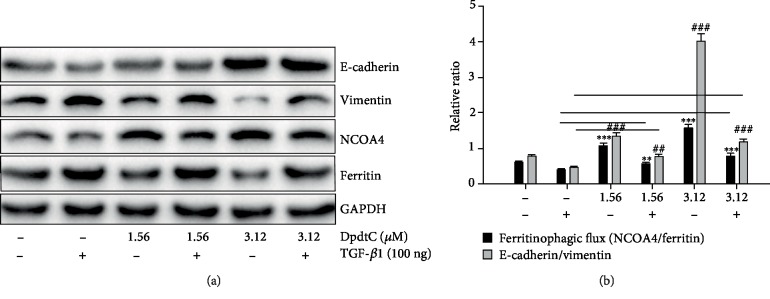
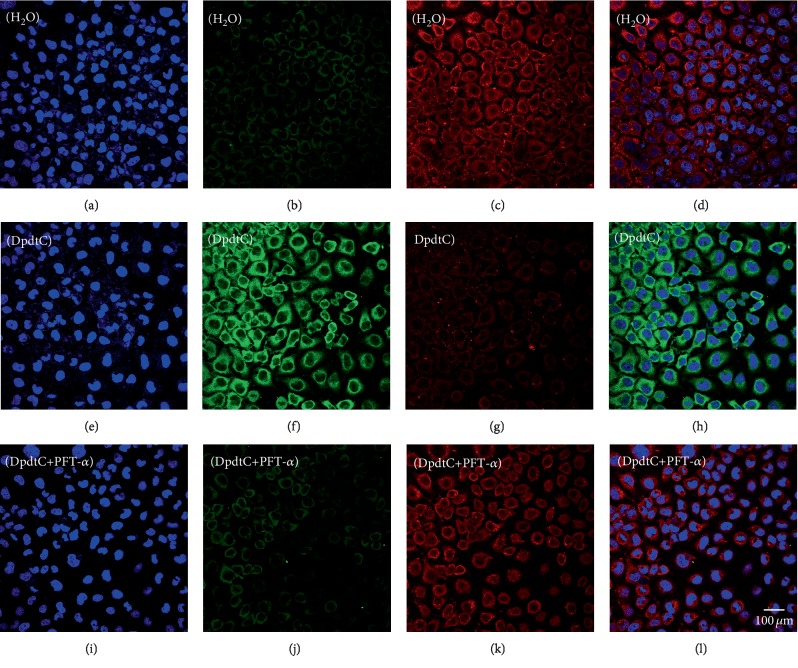
Epithelial-mesenchymal transition (EMT) is a cellular process in which epithelial cells are partially transformed into stromal cells, which endows the polarized epithelium cells more invasive feature and contributes cancer metastasis and drug resistance. Ferritinophagy is an event of ferritin degradation in lysosomes, which contributes Fenton-mediated ROS production. In addition, some studies have shown that ROS participates in EMT process, but the effect of ROS stemmed from ferritin degradation on EMT has not been fully established. A novel iron chelator, DpdtC (2,2'-di-pyridylketone dithiocarbamate), which could induce ferritinophagy in HepG2 cell in our previous study, was used to investigate its effect on EMT in gastric cancer cells. The proliferation assay showed that DpdtC treatment resulted in growth inhibition and morphologic alteration in MGC-803 cell (IC = 3.1 ± 0.3 M), and its action involved ROS production that was due to the occurrence of ferritinophagy. More interestingly, DpdtC could also inhibit EMT, leading to the upregulation of E-cadherin and the downregulation of vimentin; however, the addition of NAC and 3-MA could attenuate (or neutralize) the action of DpdtC on ferritinophagy induction and EMT inhibition, supporting that the enhanced ferritinophagic flux contributed to the EMT inhibition. Since the degradation of ferritin may trigger the production of ROS and induce the response of p53, we next studied the role of p53 in the above two-cell events. As expected, an upregulation of p53 was observed after DpdtC insulting; however, the addition of a p53 inhibitor, PFT-, could significantly attenuate the action of DpdtC on ferritinophagy induction and EMT inhibition. In addition, autophagy inhibitors or NAC could counteract the effect of DpdtC and restore the level of p53 to the control group, indicating that the upregulation of p53 was caused by ferritinophagy-mediated ROS production. In conclusion, our data demonstrated that the inhibition of EMT induced by DpdtC was realized through ferritinophagy-mediated ROS/p53 pathway, which supported that the activation of ferritinophagic flux was the main driving force in EMT inhibition in gastric cancer cells, and further strengthening the concept that NCOA4 participates in EMT process.
上皮-间充质转化 (EMT) 是上皮细胞部分转化为间质细胞的细胞过程,赋予极化上皮细胞更强的侵袭特征,并促进癌症转移和耐药性。铁蛋白自噬是溶酶体中铁蛋白降解的事件,有助于 Fenton 介导的 ROS 产生。此外,一些研究表明 ROS 参与 EMT 过程,但铁蛋白降解产生的 ROS 对 EMT 的影响尚未完全确定。一种新型铁螯合剂,DpdtC(2,2'-二吡啶酮二硫代氨基甲酸盐),在我们之前的研究中可以诱导 HepG2 细胞中的铁蛋白自噬,被用于研究其对胃癌细胞 EMT 的影响。增殖实验表明,DpdtC 处理导致 MGC-803 细胞生长抑制和形态改变(IC=3.1±0.3μM),其作用涉及 ROS 产生,这是由于铁蛋白自噬的发生。更有趣的是,DpdtC 还可以抑制 EMT,导致 E-钙粘蛋白上调和波形蛋白下调;然而,添加 NAC 和 3-MA 可以减弱(或中和)DpdtC 对铁蛋白自噬诱导和 EMT 抑制的作用,支持增强的铁蛋白自噬通量有助于 EMT 抑制。由于铁蛋白的降解可能引发 ROS 的产生并诱导 p53 的反应,我们接下来研究了 p53 在上述两个细胞事件中的作用。不出所料,在 DpdtC 刺激后观察到 p53 的上调;然而,添加 p53 抑制剂 PFT-,可以显著减弱 DpdtC 对铁蛋白自噬诱导和 EMT 抑制的作用。此外,自噬抑制剂或 NAC 可以抵消 DpdtC 的作用并将 p53 的水平恢复到对照组,表明 p53 的上调是由铁蛋白自噬介导的 ROS 产生引起的。总之,我们的数据表明,DpdtC 诱导的 EMT 抑制是通过铁蛋白自噬介导的 ROS/p53 途径实现的,这支持了铁蛋白自噬通量的激活是胃癌细胞 EMT 抑制的主要驱动力的观点,并进一步强化了 NCOA4 参与 EMT 过程的概念。