Ambo University, College of Medicine and Health Science, Department of Public Health, P.O. Box 19 Ambo, Ethiopia.
Addis Ababa University, College of Health Science, Department of Medical Radiological Technology, P.O. Box 11950 Addis Ababa, Ethiopia.
Biomed Res Int. 2020 Feb 27;2020:8032894. doi: 10.1155/2020/8032894. eCollection 2020.
Vitamin A deficiency is a major nutritional concern in lower-income countries. The aim of this systematic review and meta-analysis was to show the magnitude of vitamin A deficiency among preschoolers in Ethiopia.
The present study was aimed at synthesizing qualitatively and quantitatively the existing literature on the prevalence of VAD in preschool children in Ethiopia.
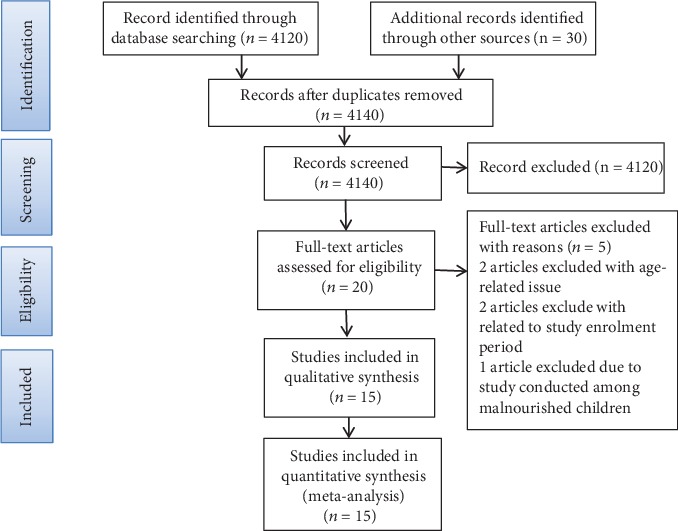
Studies were searched through the search engine of Google Scholar, Hinari, MEDLINE/PubMed, Cochrane Library, and Africa-Wide Information. Searching was made using the keywords/MeSH of vitamin A deficiency, xerophthalmia, night blindness, Bitot's spot, retinol, children, and Ethiopia. Data were analyzed and compared with the WHO threshold criteria to declare a public health problem. Heterogeneity among studies was assessed using a Cochran test and statistics. A random-effects model with 95% confidence interval was used for prevalence estimations.
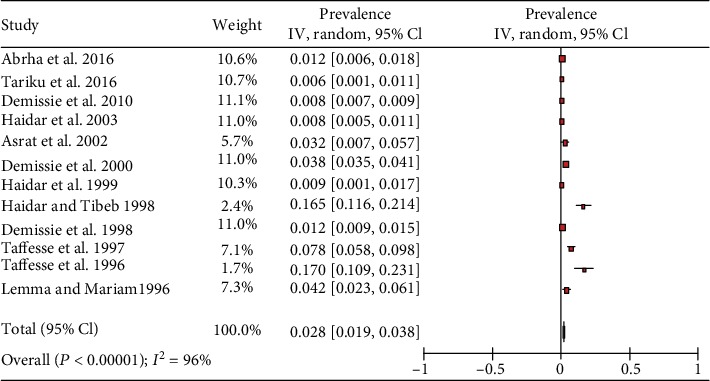
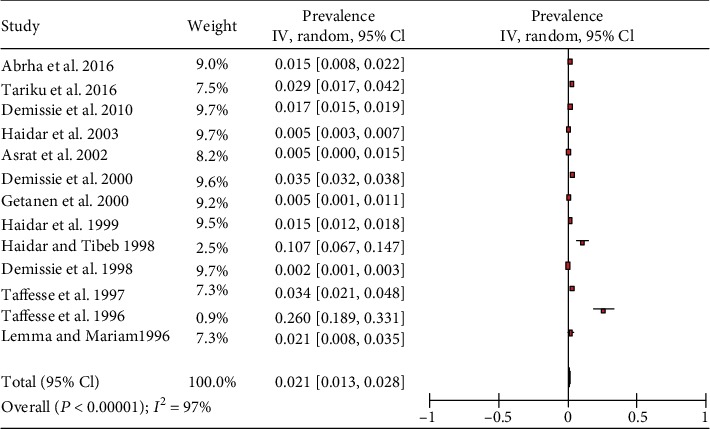
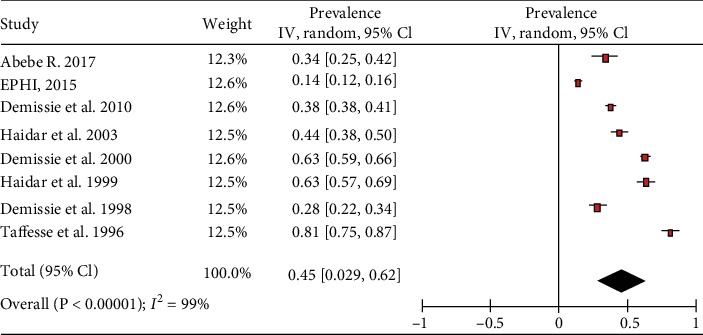
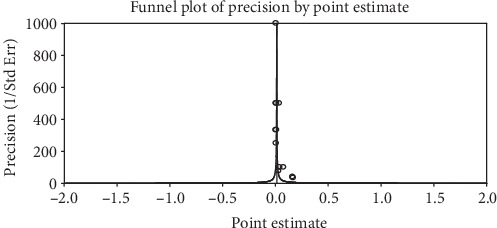
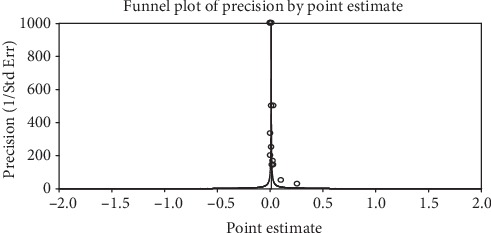
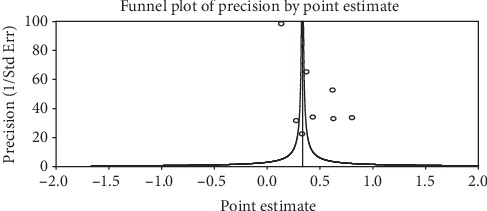
Of the 13 studies included in clinical analysis, 12 of them reported the prevalence of night blindness and/or Bitot's spot among preschool children in Ethiopia which was above WHO cutoff point for the public health problem 1% and 0.5%, respectively. The prevalence of night blindness significantly decreased from moderate public health problem 4.2% (95% CI: 2.8%-5.7%) in a period from 1990 to 2004 to mild public health problem 0.8% (95% CI: 0.6%-1.0%) in a period from 2005 to 2019. Furthermore, statistically insignificant reduction was observed in the prevalence of Bitot's spot in a period from 1990 to 2004, 2.2% (95% CI: 1.3%-3.2%) to 1.8% (95% CI: 1.2%-2.3%) in a period from 2005 to 2019. Among 8 studies on subclinical vitamin A deficiency, 7 of them indicated a severe public health problem (>20%). The prevalence of subclinical vitamin A deficiency decreased from 55.7% (95% CI: 39.8%-71.6%) in a period from 1990 to 2004 to 28.3% (95% CI: 9.8%-46.7%) in a period from 2005 to 2019, but not statistically significant.
Despite the reduced proportion of night blindness and Bitot's spot, still both clinical and subclinical vitamin A deficiencies remain a public health problem in Ethiopia requiring strengthen intervention through the newly initiated health extension program.
维生素 A 缺乏症是低收入国家的一个主要营养问题。本系统评价和荟萃分析的目的是展示埃塞俄比亚学龄前儿童维生素 A 缺乏症的严重程度。
本研究旨在定性和定量综合现有关于埃塞俄比亚学龄前儿童维生素 A 缺乏症患病率的文献。
通过谷歌学术搜索引擎、Hinari、MEDLINE/PubMed、Cochrane 图书馆和非洲信息网搜索研究。使用维生素 A 缺乏症、干眼病、夜盲症、Bitot 斑、视黄醇、儿童和埃塞俄比亚等关键词/MeSH 进行搜索。使用世界卫生组织阈值标准分析和比较数据,以宣布公共卫生问题。使用 Cochran 检验和 Q 统计量评估研究之间的异质性。使用具有 95%置信区间的随机效应模型进行患病率估计。
在纳入临床分析的 13 项研究中,有 12 项报告了埃塞俄比亚学龄前儿童夜盲症和/或 Bitot 斑的患病率高于世界卫生组织公共卫生问题的 1%和 0.5%的临界值。夜盲症的患病率从 1990 年至 2004 年期间中度公共卫生问题的 4.2%(95%CI:2.8%-5.7%)显著下降至 2005 年至 2019 年期间轻度公共卫生问题的 0.8%(95%CI:0.6%-1.0%)。此外,1990 年至 2004 年期间 Bitot 斑的患病率呈统计学上无显著下降,从 2.2%(95%CI:1.3%-3.2%)降至 2005 年至 2019 年期间的 1.8%(95%CI:1.2%-2.3%)。在 8 项关于亚临床维生素 A 缺乏症的研究中,有 7 项表明存在严重的公共卫生问题(>20%)。亚临床维生素 A 缺乏症的患病率从 1990 年至 2004 年期间的 55.7%(95%CI:39.8%-71.6%)降至 2005 年至 2019 年期间的 28.3%(95%CI:9.8%-46.7%),但无统计学意义。
尽管夜盲症和 Bitot 斑的比例有所下降,但临床和亚临床维生素 A 缺乏症仍然是埃塞俄比亚的一个公共卫生问题,需要通过新启动的卫生扩展计划加强干预。