Department of NanoEngineering, Chemical Engineering Program, Moores Cancer Center, University of California San Diego, La Jolla, CA 92093, USA.
Sci Adv. 2020 Mar 27;6(13):eaaz6108. doi: 10.1126/sciadv.aaz6108. eCollection 2020 Mar.
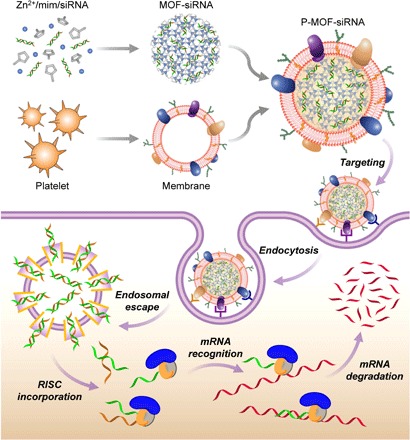
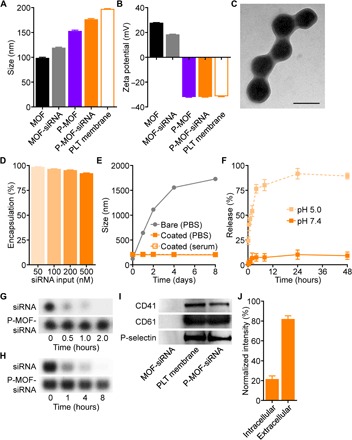
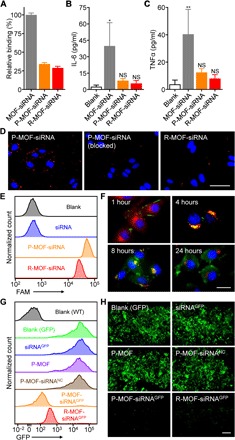
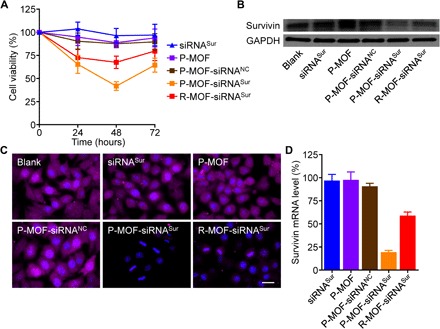
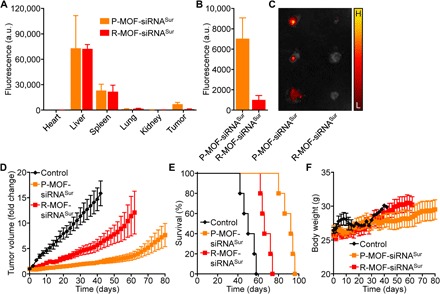
Small interfering RNA (siRNA) is a powerful tool for gene silencing that has been used for a wide range of biomedical applications, but there are many challenges facing its therapeutic use in vivo. Here, we report on a platelet cell membrane-coated metal-organic framework (MOF) nanodelivery platform for the targeted delivery of siRNA in vivo. The MOF core is capable of high loading yields, and its pH sensitivity enables endosomal disruption upon cellular uptake. The cell membrane coating provides a natural means of biointerfacing with disease substrates. It is shown that high silencing efficiency can be achieved in vitro against multiple target genes. Using a murine xenograft model, significant antitumor targeting and therapeutic efficacy are observed. Overall, the biomimetic nanodelivery system presented here provides an effective means of achieving gene silencing in vivo and could be used to expand the applicability of siRNA across a range of disease-relevant applications.
小干扰 RNA(siRNA)是一种强大的基因沉默工具,已被广泛应用于生物医学领域,但在体内治疗应用中仍面临许多挑战。在这里,我们报告了一种血小板细胞膜包覆的金属有机骨架(MOF)纳米递药平台,用于体内靶向递送 siRNA。MOF 核具有高载药率,其对 pH 的敏感性使其在细胞摄取后能够破坏内涵体。细胞膜包覆提供了与疾病底物进行生物相互作用的天然途径。结果表明,该平台在体外对多种靶基因具有高沉默效率。利用小鼠异种移植模型,观察到显著的抗肿瘤靶向和治疗效果。总的来说,本文提出的仿生纳米递药系统为体内基因沉默提供了一种有效的方法,可用于扩展 siRNA 在一系列与疾病相关的应用中的适用性。