Cardiff University Brain Research Imaging Centre (CUBRIC), School of Psychology, Cardiff University, Maindy Road, Cardiff, CF24 4HQ, United Kingdom; Max Planck Research Group Adaptive Memory, Max Planck Institute for Human Cognitive and Brain Sciences, Stephanstraße 1a, 04103, Leipzig, Germany.
Cardiff University Brain Research Imaging Centre (CUBRIC), School of Psychology, Cardiff University, Maindy Road, Cardiff, CF24 4HQ, United Kingdom.
Neuropsychologia. 2020 May;142:107457. doi: 10.1016/j.neuropsychologia.2020.107457. Epub 2020 Apr 4.
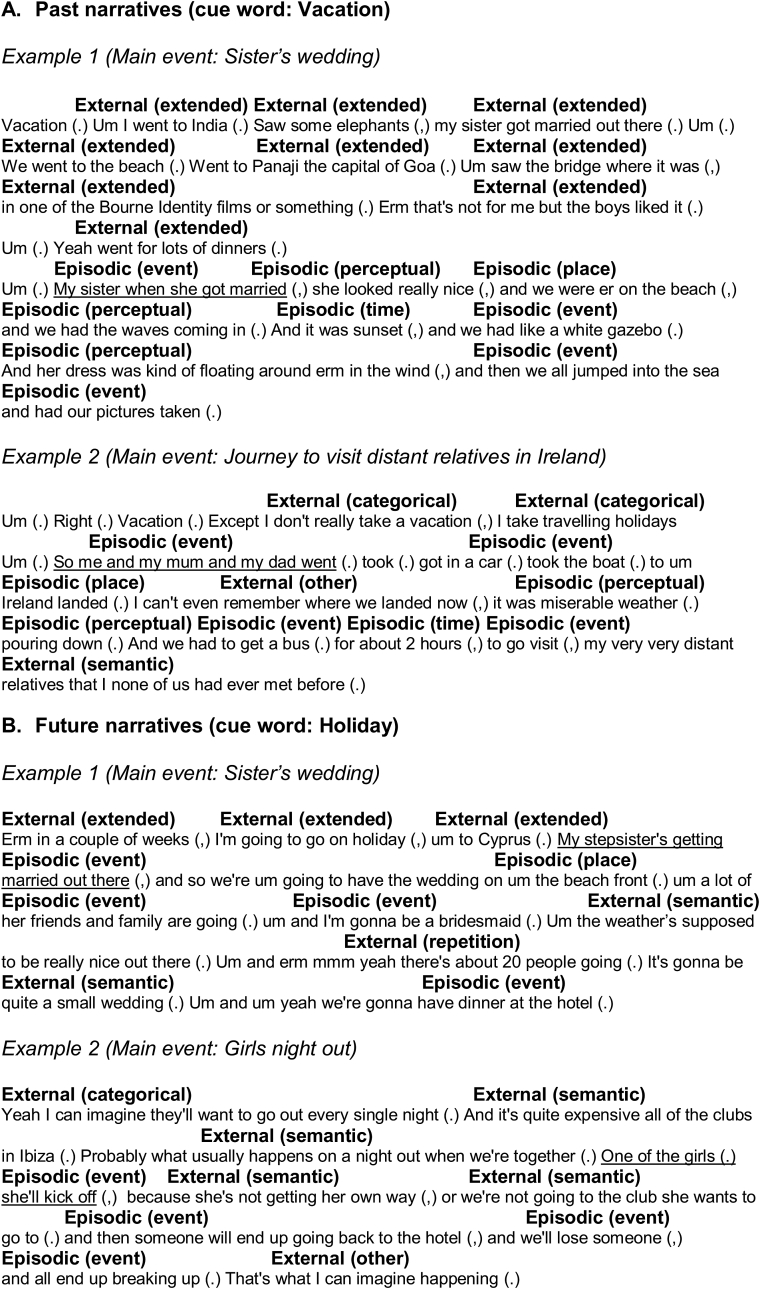
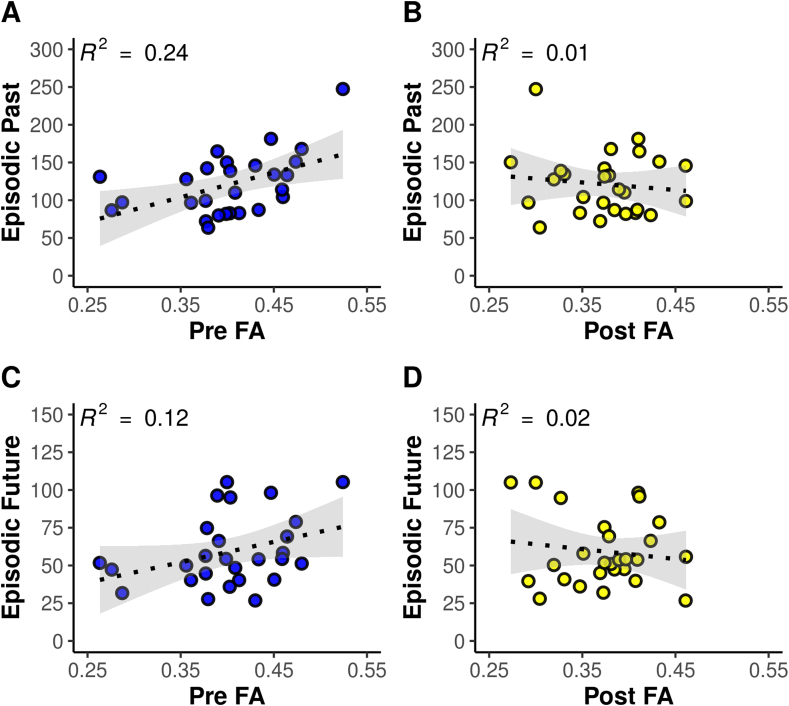
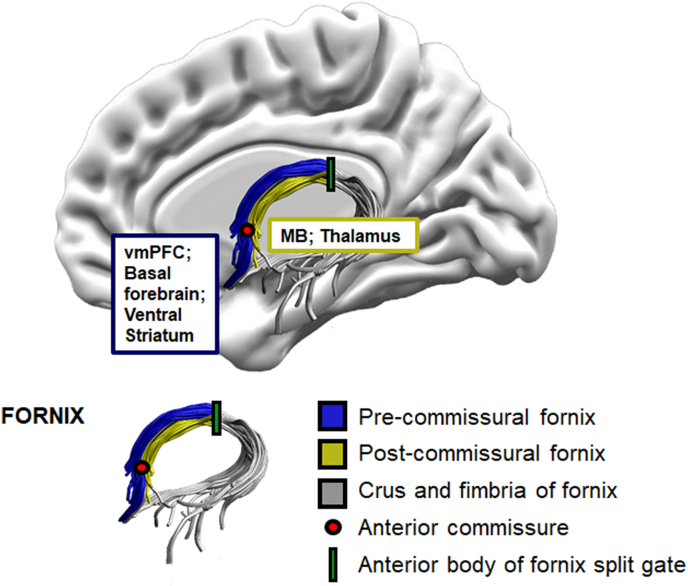
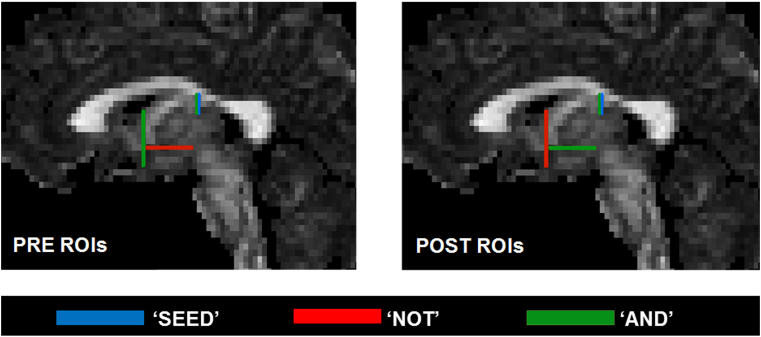
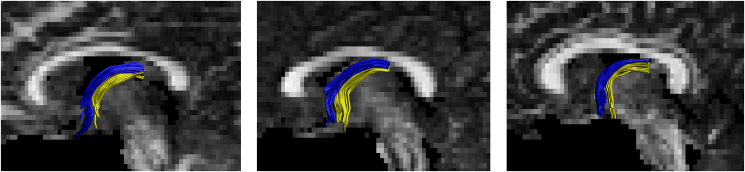
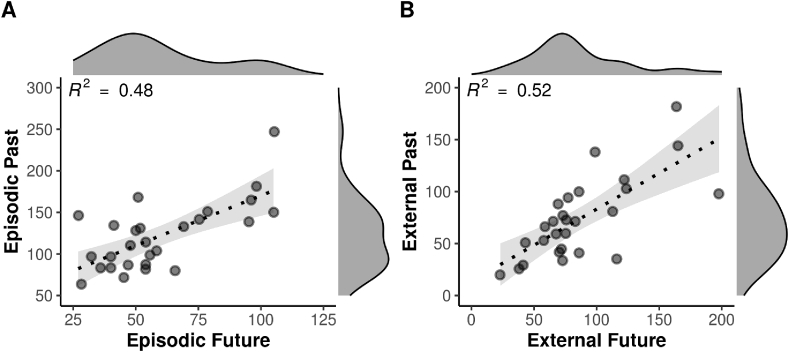
Neuropsychological and functional magnetic resonance imaging evidence suggests that the ability to vividly remember our personal past, and imagine future scenarios, involves two closely connected regions: the hippocampus and ventromedial prefrontal cortex (vmPFC). Despite evidence of a direct anatomical connection from hippocampus to vmPFC, it is unknown whether hippocampal-vmPFC structural connectivity supports both past- and future-oriented episodic thinking. To address this, we applied a novel deterministic tractography protocol to diffusion-weighted magnetic resonance imaging (dMRI) data from a group of healthy young adult humans who undertook an adapted past-future autobiographical interview (portions of this data were published in Hodgetts et al., 2017a). This tractography protocol enabled distinct subdivisions of the fornix, detected previously in axonal tracer studies, to be reconstructed in vivo, namely the pre-commissural (connecting the hippocampus to vmPFC) and post-commissural (linking the hippocampus and medial diencephalon) fornix. As predicted, we found that inter-individual differences in pre-commissural - but not post-commissural - fornix microstructure (fractional anisotropy) were significantly correlated with the episodic richness of both past and future autobiographical narratives. Notably, these results held when controlling for non-episodic narrative content, verbal fluency, and grey matter volumes of the hippocampus and vmPFC. This study provides novel evidence that reconstructing events from one's personal past, and constructing possible future events, involves a distinct, structurally-instantiated hippocampal-vmPFC pathway.
神经心理学和功能磁共振成像的证据表明,生动地回忆个人过去和想象未来场景的能力涉及两个紧密相连的区域:海马体和腹内侧前额叶皮层(vmPFC)。尽管有证据表明海马体到 vmPFC 之间存在直接的解剖连接,但尚不清楚海马体-vmPFC 的结构连接是否支持过去和未来导向的情景式思维。为了解决这个问题,我们应用了一种新的确定性轨迹追踪技术,对一组健康的年轻成年人的弥散张量磁共振成像(dMRI)数据进行了分析,这些成年人接受了改编后的过去-未来自传体访谈(该数据的一部分已在 Hodgetts 等人的研究中发表,2017a)。该轨迹追踪技术使先前在轴突示踪研究中检测到的穹窿的不同细分部分得以在体内重建,即前连合(连接海马体和 vmPFC)和后连合(连接海马体和内侧间脑)穹窿。正如预测的那样,我们发现,前连合(而非后连合)穹窿微结构(各向异性分数)的个体间差异与过去和未来自传体叙事的情景式丰富度显著相关。值得注意的是,当控制非情景式叙事内容、言语流畅性以及海马体和 vmPFC 的灰质体积时,这些结果仍然成立。本研究提供了新的证据,表明从个人过去重建事件和构建可能的未来事件涉及到一个独特的、结构上体现的海马体-vmPFC 途径。