Palacio-Castañeda Valentina, Kooijman Lucas, Venzac Bastien, Verdurmen Wouter P R, Le Gac Séverine
Department of Biochemistry, Radboud Institute for Molecular Life Sciences (RIMLS), Radboud University Medical Center, Geert Grooteplein 28, 6525 GA Nijmegen, The Netherlands.
Applied Microfluidics for BioEngineering Research, TechMed Center & MESA+ Institute for Nanotechnology, University of Twente, Postbus 217, 7500AE Enschede, The Netherlands.
Micromachines (Basel). 2020 Apr 4;11(4):382. doi: 10.3390/mi11040382.
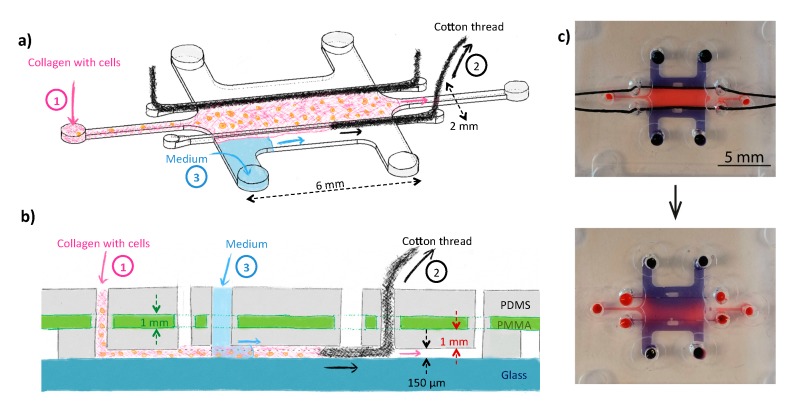
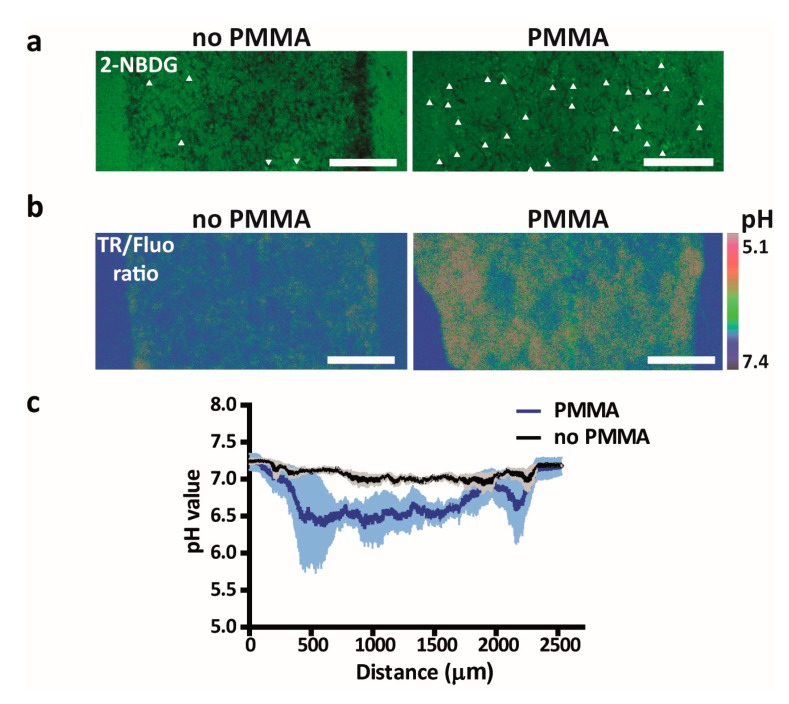
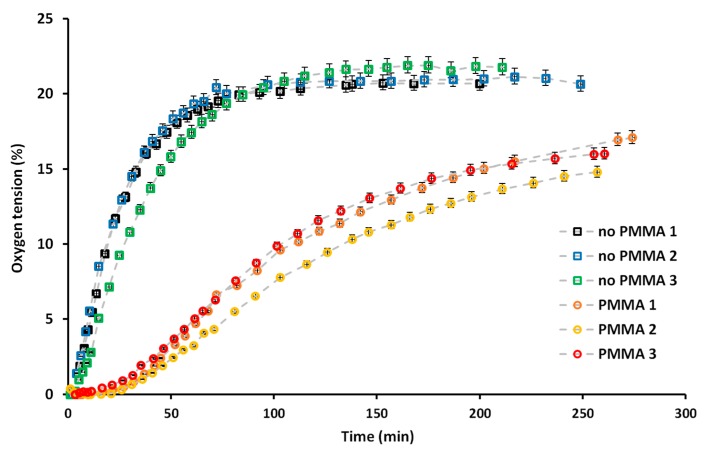
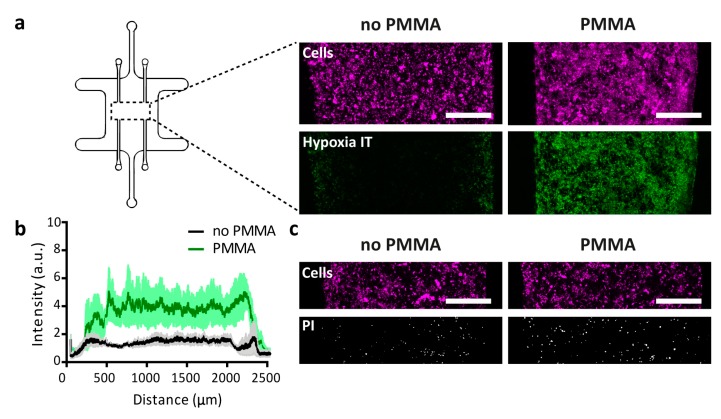
Hypoxia switches the metabolism of tumor cells and induces drug resistance. Currently, no therapeutic exists that effectively and specifically targets hypoxic cells in tumors. Development of such therapeutics critically depends on the availability of in vitro models that accurately recapitulate hypoxia as found in the tumor microenvironment. Here, we report on the design and validation of an easy-to-fabricate tumor-on-a-chip microfluidic platform that robustly emulates the hypoxic tumor microenvironment. The tumor-on-a-chip model consists of a central chamber for 3D tumor cell culture and two side channels for medium perfusion. The microfluidic device is fabricated from polydimethylsiloxane (PDMS), and oxygen diffusion in the device is blocked by an embedded sheet of polymethyl methacrylate (PMMA). Hypoxia was confirmed using oxygen-sensitive probes and the effect on the 3D tumor cell culture investigated by a pH-sensitive dual-labeled fluorescent dextran and a fluorescently labeled glucose analogue. In contrast to control devices without PMMA, PMMA-containing devices gave rise to decreases in oxygen and pH levels as well as an increased consumption of glucose after two days of culture, indicating a rapid metabolic switch of the tumor cells under hypoxic conditions towards increased glycolysis. This platform will open new avenues for testing anti-cancer therapies targeting hypoxic areas.
缺氧会改变肿瘤细胞的代谢并诱导耐药性。目前,尚无有效且特异性靶向肿瘤中缺氧细胞的治疗方法。此类治疗方法的开发严重依赖于能够准确重现肿瘤微环境中缺氧情况的体外模型。在此,我们报告了一种易于制造的芯片肿瘤微流控平台的设计与验证,该平台能够有力地模拟缺氧肿瘤微环境。芯片肿瘤模型由用于三维肿瘤细胞培养的中央腔室和用于培养基灌注的两个侧通道组成。微流控装置由聚二甲基硅氧烷(PDMS)制成,装置中的氧气扩散被一片嵌入的聚甲基丙烯酸甲酯(PMMA)阻断。使用氧敏感探针确认了缺氧情况,并通过pH敏感的双标记荧光葡聚糖和荧光标记的葡萄糖类似物研究了其对三维肿瘤细胞培养的影响。与不含PMMA的对照装置相比,含PMMA的装置在培养两天后氧气和pH水平降低,葡萄糖消耗增加,表明缺氧条件下肿瘤细胞迅速发生代谢转变,向糖酵解增加的方向发展。该平台将为测试针对缺氧区域的抗癌疗法开辟新途径。