Division of Biological Science, Graduate School of Science, Nagoya University, Nagoya 464-8602, Japan.
Laboratory of Molecular Genetics for Reproduction, National Institute for Basic Biology, Okazaki 444-8787, Japan.
Biol Open. 2020 Apr 7;9(4):bio050054. doi: 10.1242/bio.050054.
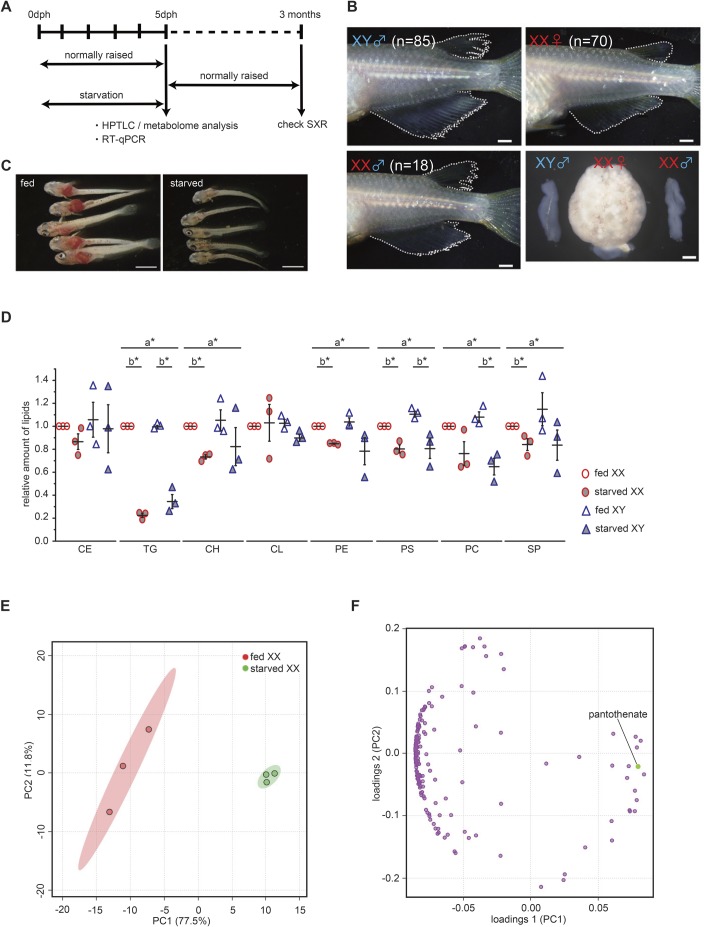
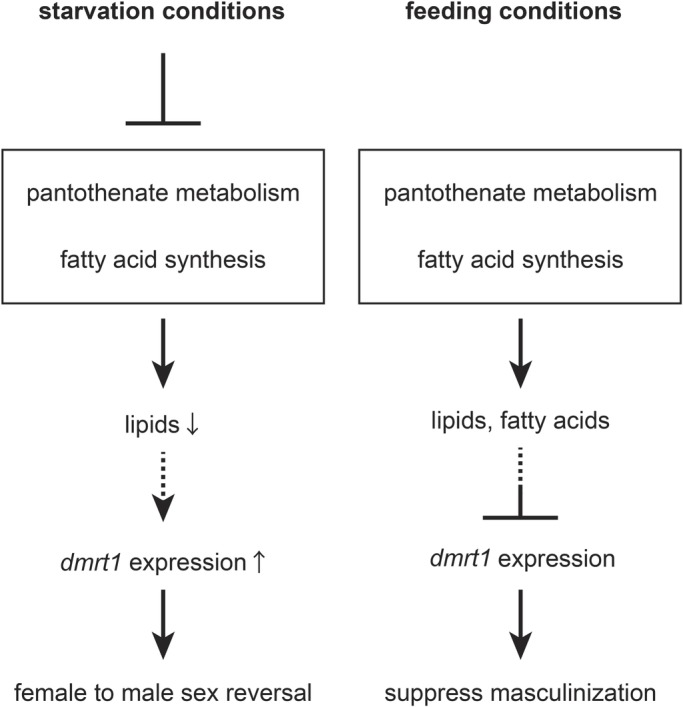
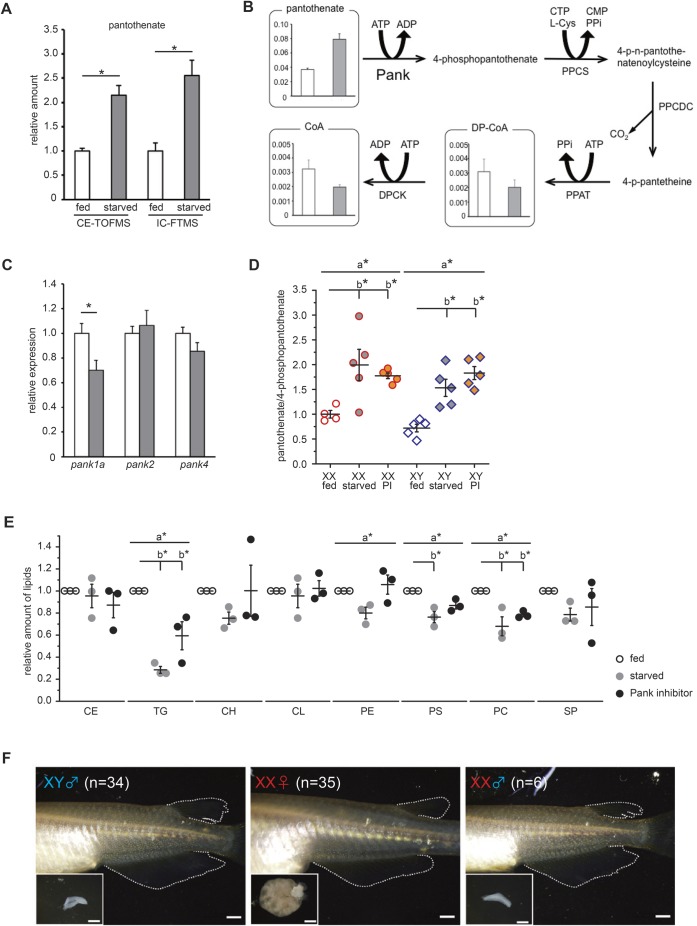
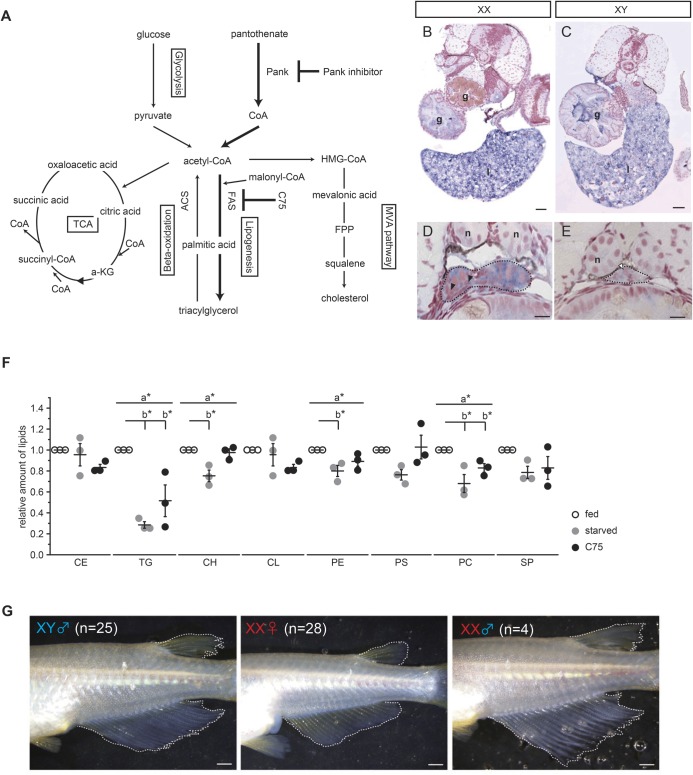
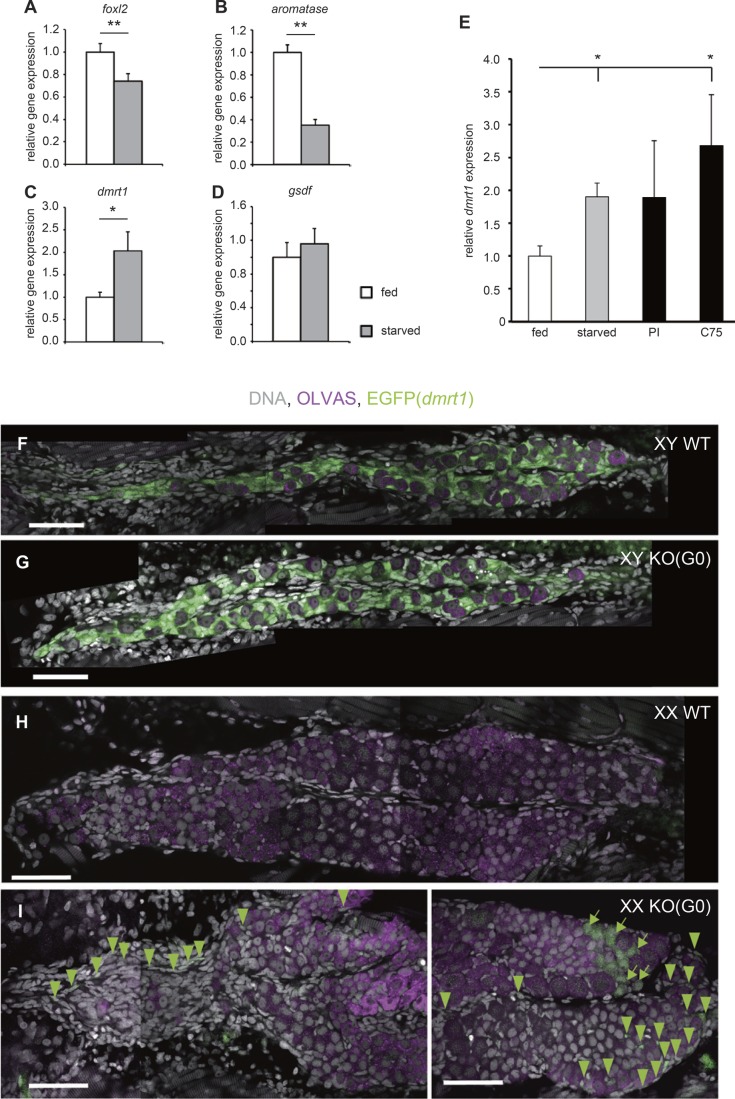
The teleost fish, medaka (), employs the XX/XY genetic sex determination system. We show here that the phenotypic sex of medaka is affected by changes in lipid metabolism. Medaka larvae subjected to 5 days of starvation underwent female-to-male sex reversal. Metabolomic and RT-qPCR analyses indicated that pantothenate metabolism was suppressed by starvation. Consistently, inhibiting the pantothenate metabolic pathway caused sex reversal. The final metabolite in this pathway is coenzyme A, an essential factor for lipogenesis. Inhibiting fatty acid synthesis, the first step of lipogenesis, also caused sex reversal. The expression of , a critical gene for male development, was suppressed by starvation, and a (Δ13) mutant did not show sex reversal under starvation. Collectively, these results indicate that fatty acid synthesis is involved in female-to-male sex reversal through ectopic expression of male gene under starvation.
硬骨鱼,斑马鱼,采用 XX/XY 遗传性别决定系统。我们在这里表明,斑马鱼的表型性别受脂质代谢变化的影响。经过 5 天饥饿处理的斑马鱼幼虫发生了雌性到雄性的性别反转。代谢组学和 RT-qPCR 分析表明,饥饿抑制泛酸代谢。一致地,抑制泛酸代谢途径导致性别反转。该途径的最终代谢产物是辅酶 A,这是脂肪生成的必需因素。抑制脂肪酸合成,脂肪生成的第一步,也导致性别反转。饥饿抑制了关键雄性发育基因 的表达,而 (Δ13)突变体在饥饿下不会发生性别反转。总的来说,这些结果表明,脂肪酸合成通过在饥饿条件下异位表达雄性基因 参与雌性到雄性的性别反转。