Ravotto Luca, Duffet Loïc, Zhou Xuehan, Weber Bruno, Patriarchi Tommaso
Institute of Pharmacology and Toxicology, University of Zurich, Zurich, Switzerland.
Neuroscience Center Zurich, Zurich, Switzerland.
Front Cell Neurosci. 2020 Mar 20;14:67. doi: 10.3389/fncel.2020.00067. eCollection 2020.
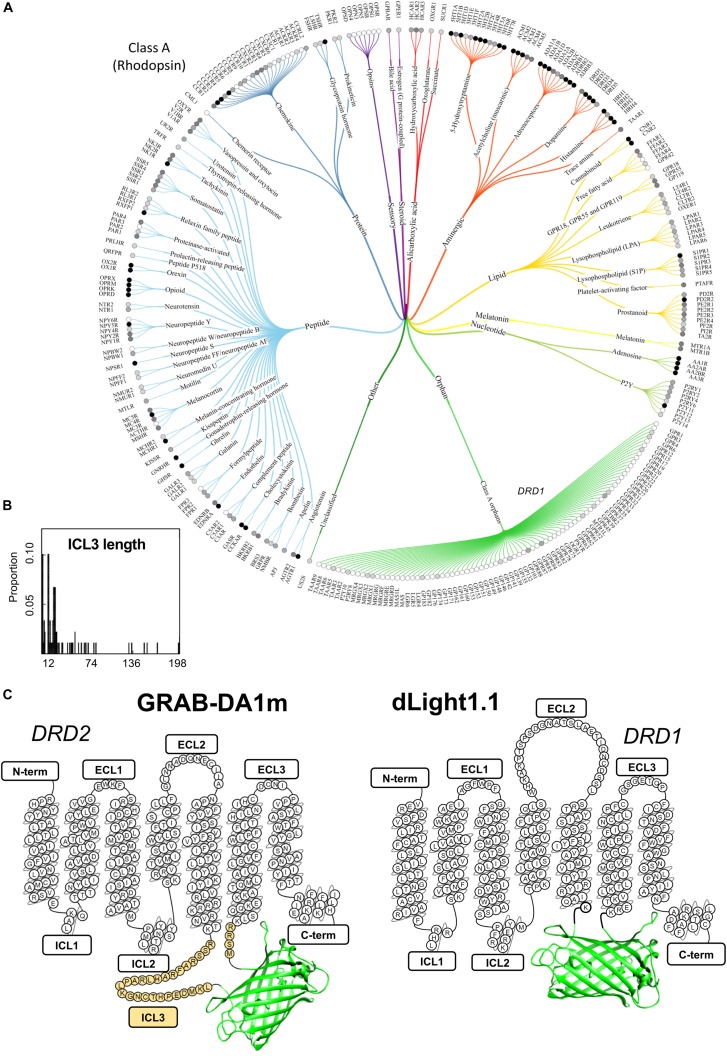
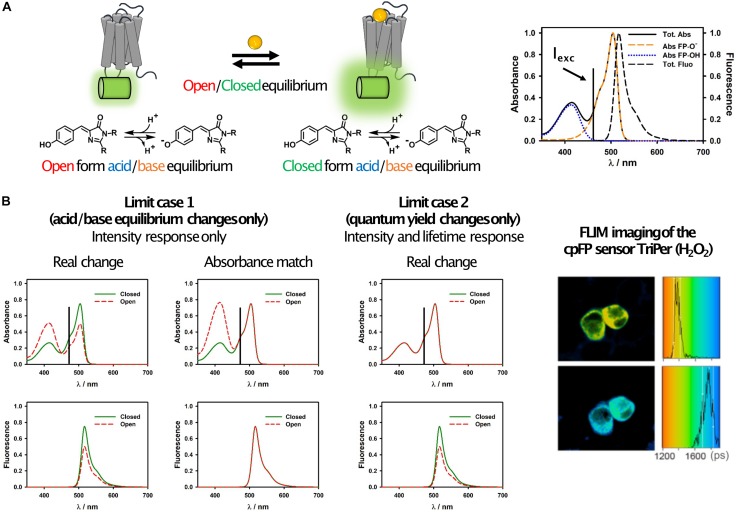
Neurochemicals have a large impact on brain states and animal behavior but are notoriously hard to detect accurately in the living brain. Recently developed genetically encoded sensors obtained from engineering a circularly permuted green fluorescent protein into G-protein coupled receptors (GPCR) provided a vital boost to neuroscience, by innovating the way we monitor neural communication. These new probes are becoming widely successful due to their flexible combination with state of the art optogenetic tools and imaging techniques, mainly fiber photometry and 2-photon microscopy, to dissect dynamic changes in brain chemicals with unprecedented spatial and temporal resolution. Here, we highlight current approaches and challenges as well as novel insights in the process of GPCR sensor development, and discuss possible future directions of the field.
神经化学物质对大脑状态和动物行为有很大影响,但在活体大脑中准确检测它们却非常困难。最近开发的基因编码传感器,是通过将环状排列的绿色荧光蛋白工程化到G蛋白偶联受体(GPCR)中获得的,它通过创新我们监测神经通讯的方式,为神经科学带来了至关重要的推动。这些新探针正变得广泛成功,因为它们能与最先进的光遗传学工具和成像技术(主要是光纤光度法和双光子显微镜)灵活结合,以前所未有的空间和时间分辨率剖析大脑化学物质的动态变化。在这里,我们强调了GPCR传感器开发过程中的当前方法和挑战以及新见解,并讨论了该领域可能的未来方向。