Department of Neurology, Kaohsiung Chang Gung Memorial Hospital and Chang Gung University College of Medicine, Kaohsiung, Taiwan.
Center for Parkinson's Disease, Kaohsiung Chang Gung Memorial Hospital and Chang Gung University College of Medicine, Kaohsiung, Taiwan.
Cancer Med. 2020 Jun;9(11):3918-3931. doi: 10.1002/cam4.3005. Epub 2020 Apr 7.
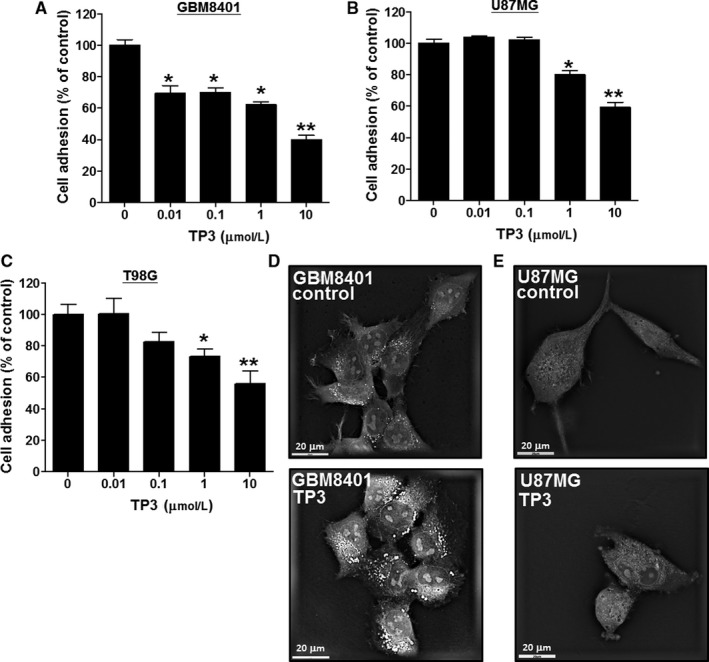
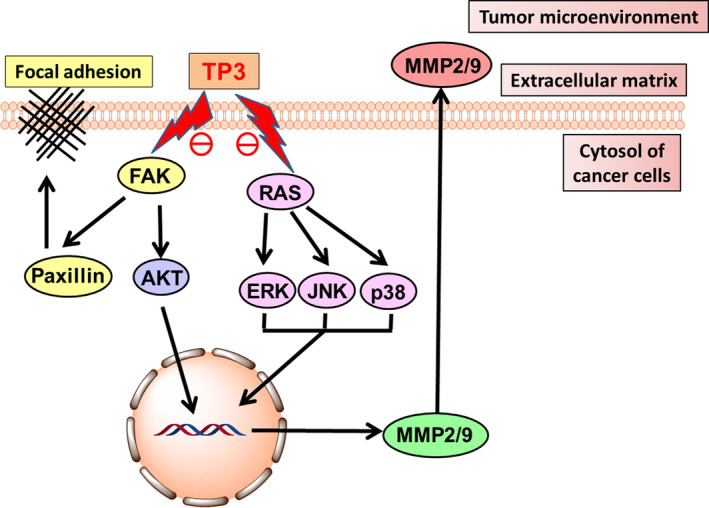
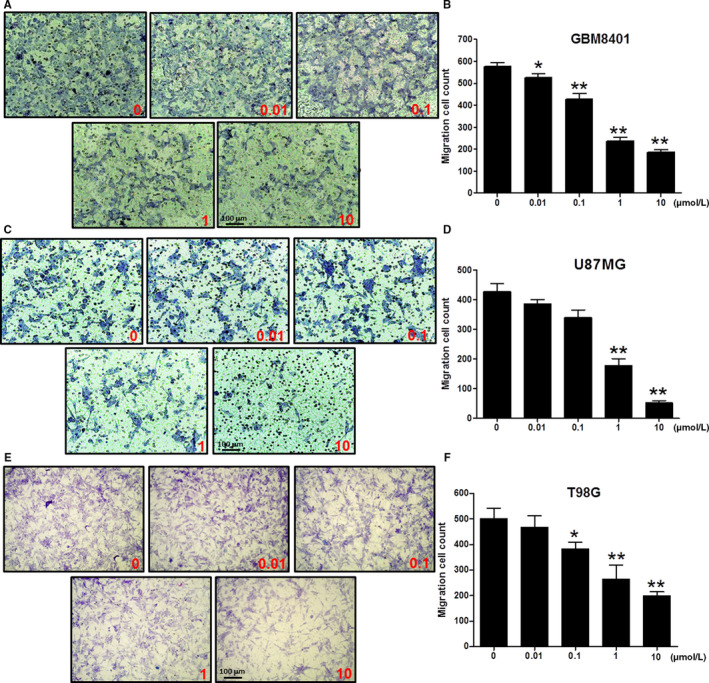
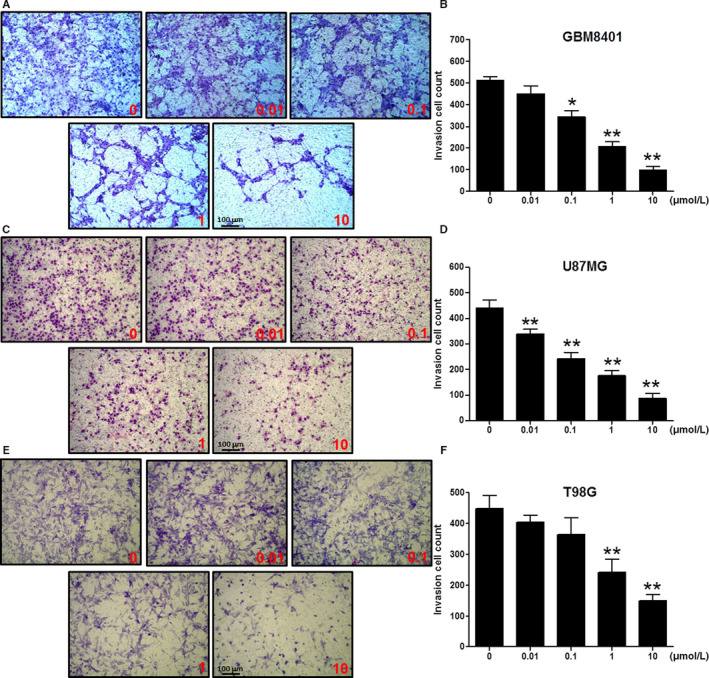
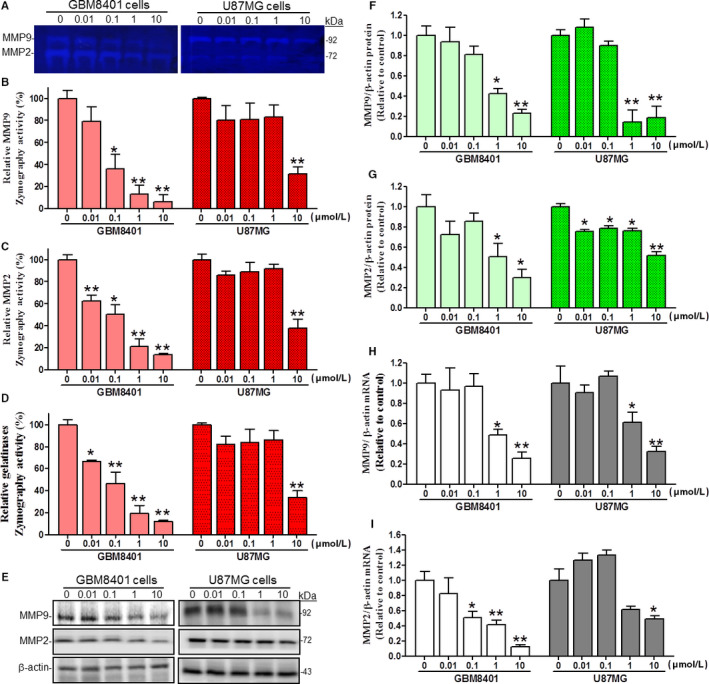
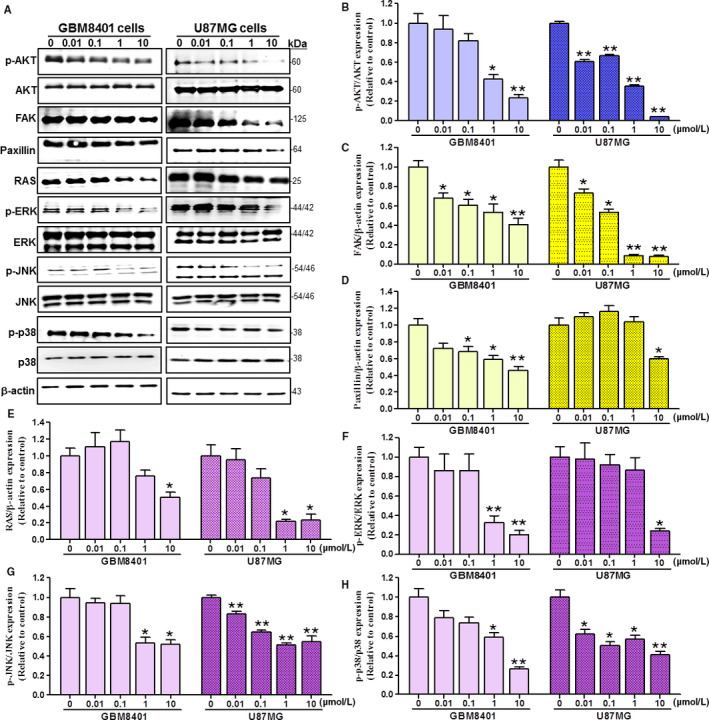
Glioblastoma multiforme (GBM) is a cancer of the central nervous system with limited therapeutic outcomes. Infiltrating cancer cells are the contributing factor to high GBM malignancy. The intracranial brain cancer cell infiltration is a complex cascade involving adhesion, migration, and invasion. An arsenal of natural products has been under exploration to overcome GBM malignancy. This study applied the antimicrobial peptide tilapia piscidin 3 (TP3) to GBM8401, U87MG, and T98G cells. The cellular assays and microscopic observations showed that TP3 significantly attenuated cell adhesion, migration, and invasion. A live-cell video clip showed the inhibition of filopodia protrusions and cell attachment. Probing at the molecular levels showed that the proteolytic activities (from secretion), the mRNA and protein expression levels of matrix metalloproteinases-2 and -9 were attenuated. This result strongly evidenced that both invasion and metastasis were inhibited, although metastatic GBM is rare. Furthermore, the protein expression levels of cell-mobilization regulators focal adhesion kinase and paxillin were decreased. Similar effects were observed in small GTPase (RAS), phosphorylated protein kinase B (AKT) and MAP kinases such as extracellular signal-regulated kinases (ERK), JNK, and p38. Overall, TP3 showed promising activities to prevent cell infiltration and metastasis through modulating the tumor microenvironment balance, suggesting that TP3 merits further development for use in GBM treatments.
多形性胶质母细胞瘤(GBM)是一种中枢神经系统癌症,治疗效果有限。浸润性癌细胞是导致 GBM 恶性程度高的原因。颅内脑癌细胞浸润是一个涉及黏附、迁移和侵袭的复杂级联反应。人们一直在探索一系列天然产物,以克服 GBM 的恶性程度。本研究将抗菌肽罗非鱼抗菌肽 3(TP3)应用于 GBM8401、U87MG 和 T98G 细胞。细胞实验和显微镜观察表明,TP3 显著减弱了细胞黏附、迁移和侵袭。活细胞视频显示,其抑制了丝状伪足的突起和细胞附着。在分子水平的探测表明,基质金属蛋白酶-2 和 -9 的蛋白水解活性(来自分泌)、mRNA 和蛋白表达水平均减弱。这一结果有力地证明了侵袭和转移都受到了抑制,尽管转移性 GBM 较为罕见。此外,细胞迁移调节剂黏着斑激酶和桩蛋白的蛋白表达水平降低。在小 GTP 酶(RAS)、磷酸化蛋白激酶 B(AKT)和细胞外信号调节激酶(ERK)、JNK 和 p38 等 MAP 激酶中也观察到了类似的效果。总的来说,TP3 通过调节肿瘤微环境平衡显示出预防细胞浸润和转移的有前景的活性,表明 TP3 值得进一步开发用于 GBM 治疗。