Cardiovascular Genetics Center, University of Girona-IDIBGI, C/ Dr Castany s/n, Parc Hospitalari Martí i Julià (M-2), 17190 Salt (Girona), Spain; Medical Science Department, School of Medicine, University of Girona, Girona, Spain; Centro de Investigación Biomédica en Red en Enfermedades Cardiovasculares (CIBERCV), Madrid, Spain; Biochemistry and Molecular Genetics Department, Hospital Clinic, University of Barcelona-IDIBAPS, Barcelona, Spain.
Medical Science Department, School of Medicine, University of Girona, Girona, Spain; Arrhythmias Unit, Hospital Sant Joan de Déu, University of Barcelona, Barcelona, Spain.
EBioMedicine. 2020 Apr;54:102732. doi: 10.1016/j.ebiom.2020.102732. Epub 2020 Apr 5.
Accurate interpretation of rare genetic variants is a challenge for clinical translation. Updates in recommendations for rare variant classification require the reanalysis and reclassification. We aim to perform an exhaustive re-analysis of rare variants associated with inherited arrhythmogenic syndromes, which were classified ten years ago, to determine whether their classification aligns with current standards and research findings.
In 2010, the rare variants identified through genetic analysis were classified following recommendations available at that time. Nowadays, the same variants have been reclassified following current American College of Medical Genetics and Genomics recommendations.
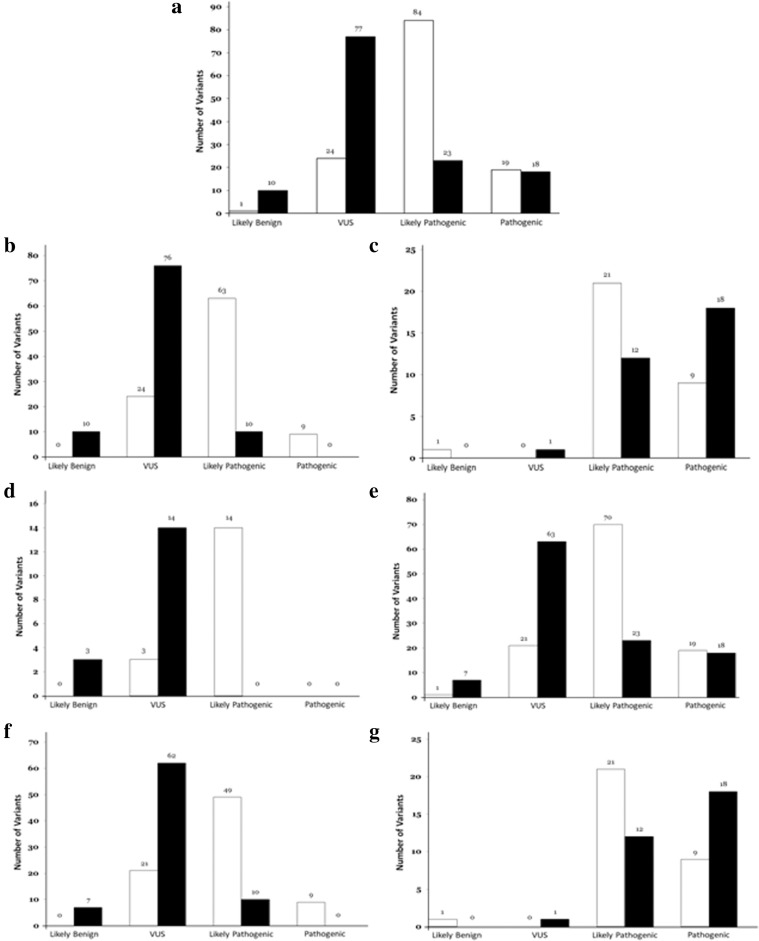
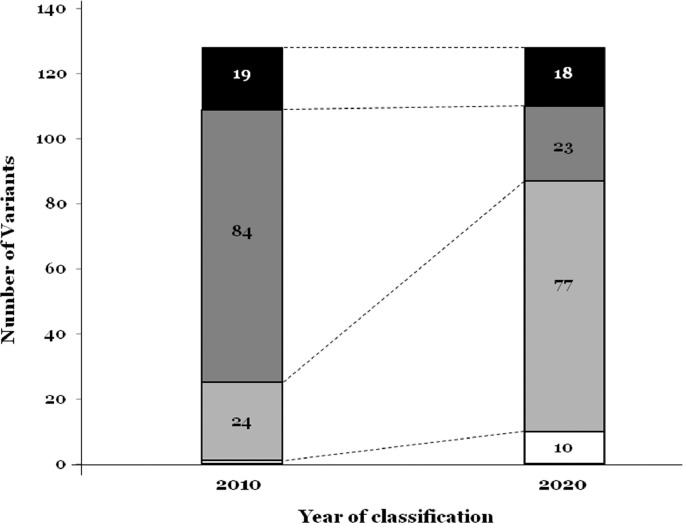
Our cohort included 104 cases diagnosed with inherited arrhythmogenic syndromes and 17 post-mortem cases in which inherited arrhythmogenic syndromes was cause of death. 71.87% of variants change their classification. While 65.62% of variants were classified as likely pathogenic in 2010, after reanalysis, only 17.96% remain as likely pathogenic. In 2010, 18.75% of variants were classified as uncertain role but nowadays 60.15% of variants are classified of unknown significance.
Reclassification occurred in more than 70% of rare variants associated with inherited arrhythmogenic syndromes. Our results support the periodical reclassification and personalized clinical translation of rare variants to improve diagnosis and adjust treatment.
Obra Social "La Caixa Foundation" (ID 100010434, LCF/PR/GN16/50290001 and LCF/PR/GN19/50320002), Fondo Investigacion Sanitaria (FIS PI16/01203 and FIS, PI17/01690), Sociedad Española de Cardiología, and "Fundacio Privada Daniel Bravo Andreu".
准确解读罕见遗传变异是临床转化的挑战。罕见变异分类建议的更新需要重新分析和重新分类。我们旨在对十年前分类的遗传性心律失常综合征相关罕见变异进行详尽的重新分析,以确定其分类是否与当前标准和研究发现一致。
2010 年,根据当时可用的建议对通过遗传分析确定的罕见变异进行分类。如今,根据美国医学遗传学与基因组学学院的最新建议对相同的变异进行了重新分类。
我们的队列包括 104 例遗传性心律失常综合征诊断病例和 17 例遗传性心律失常综合征为死因的尸检病例。71.87%的变异改变了分类。虽然 2010 年 65.62%的变异被归类为可能致病性,但重新分析后,只有 17.96%仍然为可能致病性。2010 年,18.75%的变异被归类为不确定作用,但如今 60.15%的变异被归类为意义不明。
与遗传性心律失常综合征相关的罕见变异中,超过 70%的变异发生了重新分类。我们的结果支持定期重新分类和个性化临床转化罕见变异,以改善诊断并调整治疗。
Obra Social "La Caixa Foundation"(ID 100010434、LCF/PR/GN16/50290001 和 LCF/PR/GN19/50320002)、Fondo Investigacion Sanitaria(FIS PI16/01203 和 FIS、PI17/01690)、西班牙心脏病学会和“Fundacio Privada Daniel Bravo Andreu”。