Kowanda Michelle, Smith Rebecca Sheedy, Lundy Jamie, Kentros Catherine, Kleinman Elisheva, Walsh Lauren Kasparson, Schratt Gerhard, Taylor Cora M, Chung Wendy K
Geisinger Autism & Developmental Medicine Institute, Lewisburg, PA.
Laboratory of Systems Neuroscience, Institute for Neuroscience, Department of Health Science and Technology, Swiss Federal Institute of Technology ETH, Zurich, Switzerland.
Genet Med Open. 2024 Apr 9;2:101845. doi: 10.1016/j.gimo.2024.101845. eCollection 2024.
Limited knowledge about disease mechanisms, few published cases, and the lack of functional assessment of variants for neurodevelopmental genetic disorders challenge diagnostic classification for variants and increase the frequency of variants of uncertain significance (VUS). Because inheritance patterns aid in variant interpretation for neurodevelopmental conditions, genetic testing including only the proband leads to larger numbers of VUS than testing strategies that include the parents.
We reinterpreted genetic variants submitted to the Simons Searchlight research registry using American College of Medical Genetics and Genomics variant interpretation guidelines, familial cascade testing, and literature curation with annual VUS reevaluation.
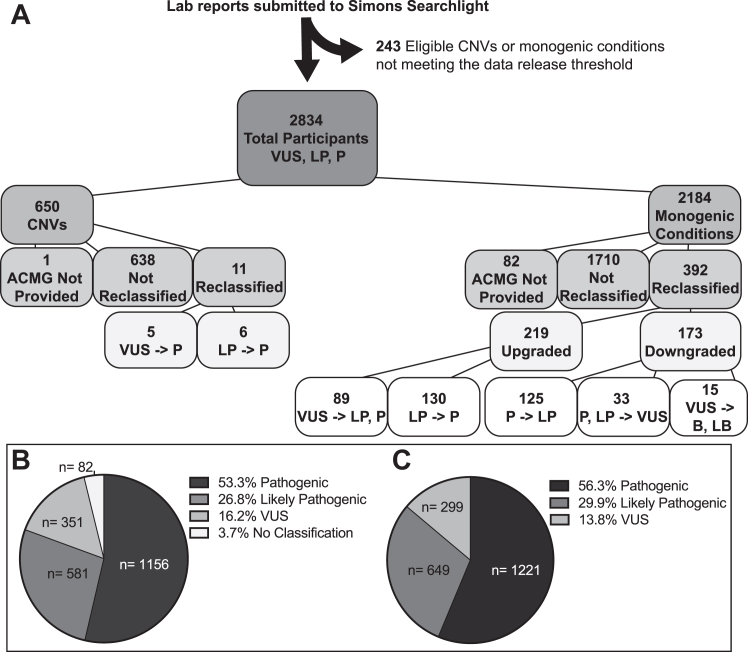
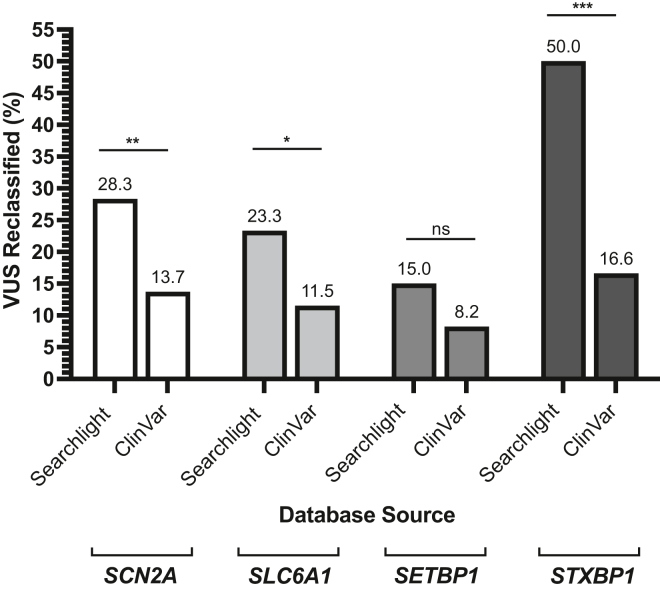
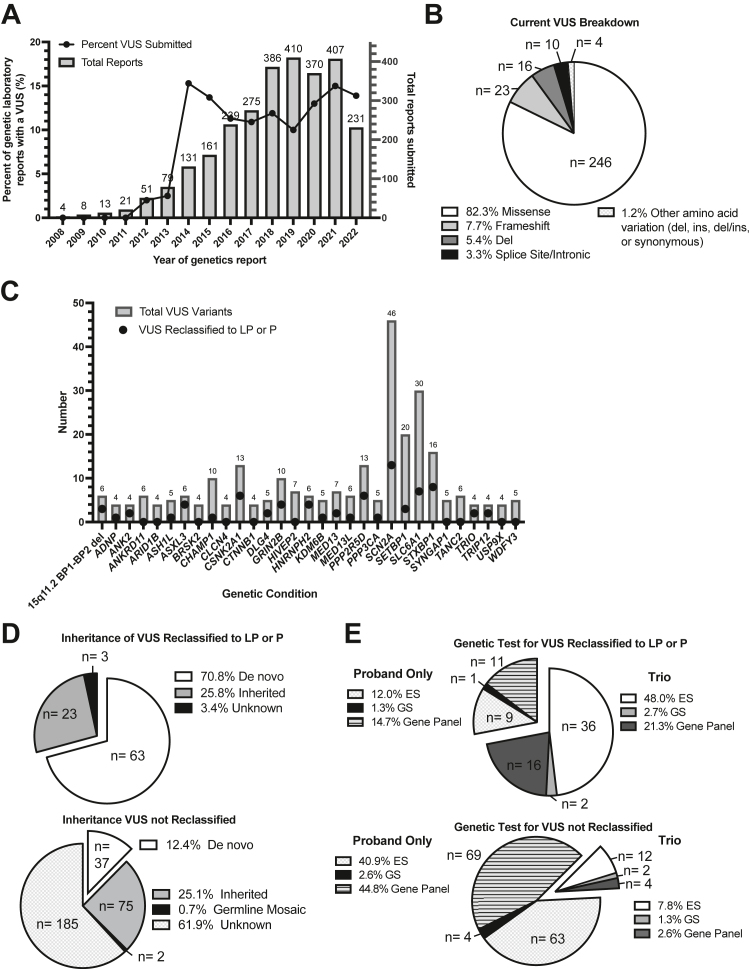
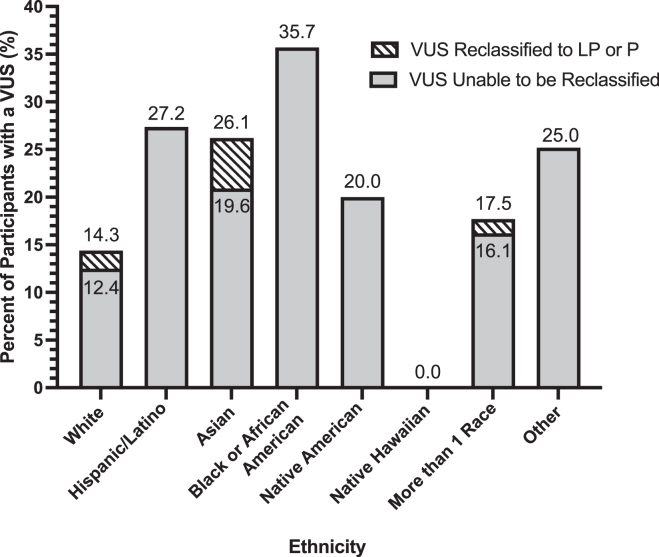
Simons Searchlight has independently evaluated 2834 genetic laboratory reports; 20.4% of variants (1.7% copy-number variants and 18.7% monogenic variants) were reclassified with 230 upgrades and 173 downgrades in pathogenicity. Of 351 monogenic VUS on the original clinical test report, 25.4% were reclassified as likely pathogenic or pathogenic. VUS in , , or were more likely to have VUS reclassified compared with variants in other genes.
Regular reevaluation of neurodevelopmental genetic variants can be helpful because relevant variant reclassifications occur frequently and may affect clinical care. Simons Searchlight contributes to the international neurodevelopmental community by systematically reviewing uncertain variants annually and providing reclassified variants to participants, researchers, and ClinVar.
关于疾病机制的知识有限、已发表的病例较少,以及缺乏对神经发育性遗传疾病变异的功能评估,这些都对变异的诊断分类构成挑战,并增加了意义未明变异(VUS)的出现频率。由于遗传模式有助于神经发育疾病变异的解释,仅对先证者进行基因检测比包括父母在内的检测策略会导致更多的VUS。
我们使用美国医学遗传学与基因组学学会的变异解释指南、家族级联检测以及每年对VUS进行重新评估的文献整理,对提交至西蒙斯灯塔研究登记处的基因变异进行重新解释。
西蒙斯灯塔已独立评估了2834份基因实验室报告;20.4%的变异(1.7%为拷贝数变异,18.7%为单基因变异)被重新分类,其中230个变异的致病性被提升,173个变异的致病性被降低。在原始临床检测报告中的351个单基因VUS中,25.4%被重新分类为可能致病或致病。与其他基因的变异相比,位于 、 或 中的VUS更有可能被重新分类。
定期重新评估神经发育性基因变异可能会有所帮助,因为相关变异的重新分类频繁发生,可能会影响临床护理。西蒙斯灯塔通过每年系统地审查不确定变异,并向参与者、研究人员和临床变异数据库(ClinVar)提供重新分类的变异,为国际神经发育领域做出了贡献。