Ramos Marina, Dominici Franco, Luzi Francesca, Jiménez Alfonso, Garrigós Maria Carmen, Torre Luigi, Puglia Debora
Department of Analytical Chemistry, Nutrition & Food Sciences, University of Alicante, San Vicente del Raspeig, ES-03690 Alicante, Spain.
Department of Civil and Environmental Engineering, University of Perugia, 05100 Terni, Italy.
Polymers (Basel). 2020 Apr 6;12(4):835. doi: 10.3390/polym12040835.
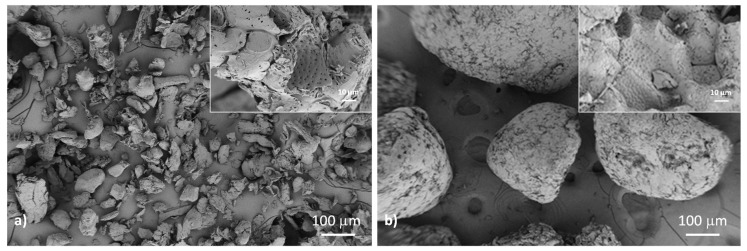
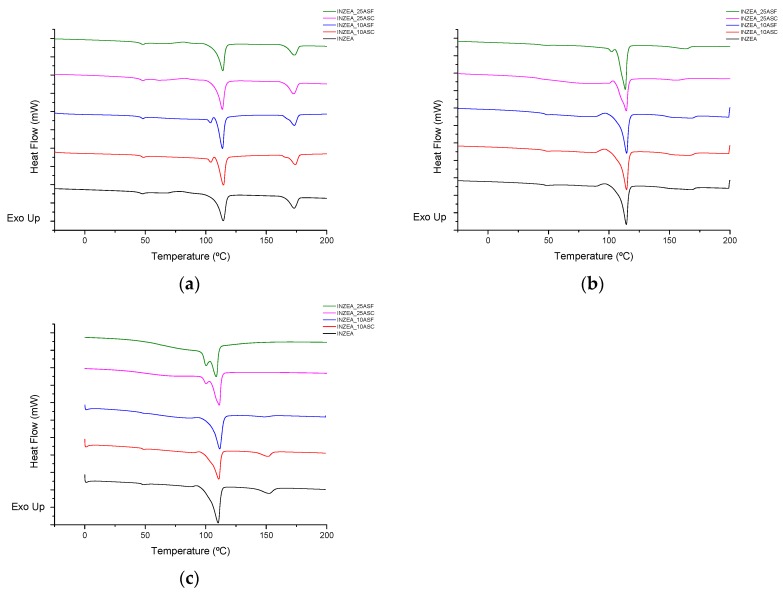
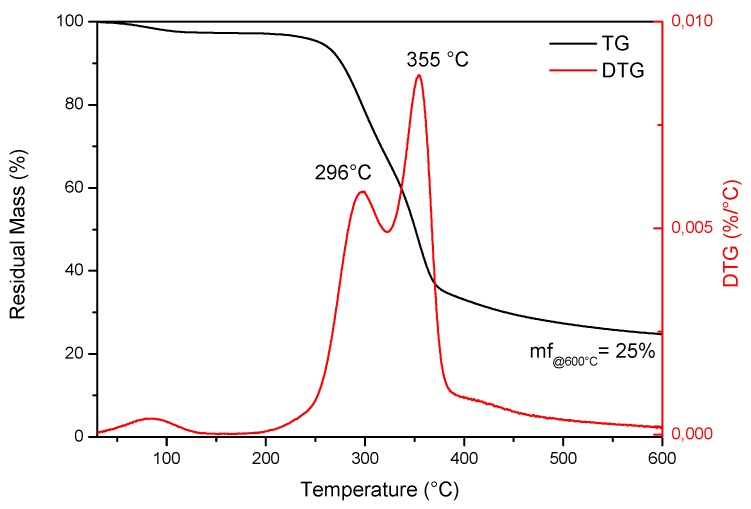
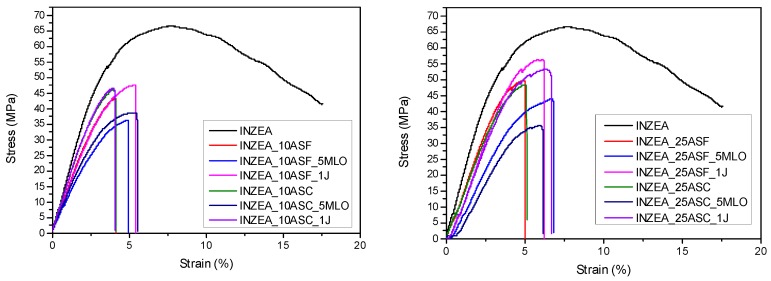
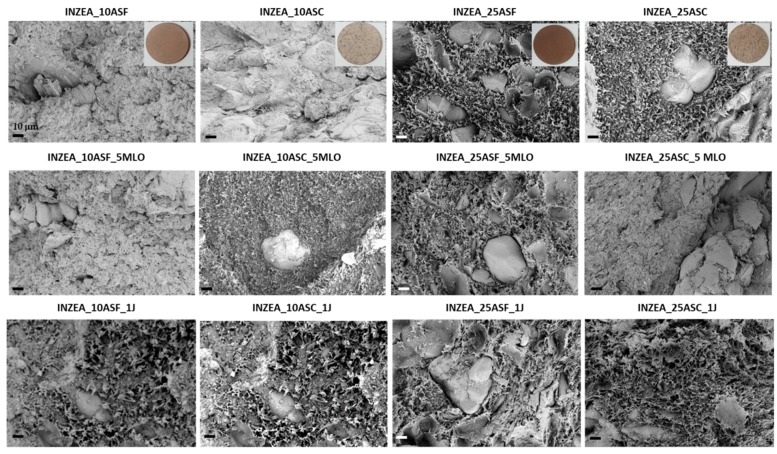
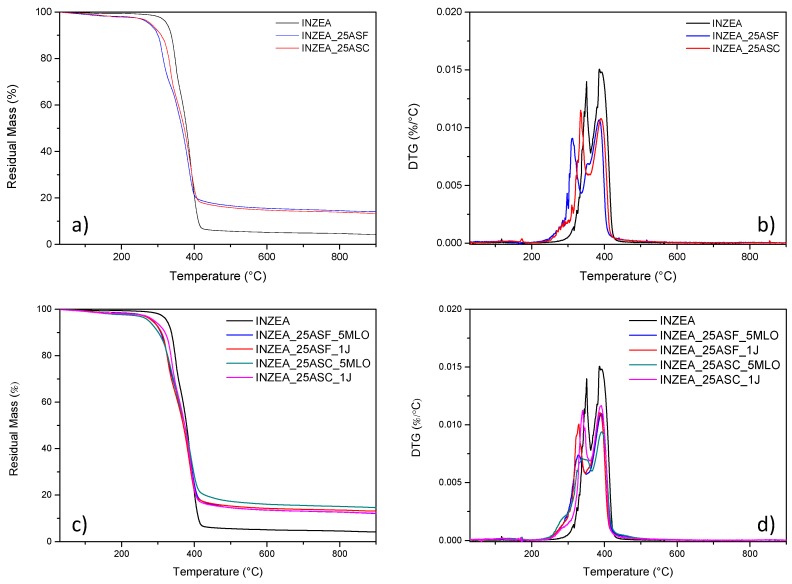
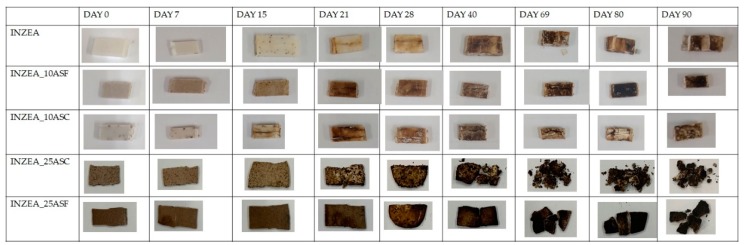
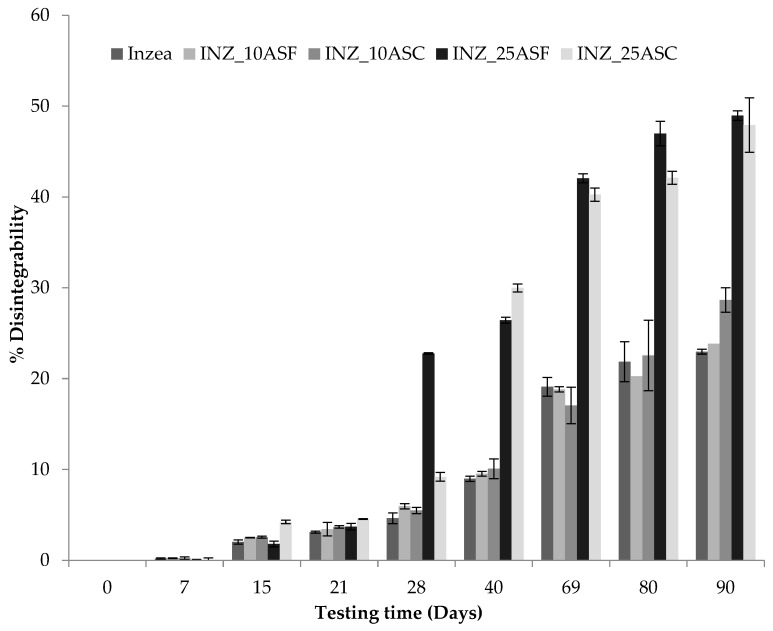
Polyester-based biocomposites containing INZEA F2 biopolymer and almond shell powder (ASP) at 10 and 25 wt % contents with and without two different compatibilizers, maleinized linseed oil and Joncryl ADR 4400, were prepared by melt blending in an extruder, followed by injection molding. The effect of fine (125-250 m) and coarse (500-1000 m) milling sizes of ASP was also evaluated. An improvement in elastic modulus was observed with the addition of< both fine and coarse ASP at 25 wt %. The addition of maleinized linseed oil and Joncryl ADR 4400 produced some compatibilizing effect at low filler contents while biocomposites with a higher amount of ASP still presented some gaps at the interface by field emission scanning electron microscopy. Some decrease in thermal stability was shown which was related to the relatively low thermal stability and disintegration of the lignocellulosic filler. The added modifiers provided some enhanced thermal resistance to the final biocomposites. Thermal analysis by differential scanning calorimetry and thermogravimetric analysis suggested the presence of two different polyesters in the polymer matrix, with one of them showing full disintegration after 28 and 90 days for biocomposites containing 25 and 10 wt %, respectively, under composting conditions. The developed biocomposites have been shown to be potential polyester-based matrices for use as compostable materials at high filler contents.
通过在挤出机中熔融共混,然后注塑成型,制备了含有10%和25%重量比的INZEA F2生物聚合物和杏仁壳粉(ASP)的聚酯基生物复合材料,其中添加和未添加两种不同的增容剂,即马来酸化亚麻籽油和Joncryl ADR 4400。还评估了ASP细磨(125 - 250微米)和粗磨(500 - 1000微米)尺寸的影响。在添加25%重量比的细磨和粗磨ASP时,观察到弹性模量有所提高。在低填料含量下,添加马来酸化亚麻籽油和Joncryl ADR 4400产生了一定的增容效果,而通过场发射扫描电子显微镜观察,含有较高ASP含量的生物复合材料在界面处仍存在一些间隙。热稳定性出现了一些下降,这与木质纤维素填料相对较低的热稳定性和分解有关。添加的改性剂为最终的生物复合材料提供了一定的热阻增强。差示扫描量热法和热重分析的热分析表明,聚合物基体中存在两种不同的聚酯,在堆肥条件下,对于分别含有25%和10%重量比的生物复合材料,其中一种聚酯在28天和90天后分别完全分解。已证明所开发的生物复合材料在高填料含量下有潜力作为可堆肥材料的聚酯基基体。