Department of Oncology, Tongji Hospital, Tongji Medical College, Huazhong University of Science and Technology, 430030, Wuhan, China.
Biological Sciences, Faculty of Environmental and Life Sciences, University of Southampton, Southampton, SO17 1BJ, UK.
Cell Death Dis. 2020 Apr 8;11(4):224. doi: 10.1038/s41419-020-2415-2.
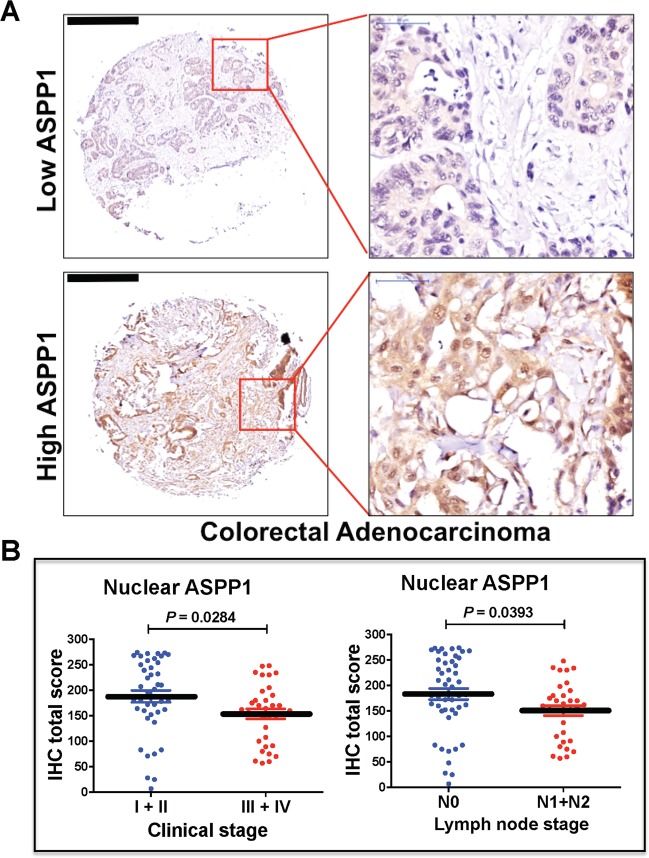
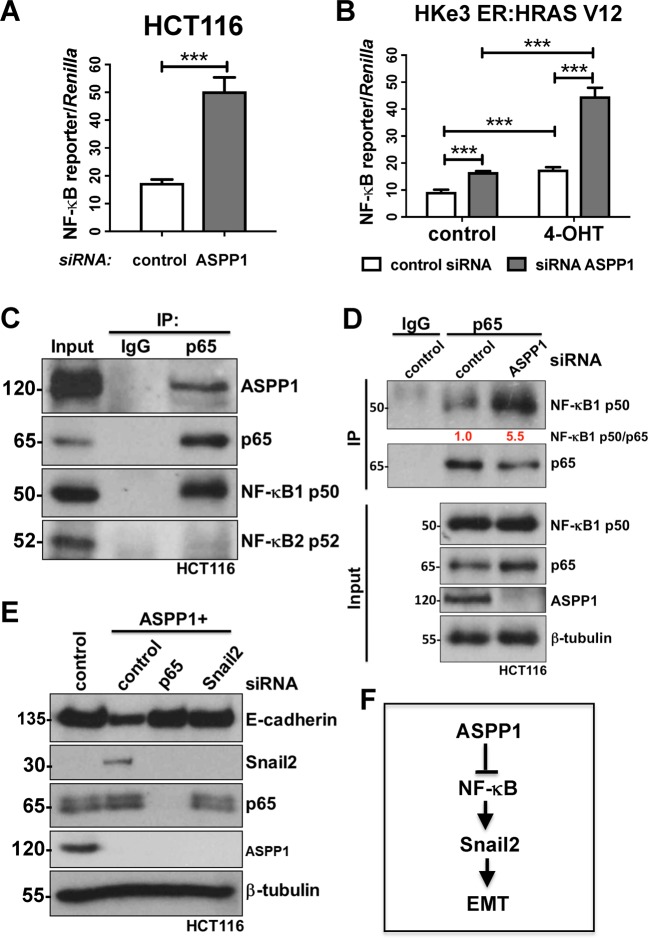
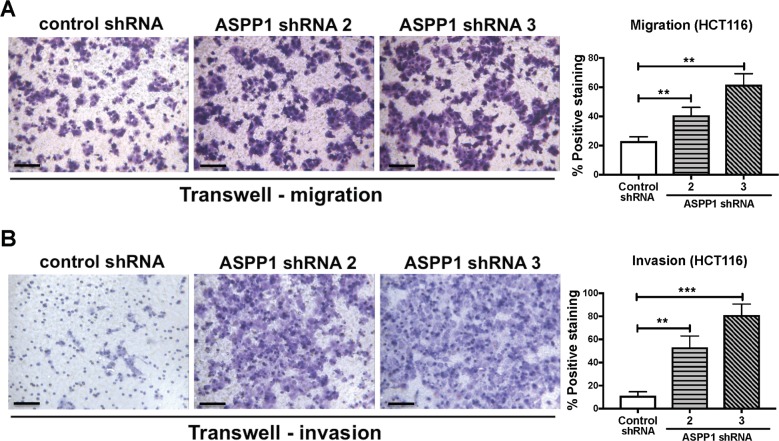
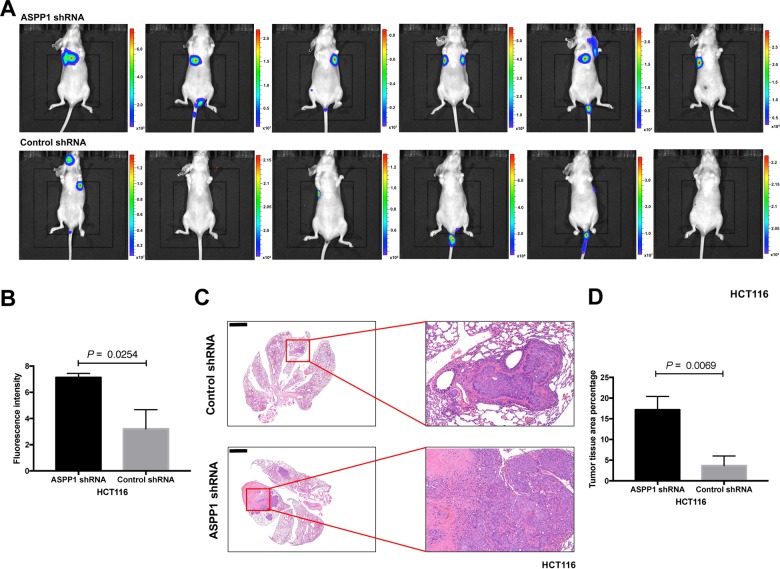
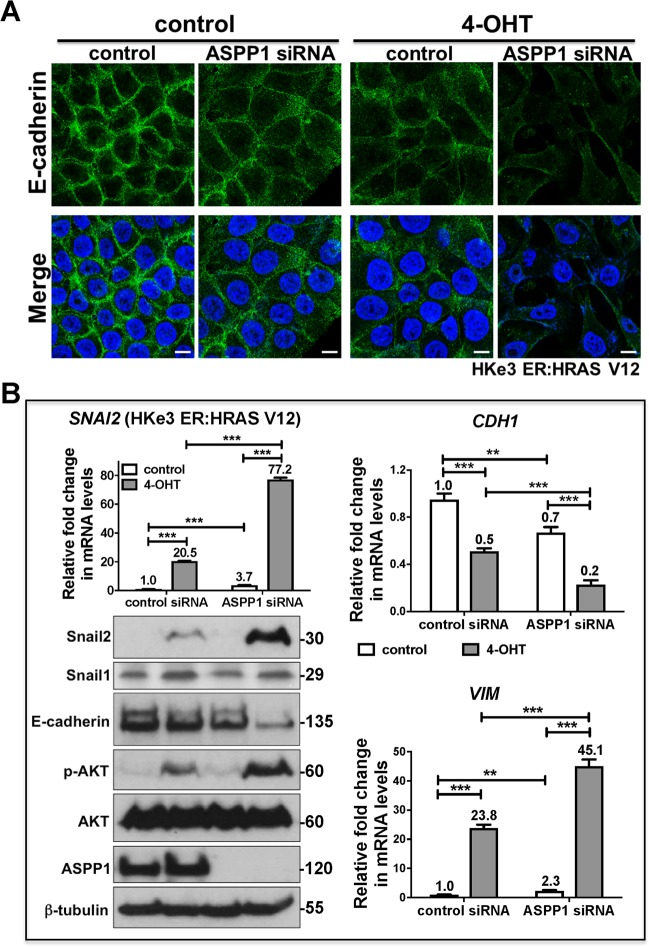
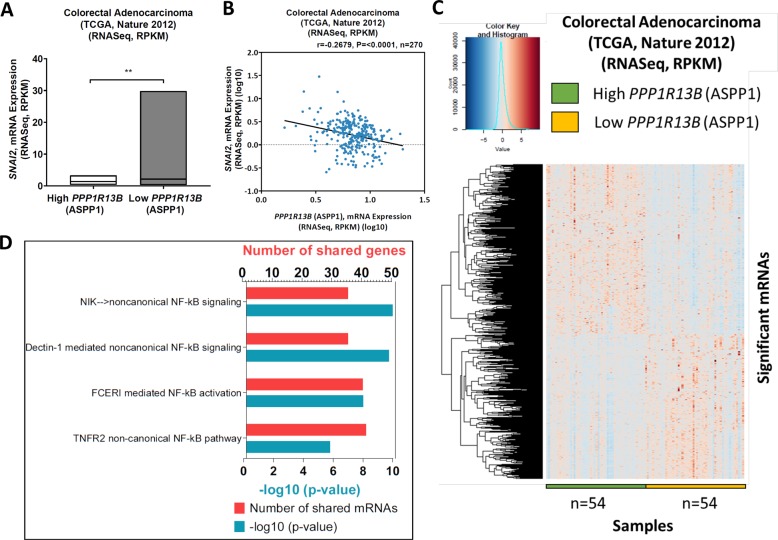
The apoptosis-stimulating protein of p53 (ASPP) family of proteins can regulate apoptosis by interacting with the p53 family and have been identified to play an important role in cancer progression. Previously, we have demonstrated that ASPP2 downregulation can promote invasion and migration by controlling β-catenin-dependent regulation of ZEB1, however, the role of ASPP1 in colorectal cancer (CRC) remains unclear. We analyzed data from The Cancer Genome Atlas (TCGA) and coupled this to in vitro experiments in CRC cell lines as well as to experimental pulmonary metastasis in vivo. Tissue microarrays of CRC patients with information of clinical-pathological parameters were also used to investigate the expression and function of ASPP1 in CRC. Here, we report that loss of ASPP1 is capable of enhancing migration and invasion in CRC, both in vivo and in vitro. We demonstrate that depletion of ASPP1 could activate expression of Snail2 via the NF-κB pathway and in turn, induce EMT; and this process is further exacerbated in RAS-mutated CRC. ASPP1 could be a prognostic factor in CRC, and the use of NF-κB inhibitors may provide new strategies for therapy against metastasis in ASPP1-depleted CRC patients.
p53 家族凋亡刺激蛋白(ASPP)家族的蛋白质可以通过与 p53 家族相互作用来调节细胞凋亡,并已被确定在癌症进展中发挥重要作用。以前,我们已经证明 ASPP2 的下调可以通过控制β-连环蛋白依赖性的 ZEB1 调节来促进侵袭和迁移,但是 ASPP1 在结直肠癌(CRC)中的作用尚不清楚。我们分析了来自癌症基因组图谱(TCGA)的数据,并将其与 CRC 细胞系中的体外实验以及体内实验性肺转移相结合。还使用了具有临床病理参数信息的 CRC 患者的组织微阵列来研究 ASPP1 在 CRC 中的表达和功能。在这里,我们报告说 ASPP1 的缺失能够增强 CRC 中的迁移和侵袭,无论是在体内还是体外。我们证明,ASPP1 的耗竭可以通过 NF-κB 途径激活 Snail2 的表达,并进而诱导 EMT;并且在 RAS 突变型 CRC 中,这一过程进一步加剧。ASPP1 可能是 CRC 的一个预后因素,NF-κB 抑制剂的使用可能为针对 ASPP1 耗竭型 CRC 患者转移的治疗提供新策略。