Suo Danfeng, Zeng Sanwu, Zhang Junling, Meng Linghe, Weng Lishuo
Department of Dermatology, Tianjin First Center Hospital, Tianjin 300192, P.R. China.
Department of Dermatology, Tianjin Academy of Traditional Chinese Medicine Affiliated Hospital, Tianjin 300120, P.R. China.
Exp Ther Med. 2020 May;19(5):3227-3238. doi: 10.3892/etm.2020.8590. Epub 2020 Mar 9.
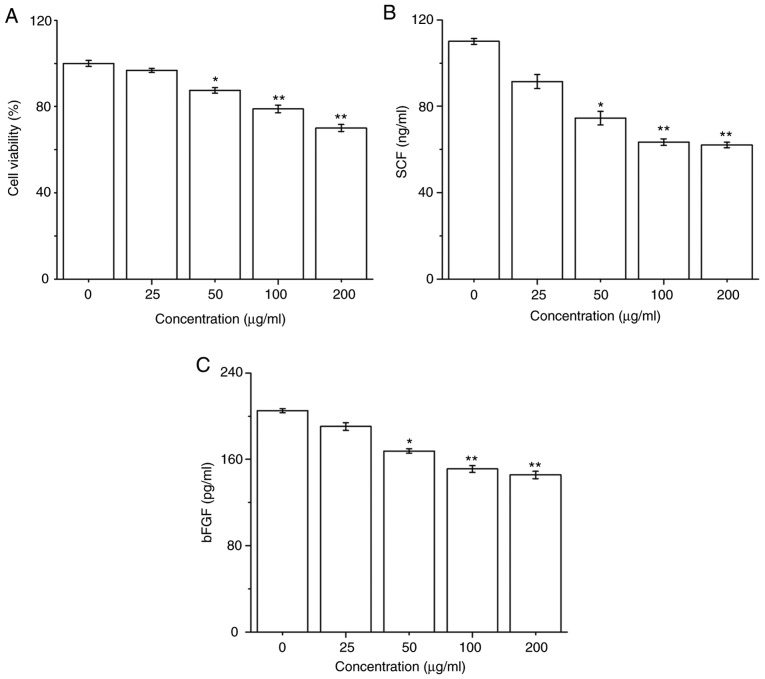
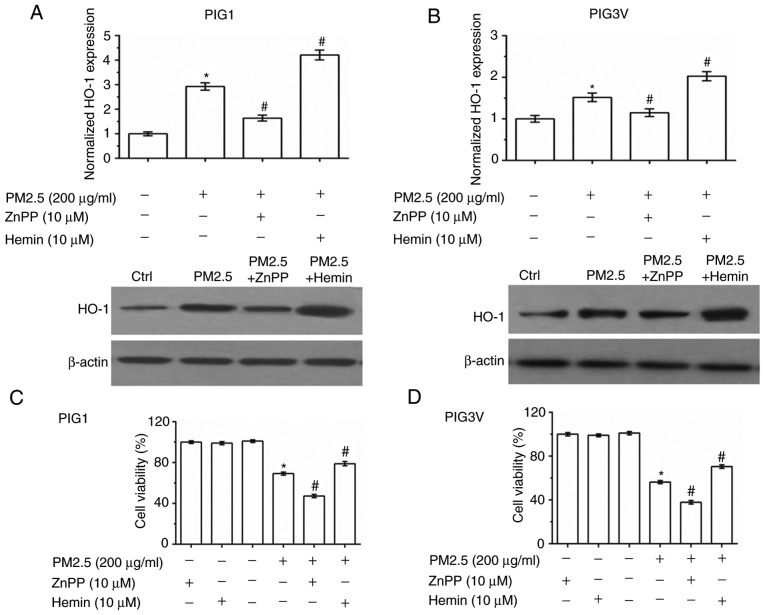
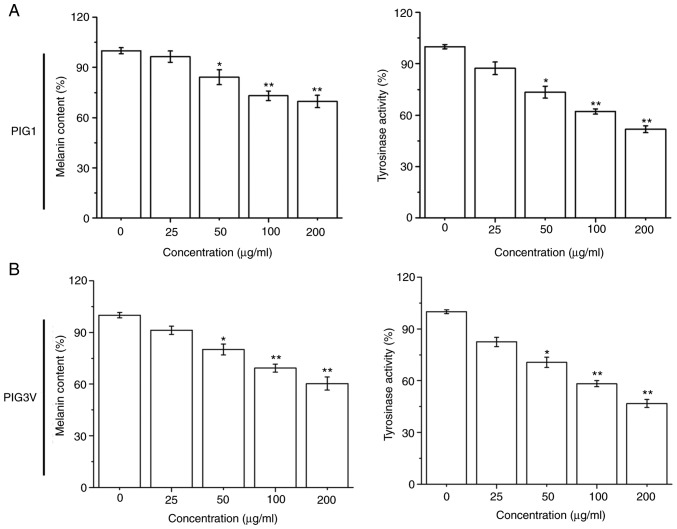
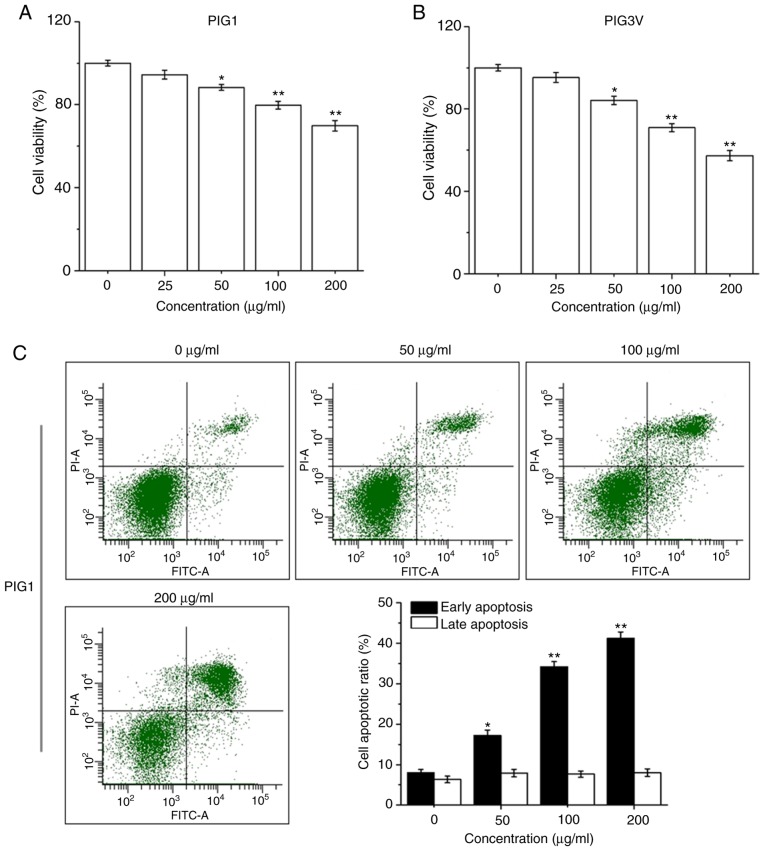
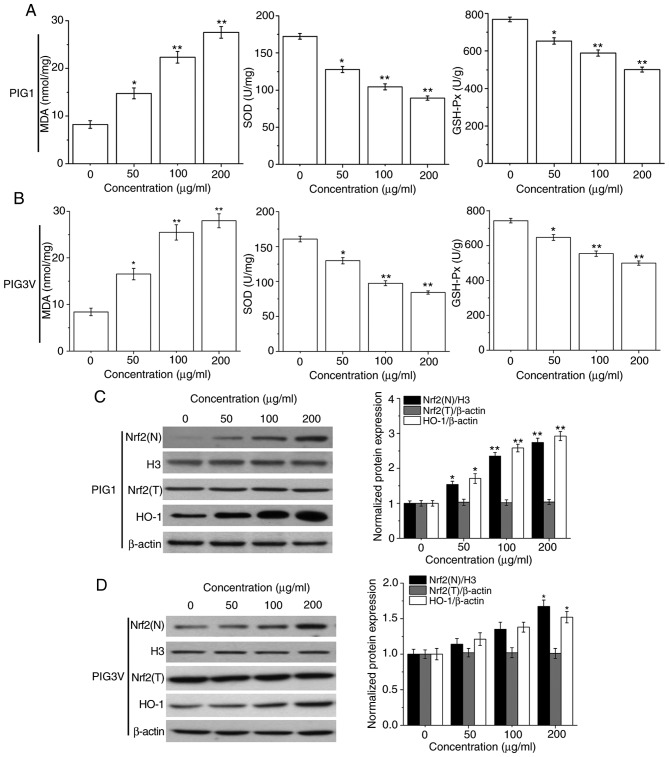
Recent growing evidence suggested that particulate matter 2.5 (PM2.5) has strong toxic effects on skin systems. However, the possible effects and the mechanisms of PM2.5 on vitiligo remain poorly understood. Therefore, the present study aimed to further investigate the effects and possible mechanisms of PM2.5 on vitiligo. Human keratinocytes (HaCaT cells) and human melanocytes (PIG1 cells and PIG3V cells) were exposed to PM2.5 (0-200 µg/ml) for 24 h. The cell viability of the three cell lines was measured by a Cell Counting Kit-8 assay. The secretions of stem cell factor (SCF) and basic fibroblast growth factor (bFGF) in HaCaT cells were evaluated by ELISA. The melanin contents, cellular tyrosinase activity, apoptosis, cell migration, malondialdehyde (MDA) contents, superoxide dismutase (SOD) levels, glutathione peroxidase (GSH-Px) levels and related protein expressions in PIG1 cells and PIG3V cells were evaluated by a NaOH assay, DOPA assay, Annexin V-FITC/Propidium Iodide staining, MDA assay, SOD assay, GSH-Px assay and western blotting, respectively. It was demonstrated that PM2.5 exposure inhibited cell viability of all three cell lines (HaCaT, PIG1 and PIG3V cells). PM2.5 exposure attenuated the secretions of SCF and bFGF in HaCaT cells. Moreover, PM2.5 exposure attenuated the activation of tyrosinase and melanogenesis, inhibited cell migration, and induced apoptosis and oxidative stress injury in PIG1 cells and PIG3V cells. In addition, PM2.5 exposure caused upregulated cytosolic cytochrome C and activated caspase-3 in PIG1 cells and PIG3V cells. Furthermore, PM2.5 exposure activated the nuclear factor erythroid 2-related factor 2 and heme oxygenase-1 signaling pathway. The present results suggested that PM2.5 exposure could inhibit the secretions of SCF and bFGF in keratinocytes, and cause oxidative stress injury and melanin metabolic disorder in melanocytes. Therefore, PM2.5 could be a new risk factor for vitiligo.
最近越来越多的证据表明,细颗粒物2.5(PM2.5)对皮肤系统具有强烈的毒性作用。然而,PM2.5对白癜风的可能影响及其机制仍知之甚少。因此,本研究旨在进一步探讨PM2.5对白癜风的影响及其可能的机制。将人角质形成细胞(HaCaT细胞)和人黑素细胞(PIG1细胞和PIG3V细胞)暴露于PM2.5(0 - 200 µg/ml)中24小时。通过细胞计数试剂盒-8检测法测定这三种细胞系的细胞活力。通过酶联免疫吸附测定法评估HaCaT细胞中干细胞因子(SCF)和碱性成纤维细胞生长因子(bFGF)的分泌情况。分别通过氢氧化钠检测法、多巴检测法、膜联蛋白V-异硫氰酸荧光素/碘化丙啶染色、丙二醛检测法、超氧化物歧化酶检测法、谷胱甘肽过氧化物酶检测法和蛋白质免疫印迹法评估PIG1细胞和PIG3V细胞中的黑色素含量、细胞酪氨酸酶活性、细胞凋亡、细胞迁移、丙二醛(MDA)含量、超氧化物歧化酶(SOD)水平、谷胱甘肽过氧化物酶(GSH-Px)水平及相关蛋白表达。结果表明,暴露于PM2.5会抑制所有三种细胞系(HaCaT、PIG1和PIG3V细胞)的细胞活力。暴露于PM2.5会减弱HaCaT细胞中SCF和bFGF的分泌。此外,暴露于PM2.5会减弱酪氨酸酶的激活和黑色素生成,抑制细胞迁移,并诱导PIG1细胞和PIG3V细胞凋亡及氧化应激损伤。此外,暴露于PM2.5会导致PIG1细胞和PIG3V细胞中细胞质细胞色素C上调并激活半胱天冬酶-3。此外,暴露于PM2.5会激活核因子红细胞2相关因子2和血红素加氧酶-1信号通路。目前的结果表明,暴露于PM2.5可能会抑制角质形成细胞中SCF和bFGF的分泌,并导致黑素细胞氧化应激损伤和黑色素代谢紊乱。因此,PM2.5可能是白癜风的一个新的危险因素。