Liu Lian, Fan Yichang, Chen Zhaoxin, Zhang Yujian, Yu Jing
Cancer Center, Beijing Friendship Hospital, Capital Medical University, Beijing, China.
Front Oncol. 2020 Mar 25;10:305. doi: 10.3389/fonc.2020.00305. eCollection 2020.
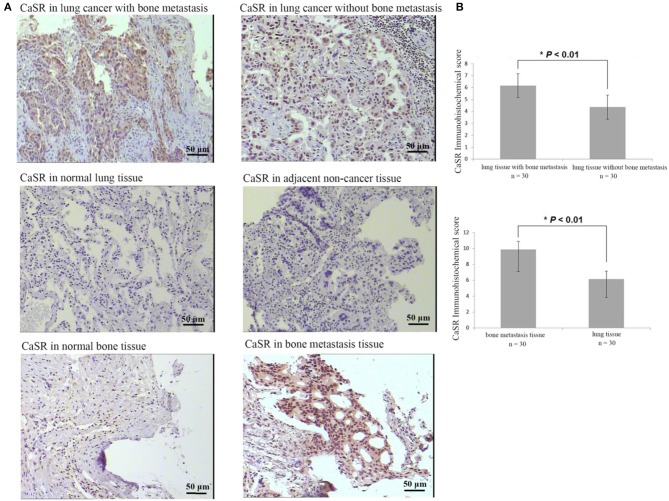
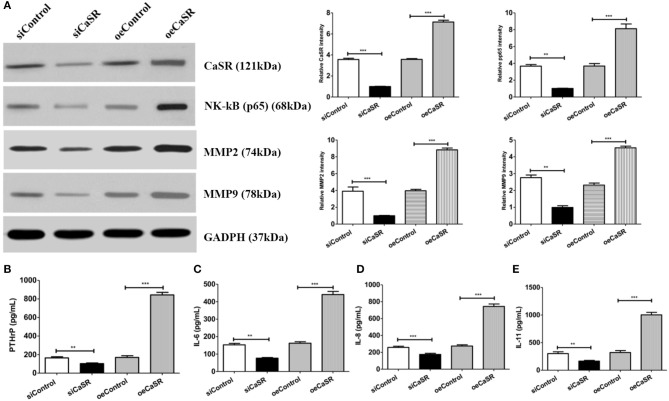
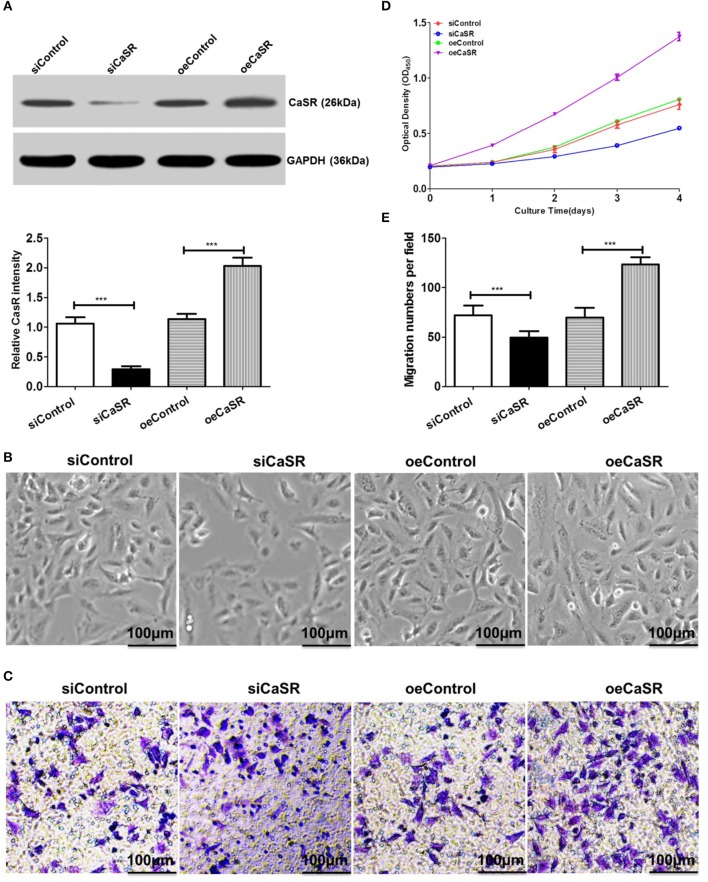
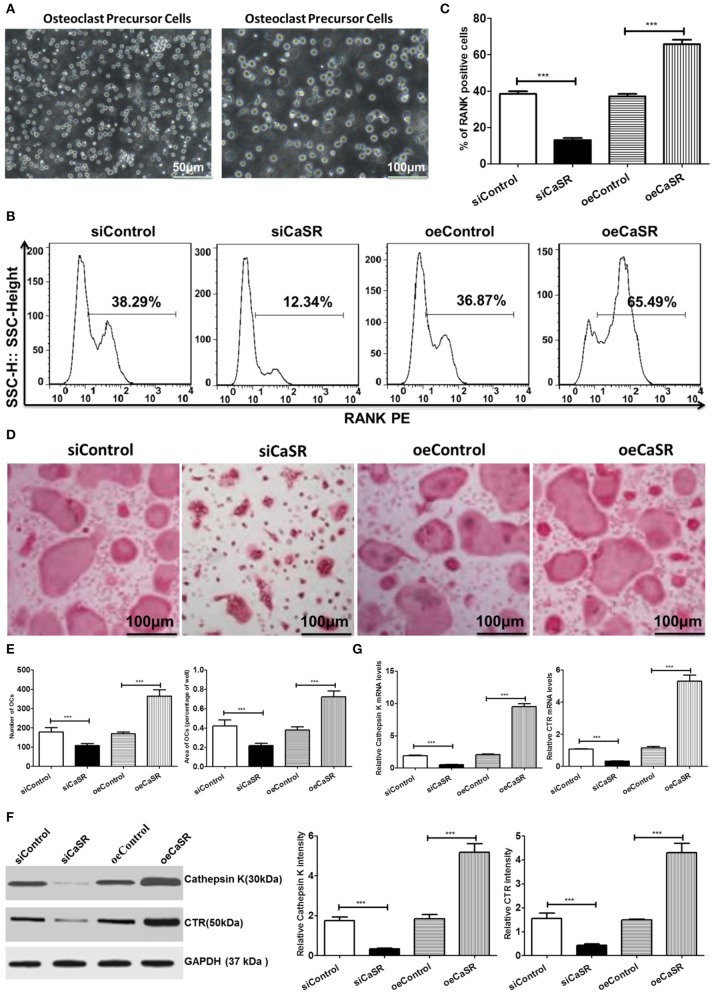
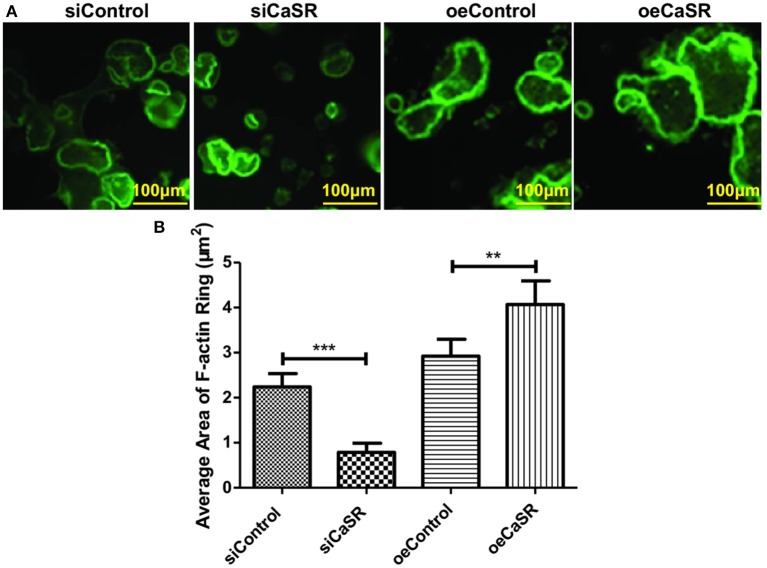
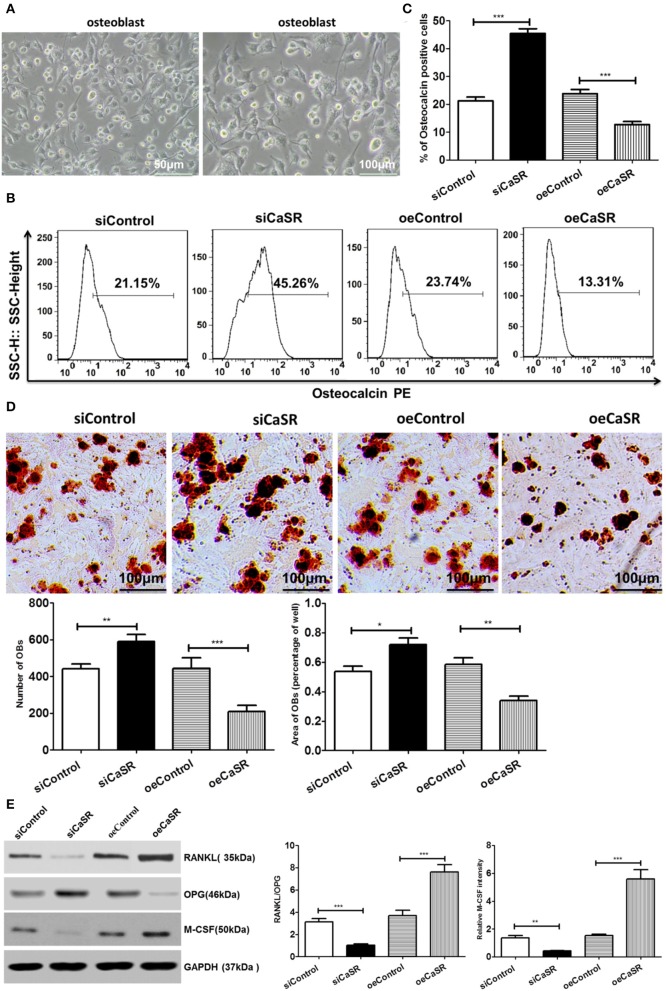
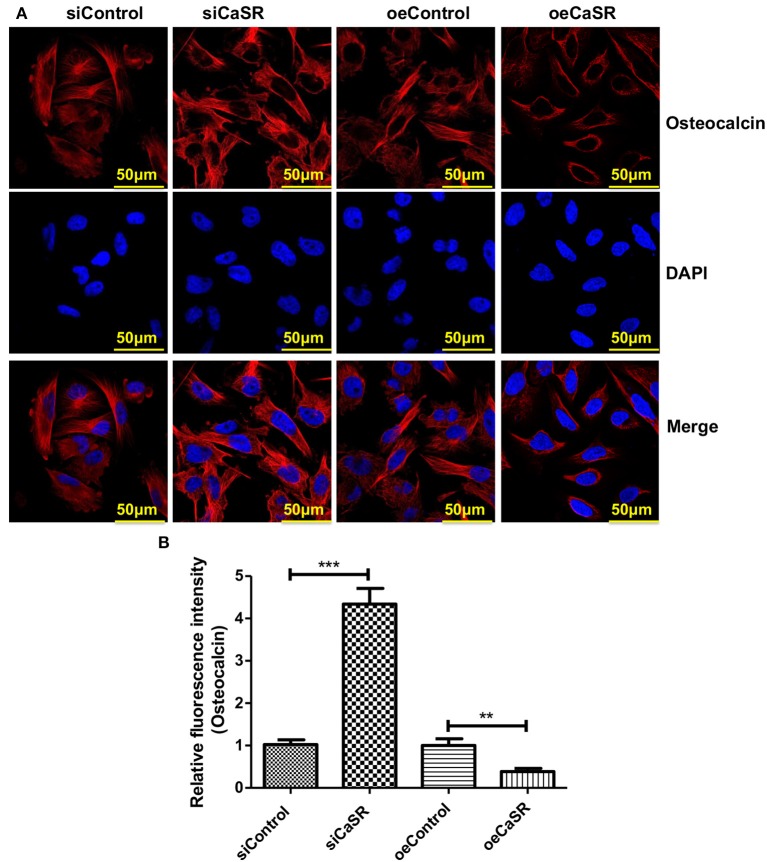
Explore the mechanism of CaSR's involvement in bone metastasis in lung adenocarcinoma. Immunohistochemistry (IHC) was used to detect the expression of calcium-sensing receptor (CaSR) in 120 cases of lung adenocarcinoma with bone metastasis. Stably transfected cell lines with CaSR overexpression and knockdown based on A549 cells were constructed. The expression of CaSR was verified by western blot and qPCR. The proliferation and migration abilities of A549 cells were tested using cholecystokinin-8 (CCK-8) and Transwell assays, respectively. Western blotting was used to detect the expression of matrix metalloproteinases MMP2, MMP9, CaSR, and NF-κB. The supernatant from each cell culture group was collected as a conditional co-culture solution to study the induction of osteoclast precursor cells and osteoblasts. Western blot and qPCR were used to validate the expression of bone matrix degradation-related enzymes cathepsin K and hormone calcitonin receptor (CTR) and osteoblast-induced osteoclast maturation and differentiation enzyme receptor activator of nuclear factor-κB ligand (RANKL), macrophage colony-stimulating factor (M-CSF), osteoprotegerin (OPG), and PTHrP. Immunofluorescent staining was used to detect F-actin ring formation and osteocalcin expression. Western blot results for NF-κB expression identified a regulatory relationship between NF-κB and CaSR. CaSR expression in lung cancer tissues was significantly higher than that in adjacent and normal lung tissues. The expression of CaSR in lung cancer tissues with bone metastasis was higher than that in non-metastatic lung cancer tissues. The proliferation and migration ability of A549 cells increased significantly with overexpressed CaSR. The co-culture solution directly induced osteoclast precursor cells and the expression of bone matrix degradation-related enzymes significantly increased. Osteoblasts were significantly inhibited and osteoblast-induced osteoclast maturation and differentiation enzymes were significantly downregulated. It was found that the expression of NF-κB and PTHrP increased when CaSR was overexpressed. Osteoclast differentiation factor expression was also significantly increased, which directly induces osteoclast differentiation and maturation. These results were reversed when CaSR was knocked down. CaSR can positively regulate NF-κB and PTHrP expression in A549 cells with a high metastatic potential, thereby promoting osteoclast differentiation and maturation, and facilitating the occurrence and development of bone metastasis in lung adenocarcinoma.
探索钙敏感受体(CaSR)参与肺腺癌骨转移的机制。采用免疫组织化学(IHC)检测120例发生骨转移的肺腺癌组织中钙敏感受体(CaSR)的表达。构建基于A549细胞的CaSR过表达和敲低的稳定转染细胞系。通过蛋白质免疫印迹法(western blot)和实时荧光定量聚合酶链反应(qPCR)验证CaSR的表达。分别采用细胞增殖-毒性检测试剂盒(CCK-8)法和Transwell实验检测A549细胞的增殖和迁移能力。运用蛋白质免疫印迹法检测基质金属蛋白酶MMP2、MMP9、CaSR和核因子κB(NF-κB)的表达。收集各细胞培养组的上清液作为条件共培养溶液,用于研究破骨细胞前体细胞和成骨细胞的诱导情况。采用蛋白质免疫印迹法和qPCR验证骨基质降解相关酶组织蛋白酶K和激素降钙素受体(CTR)以及成骨细胞诱导破骨细胞成熟和分化酶核因子κB受体激活剂配体(RANKL)、巨噬细胞集落刺激因子(M-CSF)、骨保护素(OPG)和甲状旁腺激素相关蛋白(PTHrP)的表达。采用免疫荧光染色检测F-肌动蛋白环的形成和骨钙素的表达。蛋白质免疫印迹法检测NF-κB表达的结果确定了NF-κB与CaSR之间的调控关系。肺癌组织中CaSR的表达显著高于癌旁及正常肺组织。发生骨转移的肺癌组织中CaSR的表达高于未发生转移的肺癌组织。CaSR过表达时A549细胞的增殖和迁移能力显著增强。共培养溶液直接诱导破骨细胞前体细胞,骨基质降解相关酶的表达显著增加。成骨细胞受到显著抑制,成骨细胞诱导破骨细胞成熟和分化的酶显著下调。发现CaSR过表达时NF-κB和PTHrP的表达增加。破骨细胞分化因子表达也显著增加,直接诱导破骨细胞分化和成熟。CaSR敲低时这些结果则相反。CaSR可正向调节具有高转移潜能的A549细胞中NF-κB和PTHrP的表达,从而促进破骨细胞的分化和成熟,推动肺腺癌骨转移的发生和发展。