Massachusetts General Hospital Cancer Center, Boston, Massachusetts 02114, USA.
Harvard Medical School, Boston, Massachusetts 02115, USA.
Genes Dev. 2020 Jun 1;34(11-12):751-766. doi: 10.1101/gad.335166.119. Epub 2020 Apr 9.
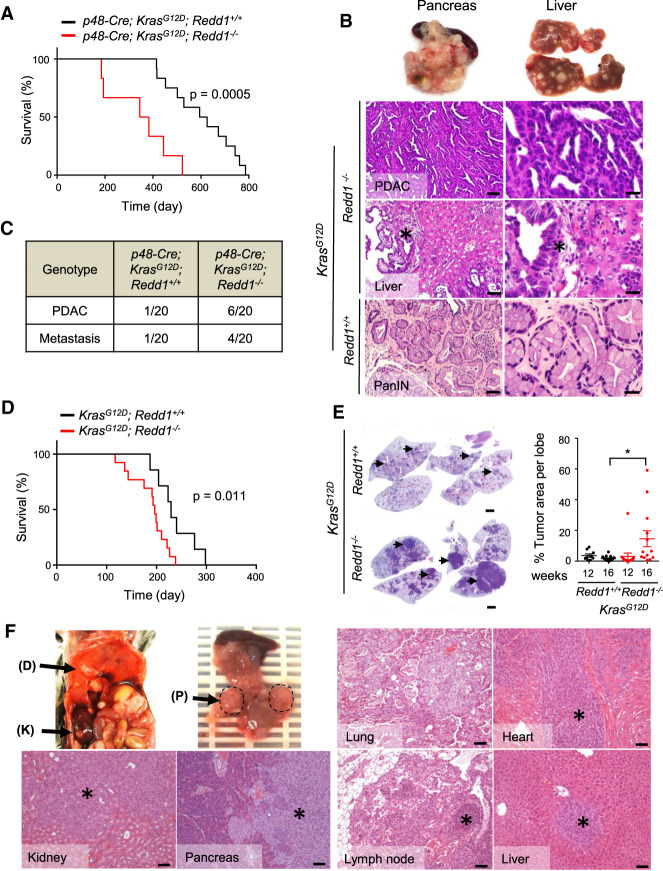
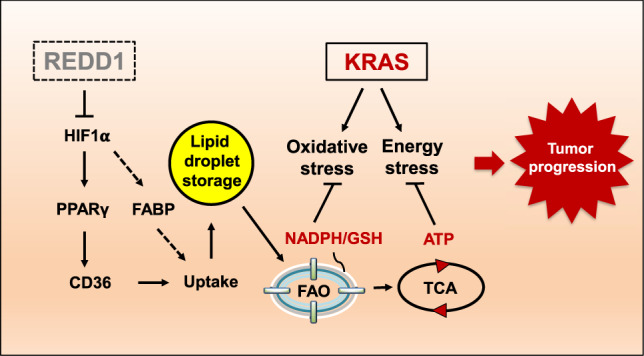
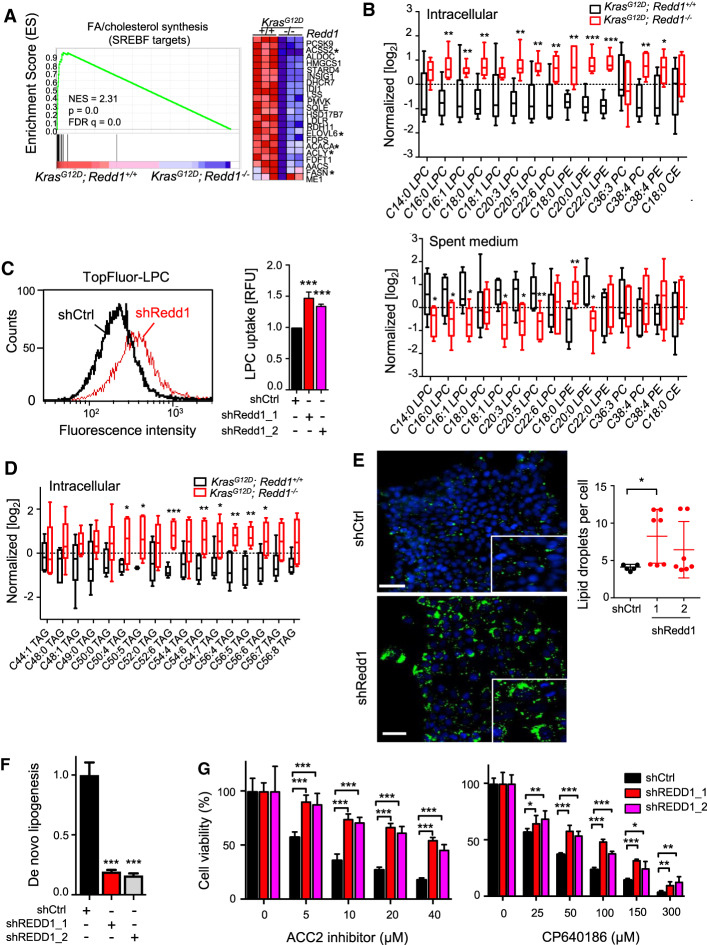
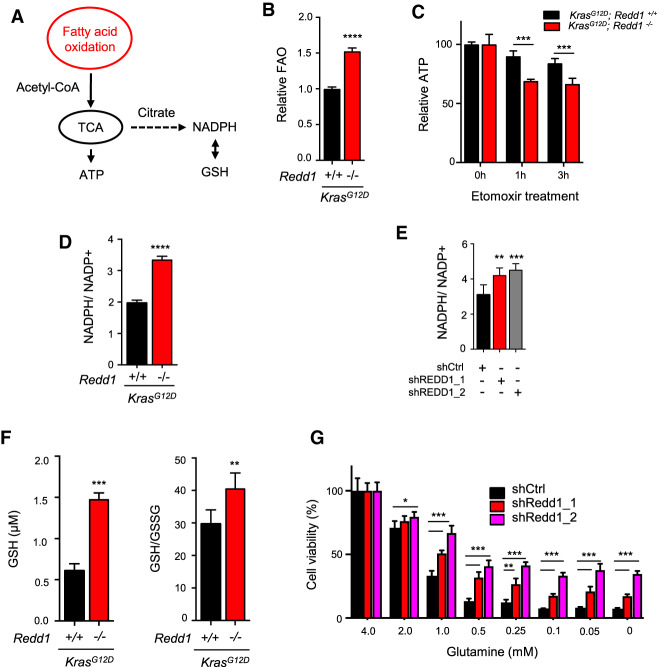
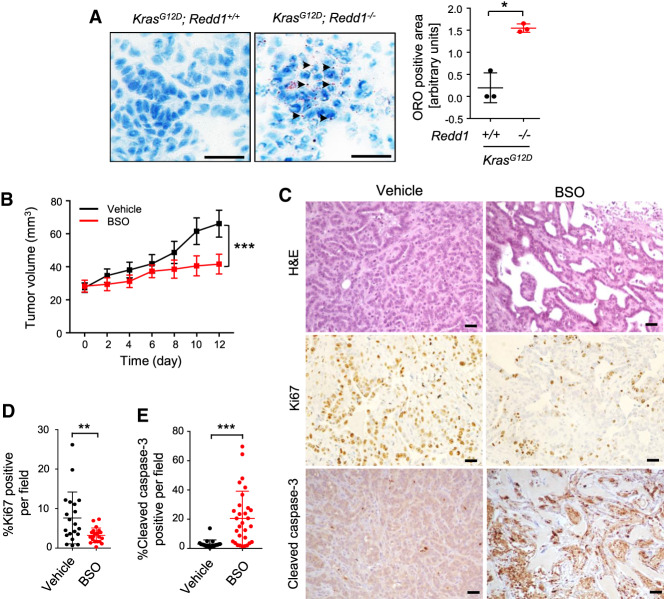
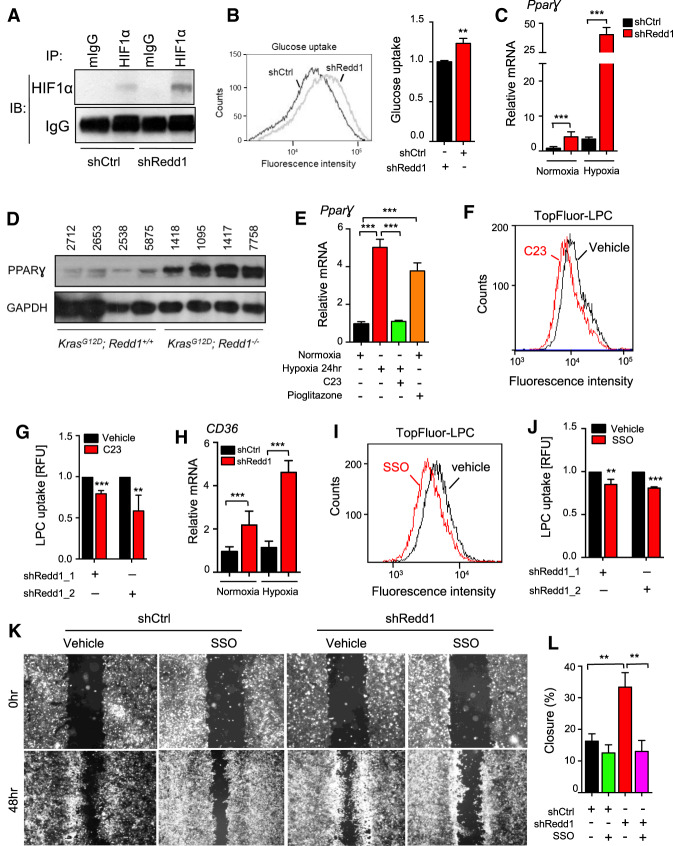
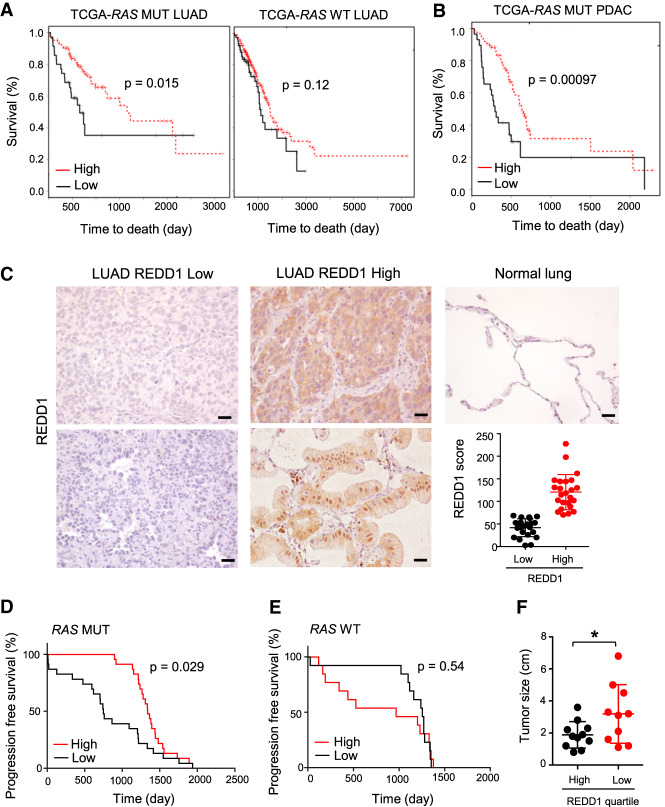
Human cancers with activating mutations are typically highly aggressive and treatment-refractory, yet mutation itself is insufficient for tumorigenesis, due in part to profound metabolic stress induced by RAS activation. Here we show that loss of REDD1, a stress-induced metabolic regulator, is sufficient to reprogram lipid metabolism and drive progression of mutant cancers. deletion in genetically engineered mouse models (GEMMs) of KRAS-dependent pancreatic and lung adenocarcinomas converts preneoplastic lesions into invasive and metastatic carcinomas. Metabolic profiling reveals that REDD1-deficient/ mutant cells exhibit enhanced uptake of lysophospholipids and lipid storage, coupled to augmented fatty acid oxidation that sustains both ATP levels and ROS-detoxifying NADPH. Mechanistically, REDD1 loss triggers HIF-dependent activation of a lipid storage pathway involving PPARγ and the prometastatic factor CD36. Correspondingly, decreased REDD1 expression and a signature of REDD1 loss predict poor outcomes selectively in mutant but not wild-type human lung and pancreas carcinomas. Collectively, our findings reveal the REDD1-mediated stress response as a novel tumor suppressor whose loss defines a mutant tumor subset characterized by reprogramming of lipid metabolism, invasive and metastatic progression, and poor prognosis. This work thus provides new mechanistic and clinically relevant insights into the phenotypic heterogeneity and metabolic rewiring that underlies these common cancers.
具有激活突变的人类癌症通常具有高度侵袭性和治疗抵抗性,但突变本身不足以引起肿瘤发生,部分原因是 RAS 激活引起的深刻代谢应激。在这里,我们表明,应激诱导的代谢调节剂 REDD1 的缺失足以重新编程脂质代谢并驱动 突变型癌症的进展。在 KRAS 依赖性胰腺和肺腺癌的基因工程小鼠模型(GEMMs)中,REDD1 的缺失会将癌前病变转化为侵袭性和转移性癌。代谢谱分析表明,REDD1 缺陷/ 突变细胞表现出增强的溶血磷脂和脂质储存摄取,同时伴有增强的脂肪酸氧化,这维持了 ATP 水平和 ROS 解毒 NADPH。在机制上,REDD1 的缺失触发了 HIF 依赖性的脂质储存途径的激活,该途径涉及 PPARγ 和促转移因子 CD36。相应地,REDD1 表达的降低和 REDD1 缺失的特征选择性地预测了 突变型而非 野生型人类肺和胰腺腺癌的不良预后。总之,我们的发现揭示了 REDD1 介导的应激反应作为一种新的肿瘤抑制因子,其缺失定义了一个 突变型肿瘤亚群,其特征是脂质代谢、侵袭和转移进展以及不良预后的重新编程。这项工作为这些常见癌症的表型异质性和代谢重排提供了新的机制和临床相关见解。