Gao Liang, Chen Xiaochen, Wang Yongxiang, Zhang Jianbin
Department of Oncology, Zhejiang Provincial People's Hospital, Hangzhou 310022, Zhejiang Province, People's Republic of China.
Department of Oncology, People's Hospital of Hangzhou Medical College, Hangzhou 310014, Zhejiang Province, People's Republic of China.
Onco Targets Ther. 2020 Apr 1;13:2725-2738. doi: 10.2147/OTT.S236359. eCollection 2020.
Follistatin-like 3 (FSTL3) binds and inactivates activin, a growth factor with cell growth and differentiation. Previous studies reported that it is overexpressed in invasive breast cancers, and its expression and function in non-small cell lung cancer (NSCLC) remain unclear.
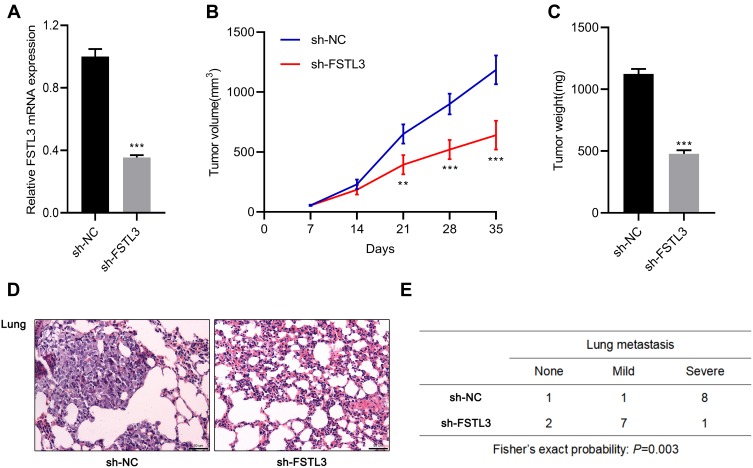
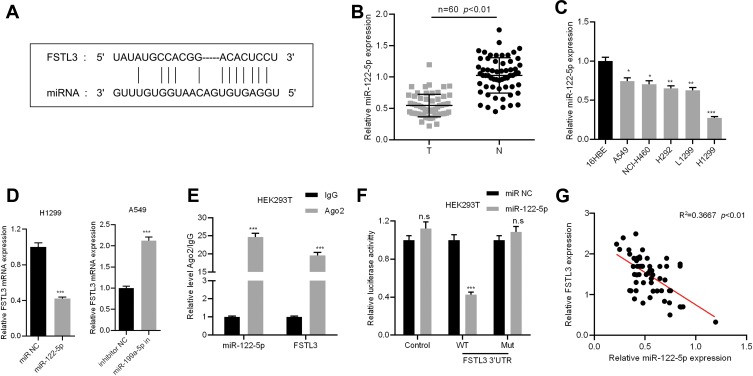
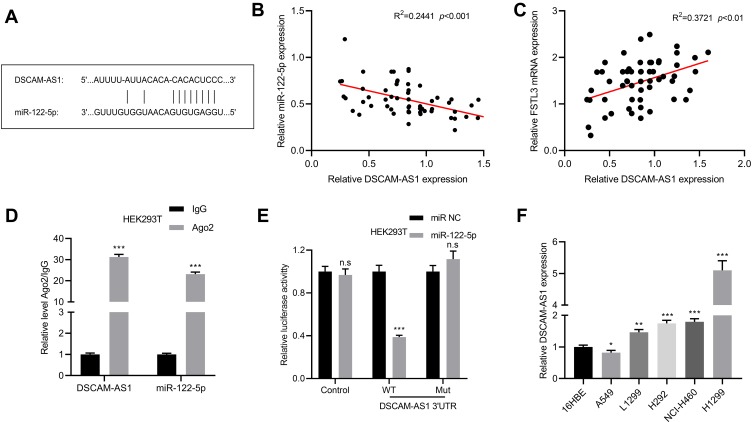
Immunohistochemistry was employed to probe the expression of FSTL3 in NSCLC tissues. Real-time PCR (RT-PCR) was applied to detect the expression of lncRNA DSCAM-AS1 and miR-122-5p. A549 cells and H1299 cells were used as cell models. The biological influence of FSTL3 on cells was studied using CCK-8 assay, wound healing assay and transwell assay in vitro, respectively. In vivo subcutaneous xenotransplanted tumor model and tail vein injection model in mice were also constructed to validate the roles of FSTL3. Interactions between miR-122-5p and FSTL3, DSCAM-AS1 and miR-122-5p were determined by bioinformatics analysis, RT-PCR, and dual-luciferase reporter assay.
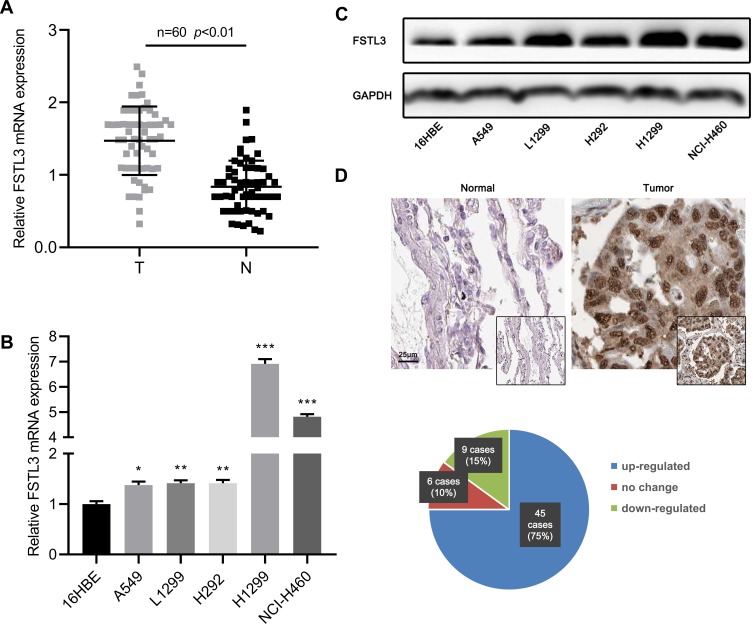
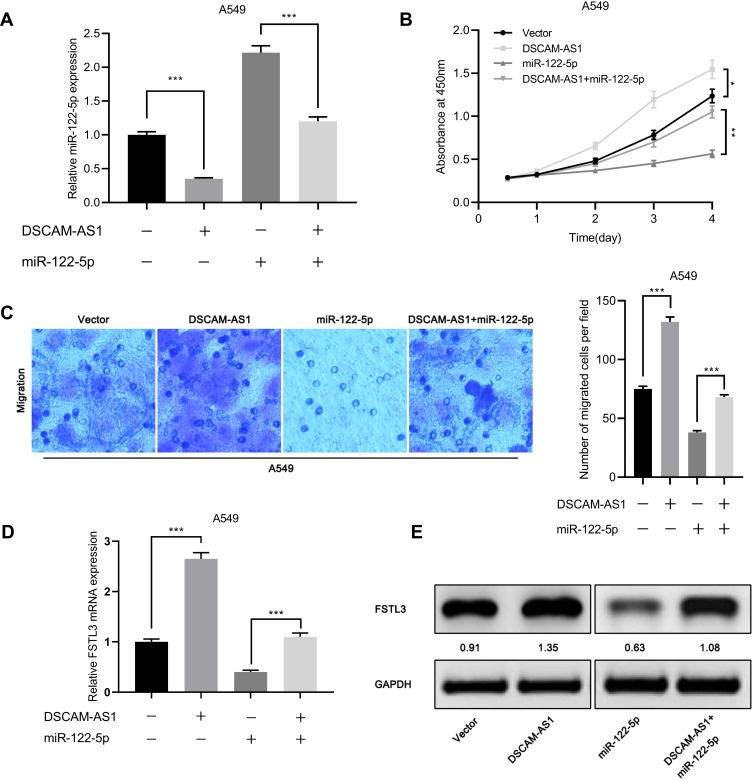
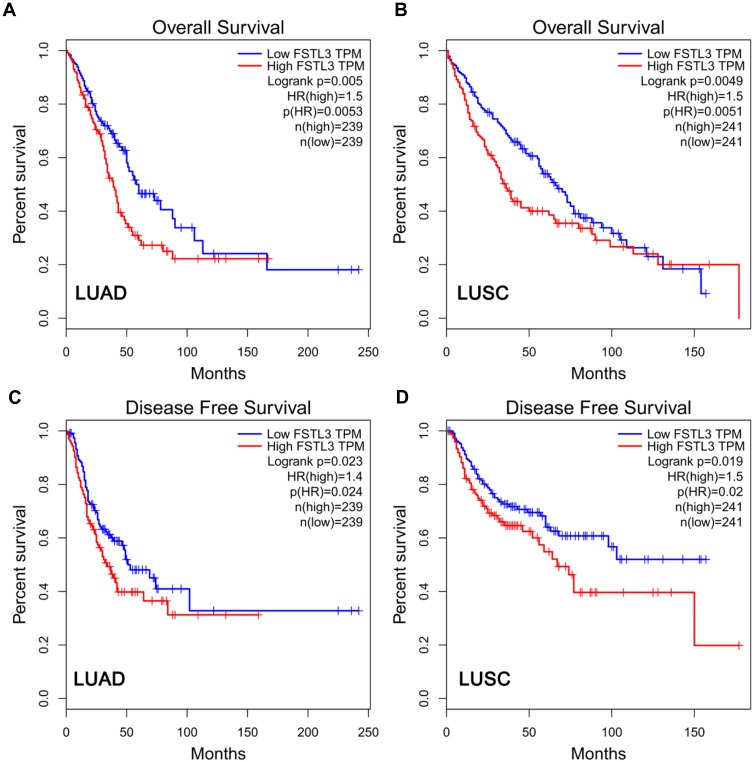
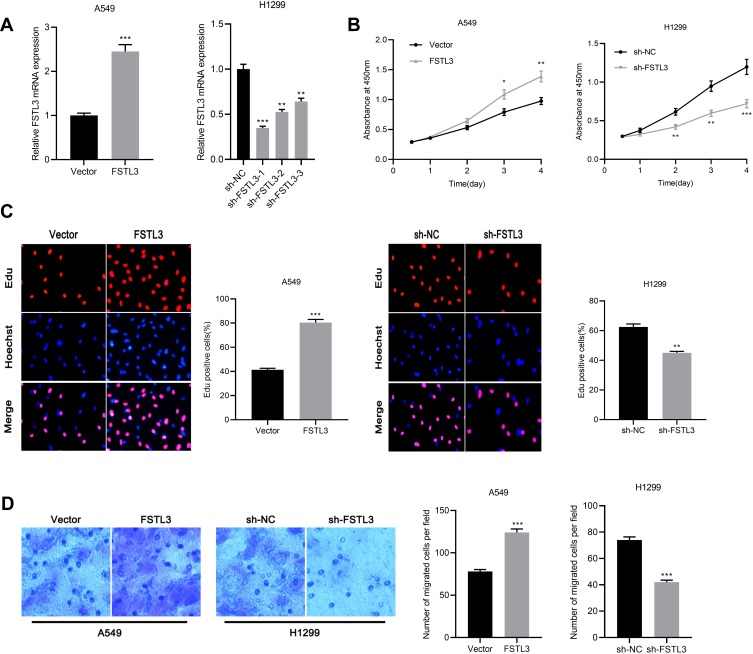
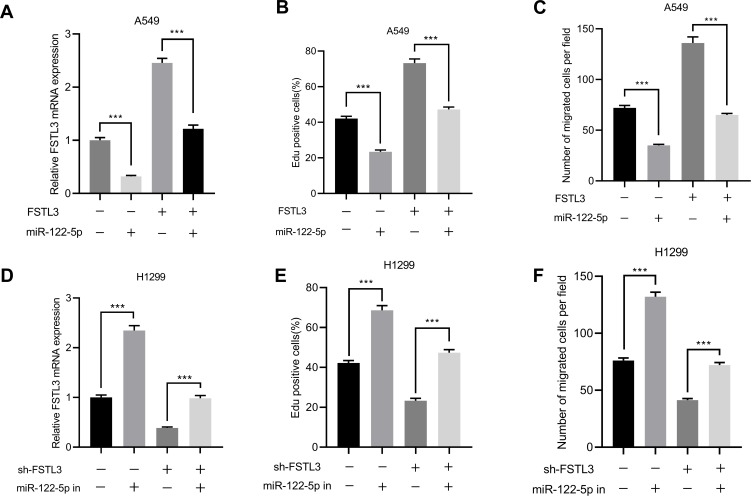
FSTL3 and DSCAM-AS1 were remarkably up-regulated in NSCLC samples, and miR-122-5p was down-regulated. FSTL3 was associated with worse prognosis of NSCLC patients. FSTL3 knockdown markedly inhibited the viability, migration and invasion of NSCLCs in vitro and in vivo. DSCAM-AS1 could down-regulate miR-122-5p via sponging it, and FSTL3 was a target gene of miR-122-5p.
Taken together, our study identified that FSTL3 was a new oncogene of NSCLC, which was regulated by DSCAM-AS1 and miR-122-5p. These findings suggested that FSTL3, DSCAM-AS1 and miR-122-5p might serve as a new valuable therapeutic target for NSCLC.
卵泡抑素样蛋白3(FSTL3)可结合并使激活素失活,激活素是一种具有细胞生长和分化功能的生长因子。先前的研究报道,FSTL3在浸润性乳腺癌中过表达,而其在非小细胞肺癌(NSCLC)中的表达及功能仍不清楚。
采用免疫组织化学法检测NSCLC组织中FSTL3的表达。应用实时荧光定量聚合酶链反应(RT-PCR)检测长链非编码RNA DSCAM-AS1和微小RNA-122-5p(miR-122-5p)的表达。以A549细胞和H1299细胞作为细胞模型。分别采用细胞计数试剂盒-8(CCK-8)法、伤口愈合实验和Transwell实验在体外研究FSTL3对细胞的生物学影响。还构建了小鼠体内皮下异种移植瘤模型和尾静脉注射模型以验证FSTL3的作用。通过生物信息学分析、RT-PCR和双荧光素酶报告基因实验确定miR-122-5p与FSTL3、DSCAM-AS1与miR-122-5p之间的相互作用。
FSTL3和DSCAM-AS1在NSCLC样本中显著上调,而miR-122-5p下调。FSTL3与NSCLC患者的不良预后相关。敲低FSTL3可在体外和体内显著抑制NSCLC的活力、迁移和侵袭。DSCAM-AS1可通过海绵吸附作用下调miR-122-5p,且FSTL3是miR-122-5p 的靶基因。
综上所述,我们的研究确定FSTL3是NSCLC的一个新癌基因,其受DSCAM-AS1和miR-122-5p调控。这些发现表明,FSTL3、DSCAM-AS1和miR-122-5p可能成为NSCLC新的有价值的治疗靶点。