Department of Addictive Behavior and Addiction Medicine, Central Institute of Mental Health, Medical Faculty of Mannheim, University of Heidelberg, Mannheim, Germany.
Children's Center, Klinikum Frankfurt Oder, Frankfurt (Oder), Germany.
Psychopharmacology (Berl). 2020 Jun;237(6):1691-1707. doi: 10.1007/s00213-020-05492-1. Epub 2020 Apr 13.
Compared to the general population, adult Attention-Deficit / Hyperactivity Disorder (ADHD) is more prevalent in patients with Alcohol Use Disorder (AUD). Impaired behavioral inhibition is a common characteristic in both ADHD and AUD. Relapse risk is increased in patients with AUD and comorbid, untreated ADHD and in AUD patients with increased neural cue-reactivity.
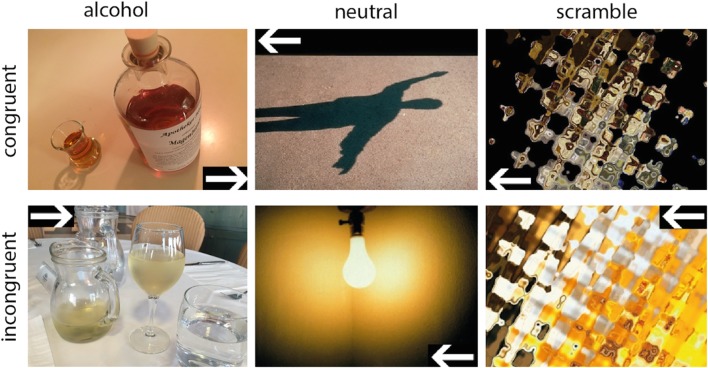
In this study, we examined the interaction between neural correlates of behavioral inhibition and alcohol cue-reactivity with a hybrid imaging task.
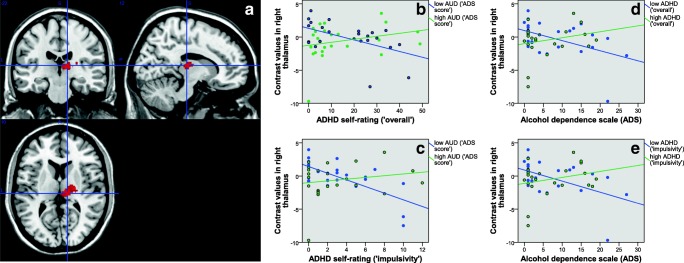
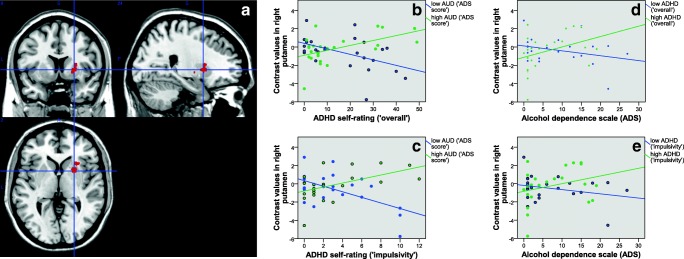
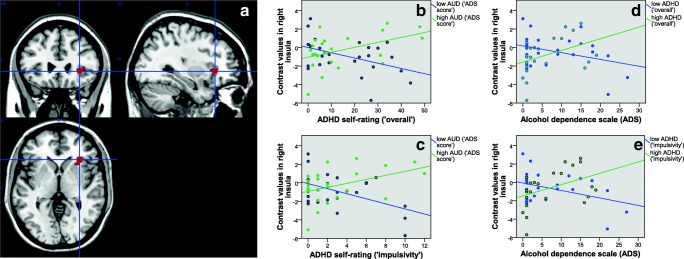
Out of 69 adult study participants, we included n = 49 in our final analyses: Individuals had a diagnosis of either AUD (n = 13), ADHD (n = 14) or both (n = 5), or were healthy controls (HC; n = 17). The functional magnetic resonance imaging paradigm aimed to examine the combined effects of both an interference-inhibition task ("Simon-task") and an alcohol cue-reactivity task. Instead of segregating by diagnostic group, we pursued a dimensional approach in which we compared measures of AUD and ADHD severity, as well as the interaction of both, using multiple regression analyses.
The four groups did not differ on the behavioral level on either the inhibition task or the alcohol cue-reactivity task. However, brain activation in frontal control and reward-related regions during completion of the combined tasks were related to ADHD and AUD severity (symptom load). During presentation of both alcohol cues and the inhibition task, participants with higher AUD and ADHD symptom load exhibited greater BOLD (blood oxygen level dependent) responses in subcortical reward-related regions.
Our findings support the hypothesis that ADHD additionally diminishes inhibition ability in individuals with AUD. This may increase relapse risk when confronted with alcohol cues. Further, it is crucial for patients with comorbid AUD and ADHD to take into account not only reduced cognitive control over behavioral inhibition but also simultaneously heightened alcohol cue-reactivity.
与一般人群相比,成人注意力缺陷多动障碍(ADHD)在酒精使用障碍(AUD)患者中更为普遍。行为抑制受损是 ADHD 和 AUD 的共同特征。AUD 患者伴未治疗的 ADHD 共病以及 AUD 患者神经线索反应性增加,其复发风险增加。
在这项研究中,我们使用混合成像任务检查了行为抑制的神经相关性与酒精线索反应性之间的相互作用。
在 69 名成年研究参与者中,我们最终分析了 n = 49 名参与者:个体被诊断为 AUD(n = 13)、ADHD(n = 14)或两者兼有(n = 5),或为健康对照(HC;n = 17)。功能磁共振成像范式旨在检查干扰抑制任务(“Simon 任务”)和酒精线索反应性任务的综合效应。我们采用了多维方法,通过多元回归分析比较了 AUD 和 ADHD 严重程度的测量值,以及两者的相互作用,而不是按诊断组进行分组。
四组在抑制任务或酒精线索反应性任务的行为水平上没有差异。然而,在完成联合任务时,前额控制和奖励相关区域的大脑激活与 ADHD 和 AUD 的严重程度(症状负荷)有关。在呈现酒精线索和抑制任务时,AUD 和 ADHD 症状负荷较高的参与者在皮质下奖励相关区域表现出更大的 BOLD(血氧水平依赖)反应。
我们的研究结果支持这样一种假设,即 ADHD 进一步降低了 AUD 患者的抑制能力。当面对酒精线索时,这可能会增加复发的风险。此外,对于患有共病 AUD 和 ADHD 的患者来说,不仅要考虑到行为抑制的认知控制能力降低,还要同时考虑到对酒精线索的反应性增强。