Alarefi Abdulqawi, Wang Xunshi, Tao Rui, Rui Qinqin, Gao Guoqing, Wang Ying, Pang Liangjun, Liu Chialun, Zhang Xiaochu
Department of Radiology, The First Affiliated Hospital of USTC, School of Life Science, Division of Life Science and Medicine, University of Science & Technology of China, Hefei 230027, China.
Affiliated Psychological Hospital of Anhui Medical University, Hefei Fourth People's Hospital, Anhui Mental Health Center, Hefei 230017, China.
Brain Sci. 2022 Feb 24;12(3):307. doi: 10.3390/brainsci12030307.
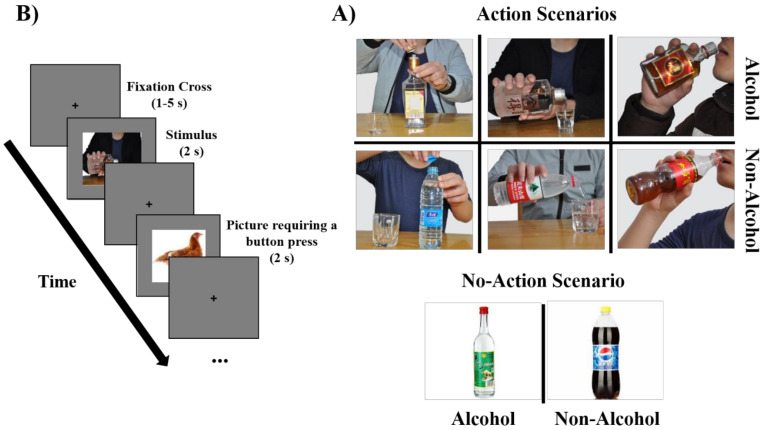
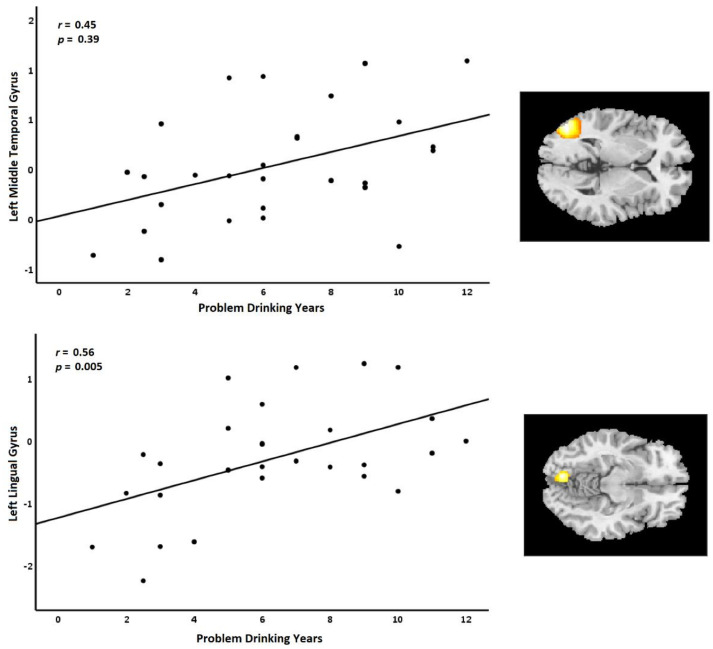
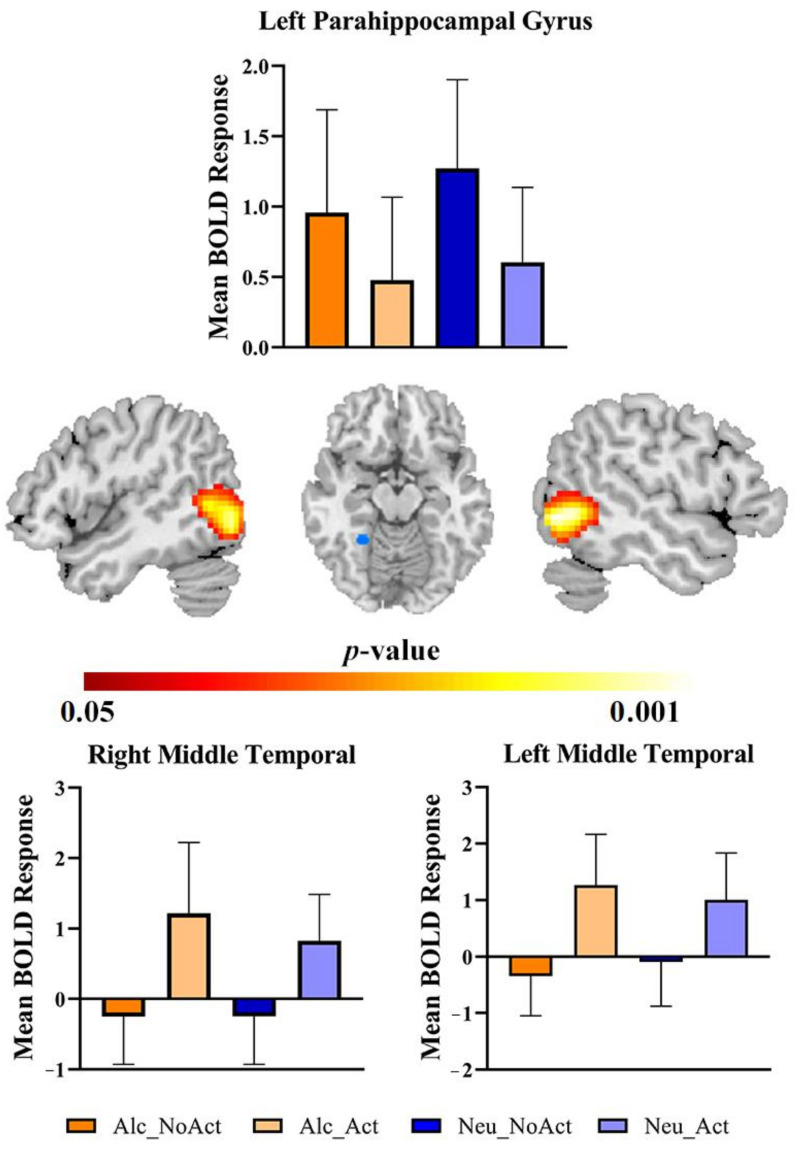
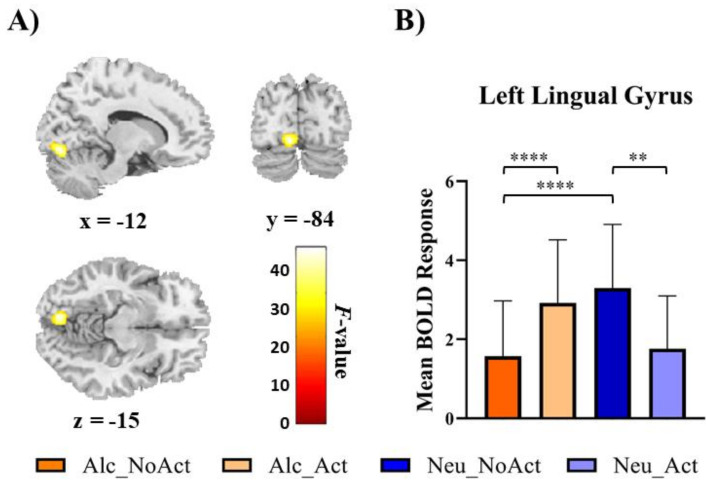
Cue reactivity is often used to study alcohol cues brain responses. Standardized image sets are used, but the effect of viewing people interacting with the alcohol drink remains unclear, which is associated with the factors of alcohol cues that influence the degree of response to alcohol stimuli. The present study used fMRI to investigate the reactivity of alcohol dependence (AD) inpatients to alcohol cues with or without human drinking behavior. Cues with a human interacting with a drink were hypothesized to increase sensorimotor activation. In total, 30 AD inpatients were asked to view pictures with a factorial design of beverage types (alcoholic vs. non-alcoholic beverages) and cue types (with or without drink action). Whole-brain analyses were performed. A correlation analysis was conducted to confirm whether the whole-brain analysis revealed cue-related brain activations correlated with problem drinking duration. The left lingual gyrus showed significant beverage types through cue type interaction, and the bilateral temporal cortex showed significant activation in response to alcohol cues depicting human drinking behavior. The right and left lingual gyrus regions and left temporal cortex were positively correlated with problem drinking duration. Sensorimotor activations in the temporal cortex may reflect self-referential and memory-based scene processing. Thus, our findings indicate these regions are associated with alcohol use and suggest them for cue exposure treatment of alcohol addiction.
线索反应性常被用于研究酒精线索的大脑反应。研究使用了标准化图像集,但观看人们与酒精饮料互动的影响尚不清楚,这与影响对酒精刺激反应程度的酒精线索因素有关。本研究采用功能磁共振成像(fMRI)来调查酒精依赖(AD)住院患者对有或无人类饮酒行为的酒精线索的反应性。假设带有人类与饮料互动的线索会增加感觉运动激活。总共30名AD住院患者被要求观看具有饮料类型(酒精饮料与非酒精饮料)和线索类型(有或无饮酒动作)析因设计的图片。进行了全脑分析。进行了相关性分析,以确认全脑分析是否揭示了与问题饮酒持续时间相关的线索相关脑激活。左侧舌回通过线索类型交互显示出显著的饮料类型差异,双侧颞叶皮质对描绘人类饮酒行为的酒精线索显示出显著激活。左右舌回区域和左侧颞叶皮质与问题饮酒持续时间呈正相关。颞叶皮质的感觉运动激活可能反映基于自我参照和记忆的场景处理。因此,我们的研究结果表明这些区域与酒精使用有关,并建议将它们用于酒精成瘾的线索暴露治疗。