Experimental Plant Ecology, Institute of Botany and Landscape Ecology, University of Greifswald, Soldmannstraße 15, 17487, Greifswald, Germany.
Climate Impacts Research Centre, Department of Ecology and Environmental Science, Umeå University, 981 07 Abisko, Sweden.
Nat Commun. 2020 Apr 14;11(1):1766. doi: 10.1038/s41467-020-15568-3.
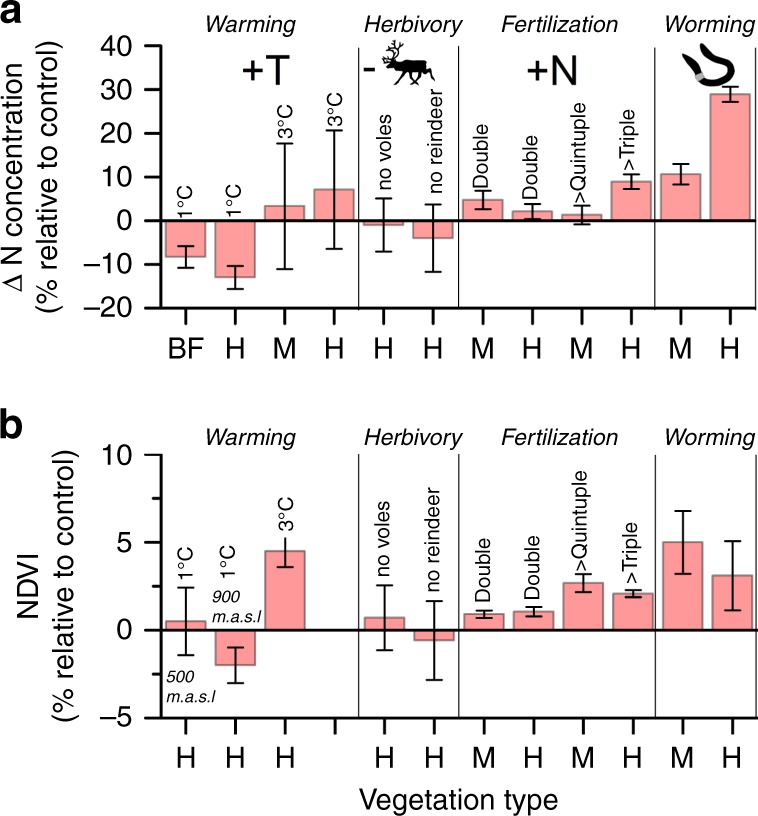
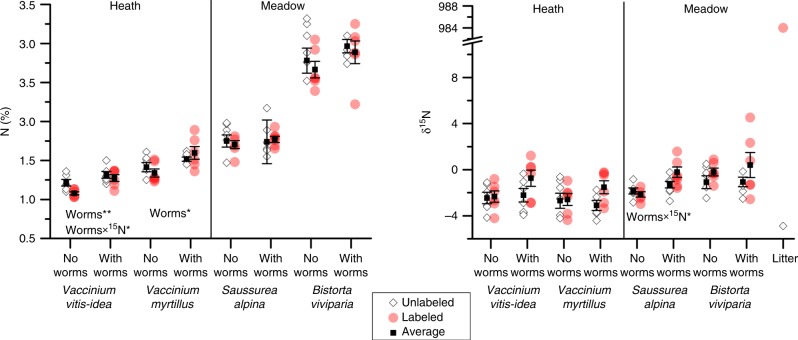
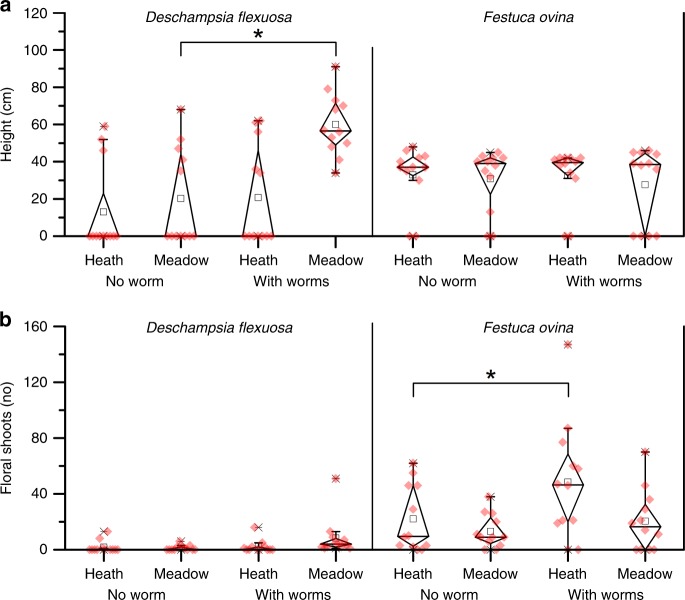
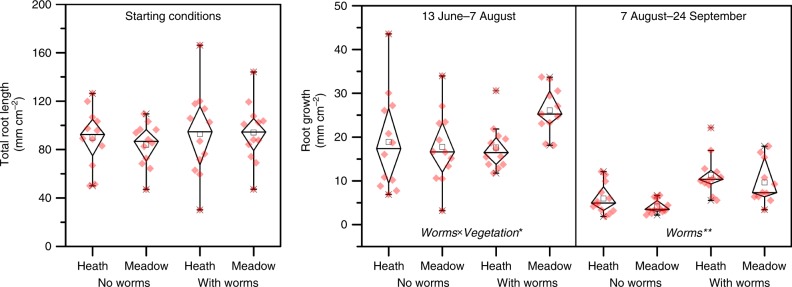
Arctic plant growth is predominantly nitrogen (N) limited. This limitation is generally attributed to slow soil microbial processes due to low temperatures. Here, we show that arctic plant-soil N cycling is also substantially constrained by the lack of larger detritivores (earthworms) able to mineralize and physically translocate litter and soil organic matter. These new functions provided by earthworms increased shrub and grass N concentration in our common garden experiment. Earthworm activity also increased either the height or number of floral shoots, while enhancing fine root production and vegetation greenness in heath and meadow communities to a level that exceeded the inherent differences between these two common arctic plant communities. Moreover, these worming effects on plant N and greening exceeded reported effects of warming, herbivory and nutrient addition, suggesting that human spreading of earthworms may lead to substantial changes in the structure and function of arctic ecosystems.
北极地区的植物生长主要受到氮(N)的限制。这种限制通常归因于低温导致的土壤微生物过程缓慢。在这里,我们表明,北极地区的植物-土壤 N 循环也受到缺乏较大的分解者(蚯蚓)的严重限制,这些分解者能够矿化和物理迁移凋落物和土壤有机质。蚯蚓提供的这些新功能增加了我们的常见花园实验中灌木和草的 N 浓度。蚯蚓的活动还增加了草本植物和草地群落中花卉芽的高度或数量,同时增强了细根的产生和植被的绿色度,使其达到超过这两个常见的北极植物群落之间固有差异的水平。此外,这些蚯蚓对植物 N 和绿化的影响超过了报道的变暖、食草和养分添加的影响,这表明人类传播蚯蚓可能会导致北极生态系统的结构和功能发生重大变化。