Department of Biology, University of Turku, Vesilinnantie 5, 20500, Turku, Finland.
Biodiversity Unit, University of Turku, Vesilinnantie 5, 20500, Turku, Finland.
Sci Rep. 2020 Apr 14;10(1):6349. doi: 10.1038/s41598-020-63365-1.
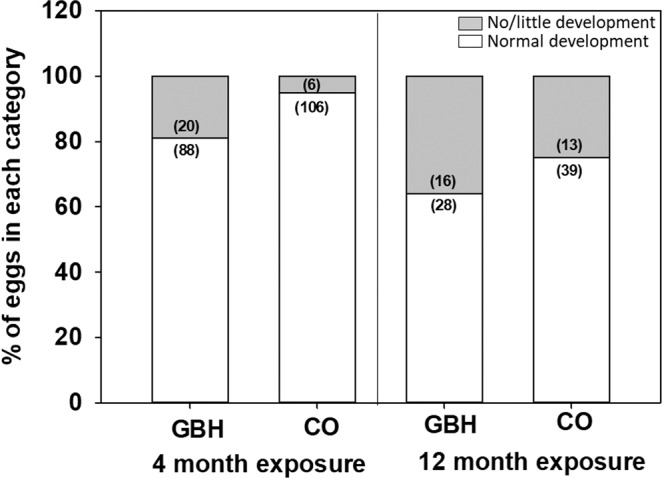
Controversial glyphosate-based herbicides (GBHs) are the most frequently used herbicides globally. GBH residues are detected in soil, water, crops, and food products, potentially exposing non-target organisms to health risks; these organisms include wildlife, livestock, and humans. However, the potential for GBH-related parental effects are poorly understood. In the case of birds, GBHs may be transferred directly from mothers to eggs, or they may indirectly influence offspring performance by altered maternal resource allocation to eggs. We experimentally exposed a parental generation of Japanese quails (Coturnix japonica) to GBHs (200 mg/kg feed) or respective controls. Glyphosate residues were found in eggs (ca 0.76 kg/mg). Embryonic development tended to be poorer in the eggs of GBH-exposed parents (76% of eggs showed normal development) compared to control parents (89% normal eggs). Embryonic brain tissue from GBH-exposed parents tended to express more lipid damage (20% higher), yet other biomarkers showed no apparent differences. We detected no differences in egg quality (egg, yolk, or shell mass, egg hormone concentration) across the treatment groups. Given this is the first long-term study testing parental effects of GBHs with birds, more studies are needed characterizing GBH-associated changes in maternal allocation and for example epigenetic programming.
具有争议性的草甘膦类除草剂(GBHs)是目前全球使用最广泛的除草剂。GBH 残留已在土壤、水、农作物和食品中被检测到,这可能使非目标生物面临健康风险;这些生物包括野生动物、牲畜和人类。然而,人们对 GBH 相关的亲代效应的潜在影响知之甚少。就鸟类而言,GBH 可能直接从母体转移到卵中,或者通过改变母体对卵的资源分配间接影响后代的表现。我们用草甘膦(200mg/kg 饲料)或相应的对照剂对一代日本鹌鹑(Coturnix japonica)进行了实验性暴露。在鸡蛋中发现了草甘膦残留(约 0.76kg/mg)。与对照父母(89%正常鸡蛋)相比,暴露于 GBH 的父母的鸡蛋中胚胎发育往往较差(76%的鸡蛋显示正常发育)。暴露于 GBH 的父母的胚胎脑组织中,脂质损伤的表达倾向更高(高出 20%),但其他生物标志物没有明显差异。我们在各组的鸡蛋质量(鸡蛋、蛋黄或蛋壳质量、鸡蛋激素浓度)方面没有发现差异。鉴于这是第一个用鸟类测试 GBH 亲代效应的长期研究,需要进行更多的研究来描述与母体分配相关的与 GBH 相关的变化,例如表观遗传编程。