Department of Anesthesiology and Intensive Care Medicine, Jena University Hospital, 07740 Jena, Germany.
Center for Molecular Biomedicine, Jena University Hospital, 07745 Jena, Germany.
Cells. 2020 Apr 10;9(4):928. doi: 10.3390/cells9040928.
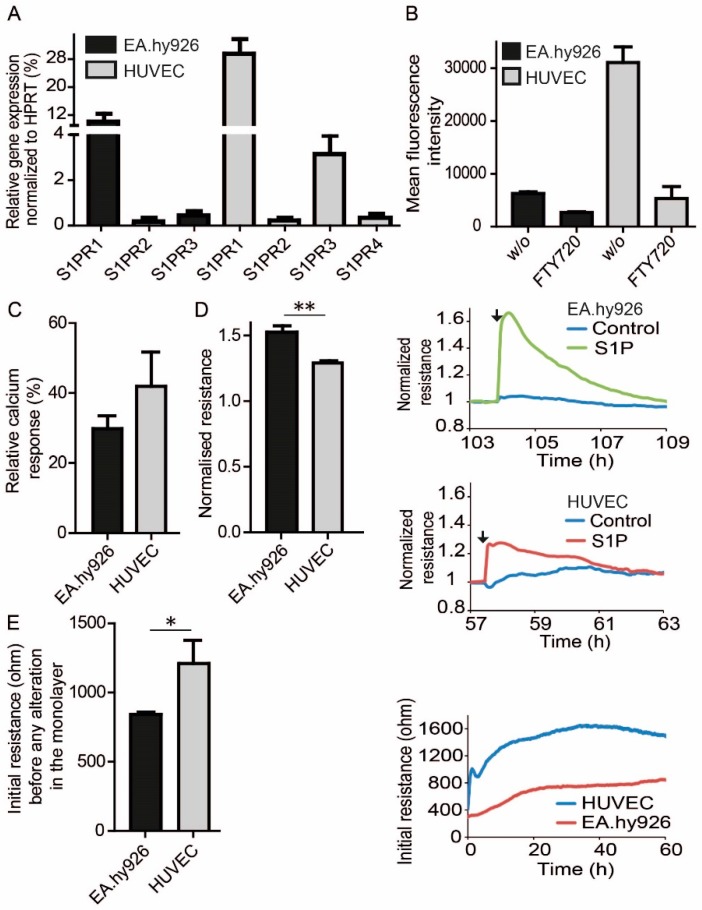
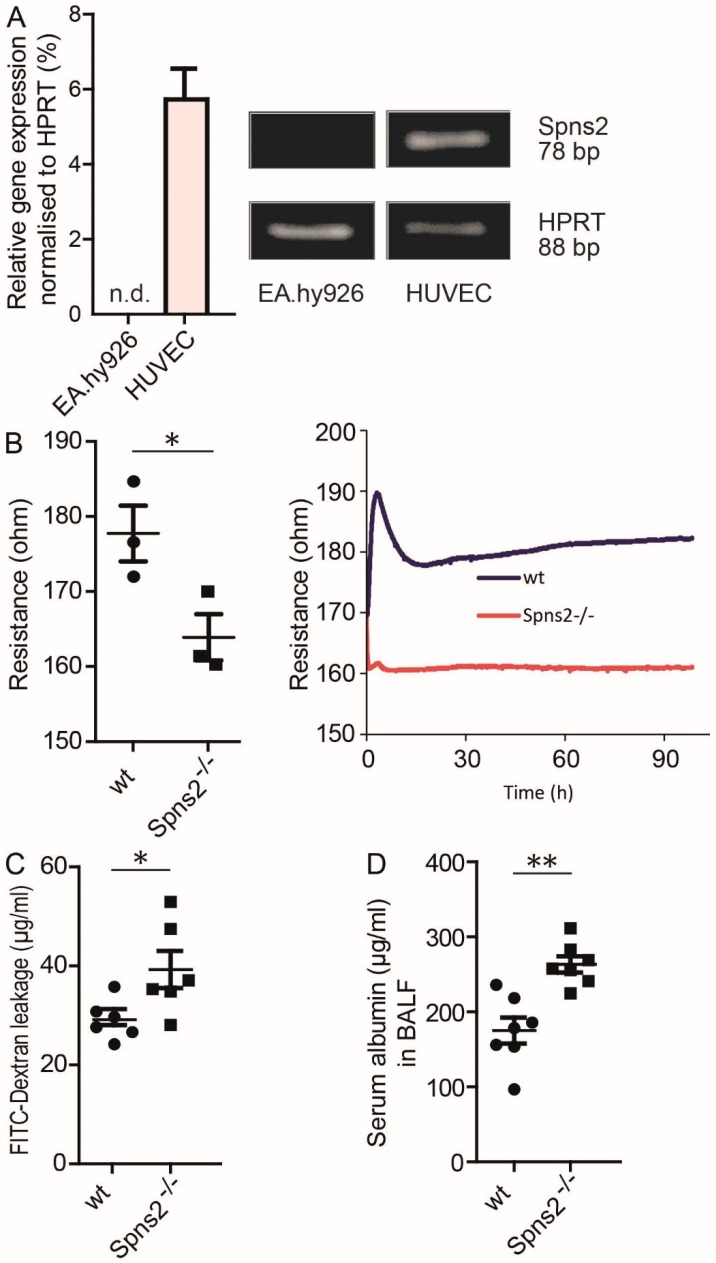
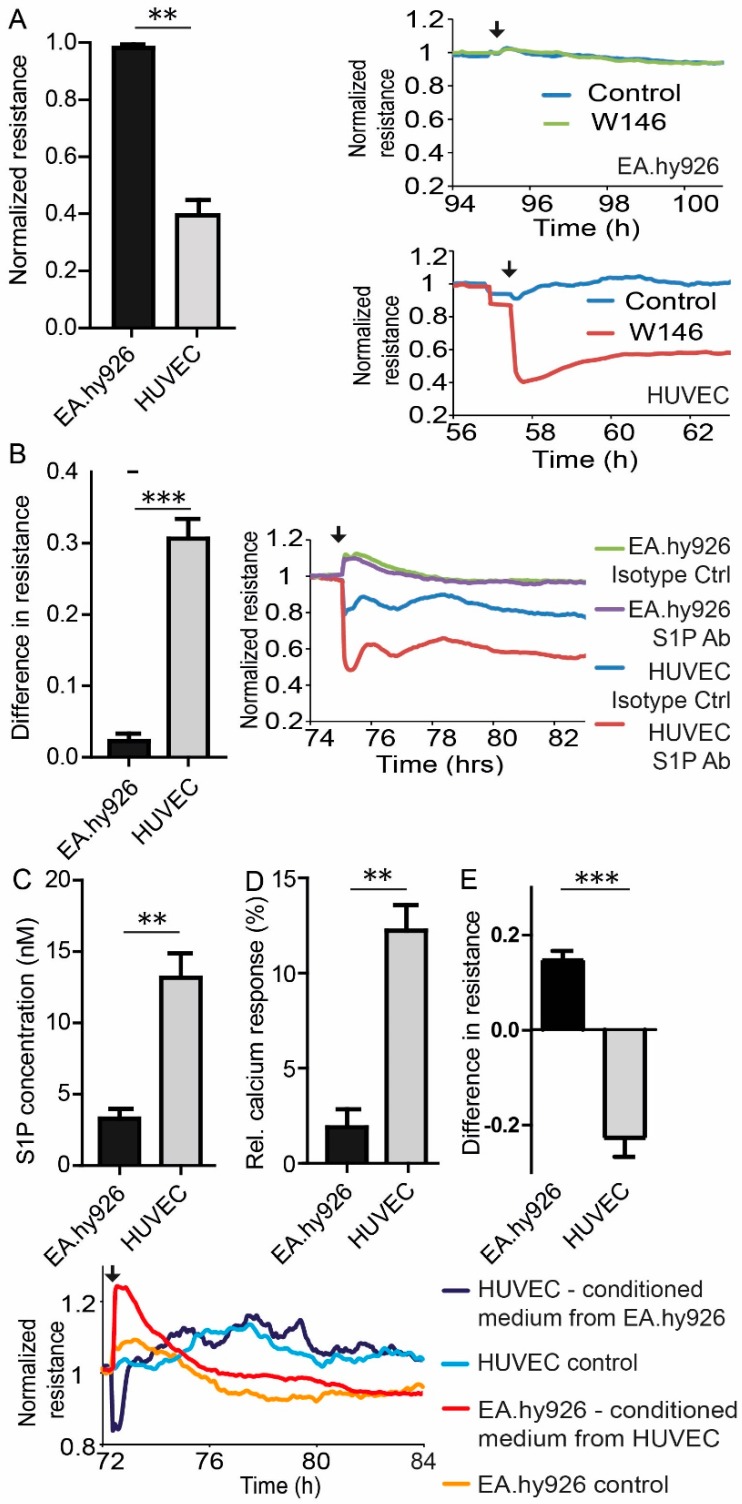
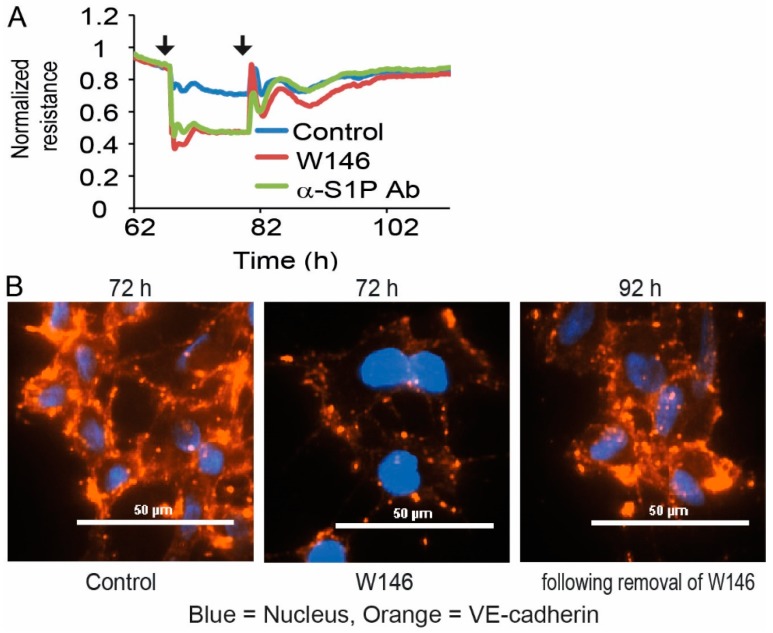
The breakdown of the endothelial cell (EC) barrier contributes significantly to sepsis mortality. Sphingosine 1-phosphate (S1P) is one of the most effective EC barrier-stabilizing signaling molecules. Stabilization is mainly transduced via the S1P receptor type 1 (S1PR1). Here, we demonstrate that S1P was autonomously produced by ECs. S1P secretion was significantly higher in primary human umbilical vein endothelial cells (HUVEC) compared to the endothelial cell line EA.hy926. Constitutive barrier stability of HUVEC, but not EA.hy926, was significantly compromised by the S1PR1 antagonist W146 and by the anti-S1P antibody Sphingomab. HUVEC and EA.hy926 differed in the expression of the S1P-transporter Spns2, which allowed HUVEC, but not EA.hy926, to secrete S1P into the extracellular space. Spns2 deficient mice showed increased serum albumin leakage in bronchoalveolar lavage fluid (BALF). Lung ECs isolated from Spns2 deficient mice revealed increased leakage of fluorescein isothiocyanate (FITC) labeled dextran and decreased resistance in electric cell-substrate impedance sensing (ECIS) measurements. Spns2 was down-regulated in HUVEC after stimulation with pro-inflammatory cytokines and lipopolysaccharides (LPS), which contributed to destabilization of the EC barrier. Our work suggests a new mechanism for barrier integrity maintenance. Secretion of S1P by EC via Spns2 contributed to constitutive EC barrier maintenance, which was disrupted under inflammatory conditions via the down-regulation of the S1P-transporter Spns2.
内皮细胞(EC)屏障的破坏对脓毒症的死亡率有重大影响。 1-磷酸鞘氨醇(S1P)是最有效的 EC 屏障稳定信号分子之一。稳定作用主要通过 S1P 受体 1(S1PR1)转导。在这里,我们证明了 S1P 是由 EC 自主产生的。与内皮细胞系 EA.hy926 相比,原代人脐静脉内皮细胞(HUVEC)中 S1P 的分泌明显更高。HUVEC 的组成性屏障稳定性,而不是 EA.hy926,则明显受到 S1PR1 拮抗剂 W146 和抗 S1P 抗体 Sphingomab 的损害。HUVEC 和 EA.hy926 在 S1P-转运蛋白 Spns2 的表达上存在差异,这使得 HUVEC 能够将 S1P 分泌到细胞外空间,但 EA.hy926 不能。Spns2 缺陷型小鼠的支气管肺泡灌洗液(BALF)中血清白蛋白渗漏增加。从 Spns2 缺陷型小鼠分离的肺 EC 显示出荧光素异硫氰酸酯(FITC)标记的葡聚糖渗漏增加和电细胞-基质阻抗感应(ECIS)测量中的电阻降低。在受到促炎细胞因子和脂多糖(LPS)刺激后,HUVEC 中的 Spns2 下调,这导致 EC 屏障的不稳定。我们的工作为屏障完整性维持提供了一种新的机制。通过 Spns2 由 EC 分泌的 S1P 有助于 EC 屏障的组成性维持,而在炎症条件下,S1P 转运蛋白 Spns2 的下调会破坏这种屏障稳定性。