LAQV-REQUIMTE, Department of Chemistry, University of Aveiro, 3810-193 Aveiro, Portugal.
CQE, Centro de Química Estrutural and IN-Institute of Nanoscience and Nanotechnology of Instituto Superior Técnico, Av. Rovisco Pais, 1049-001 Lisboa, Portugal.
Molecules. 2020 Apr 10;25(7):1745. doi: 10.3390/molecules25071745.
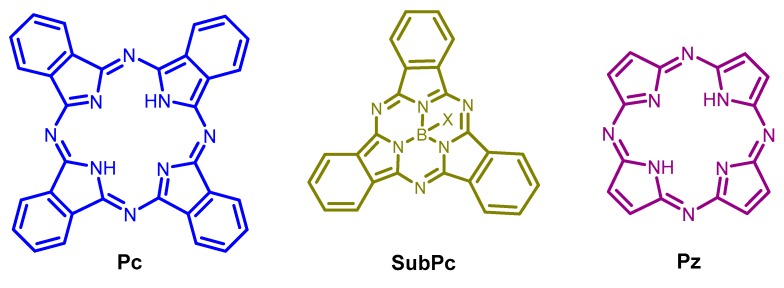
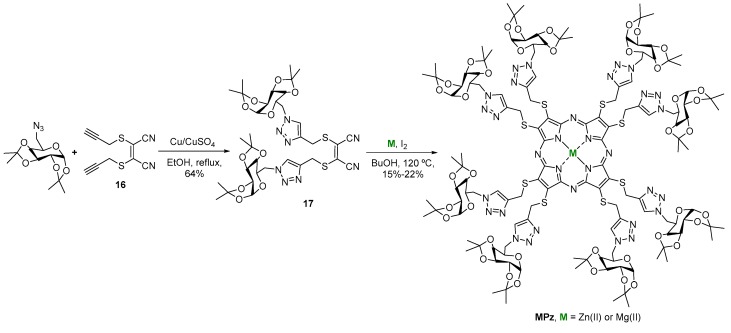
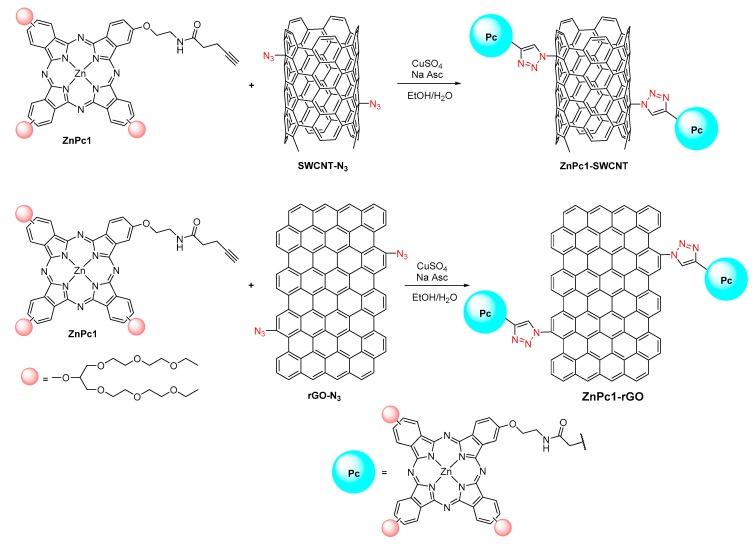
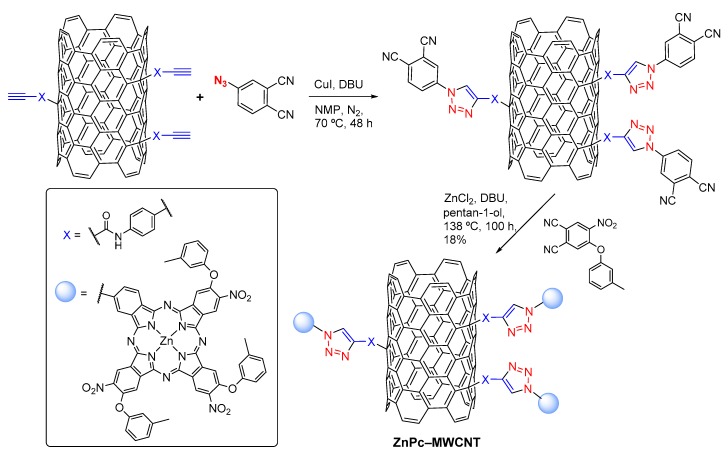
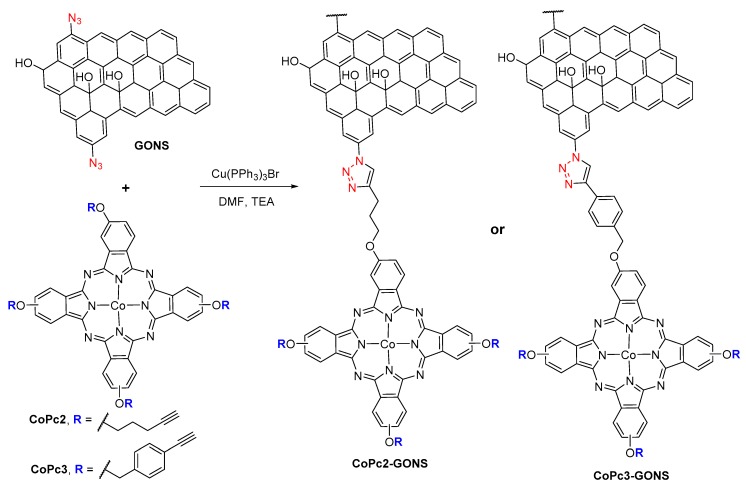
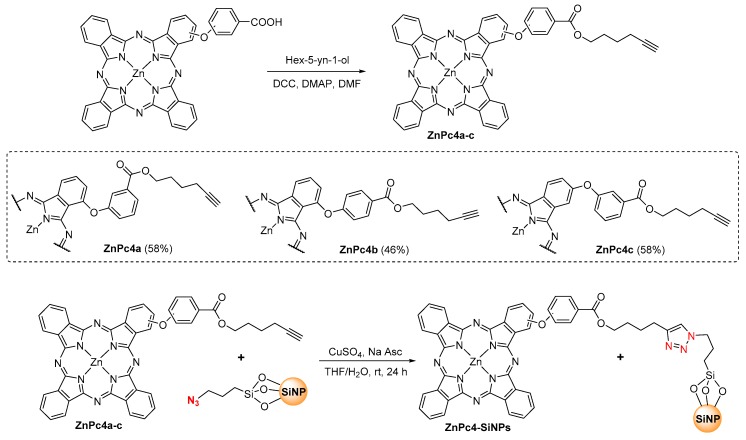
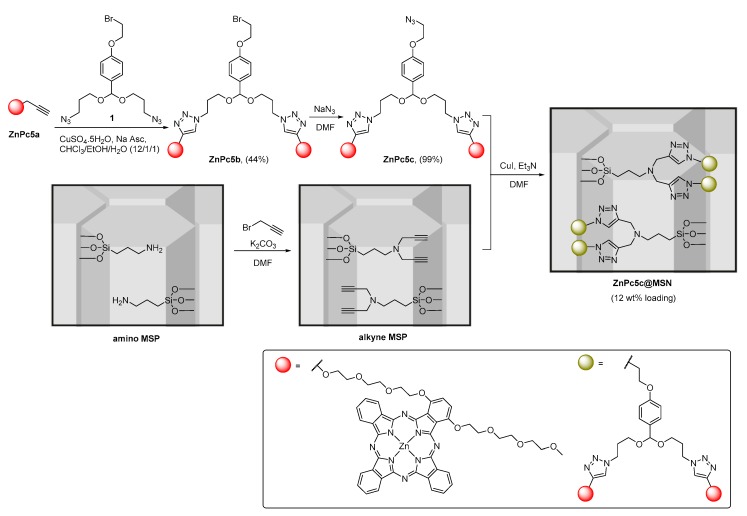
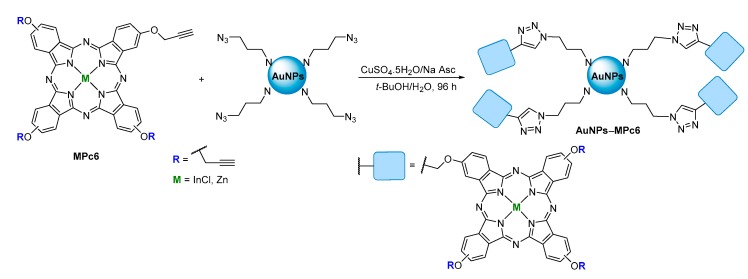
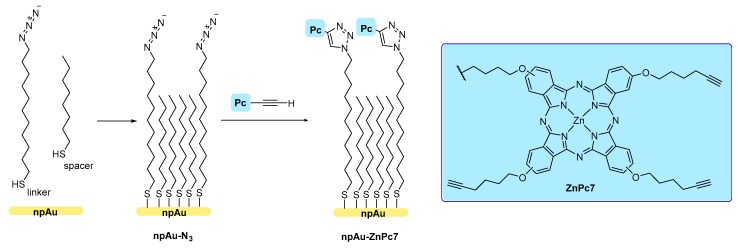
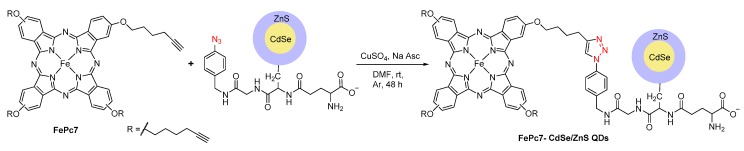
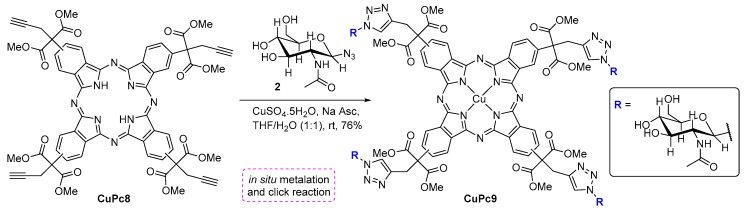
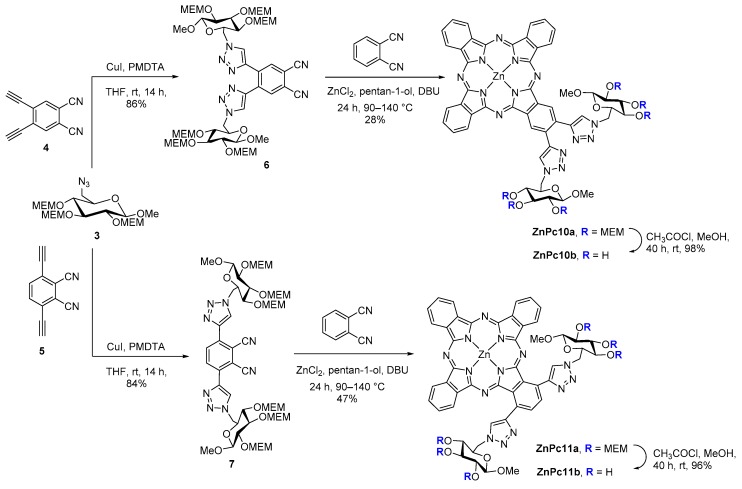
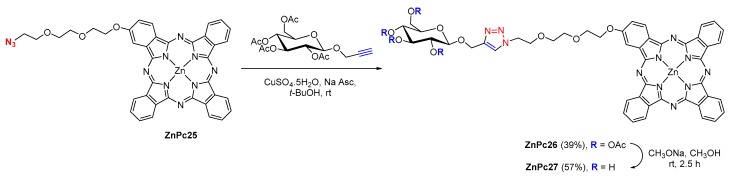
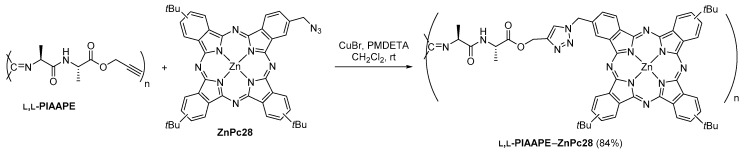
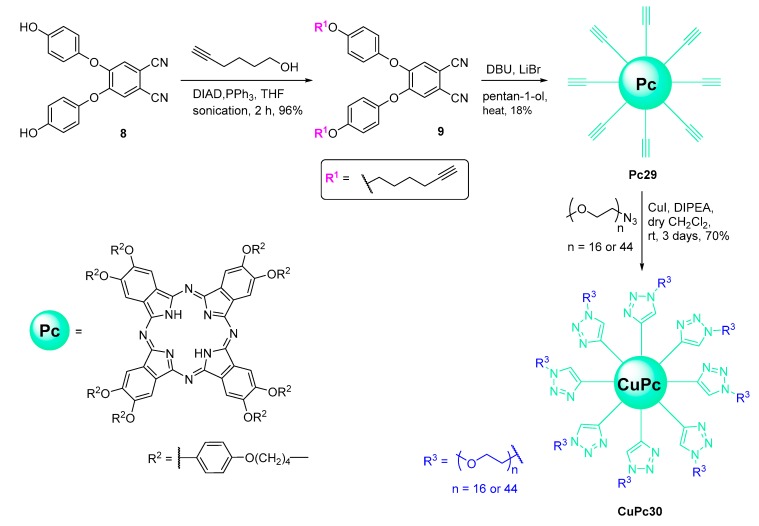
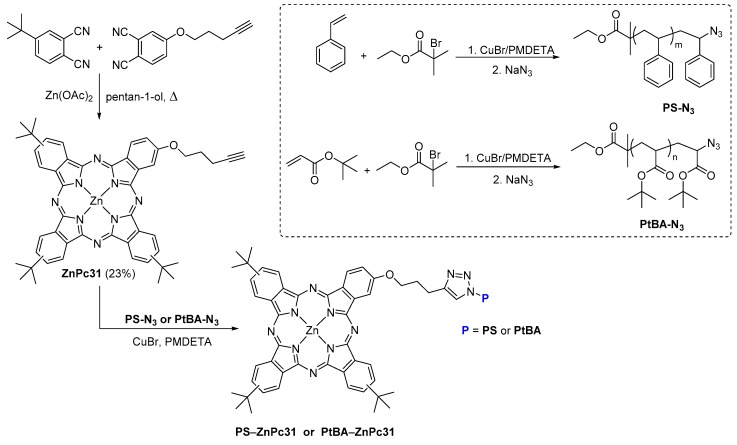
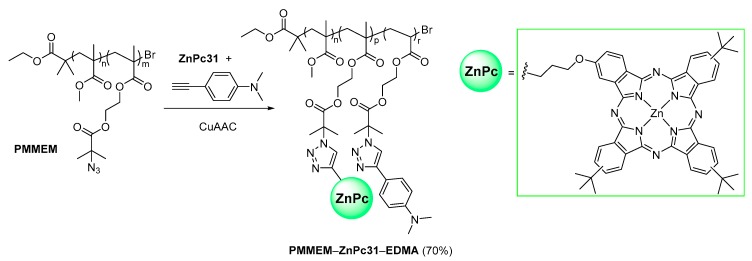
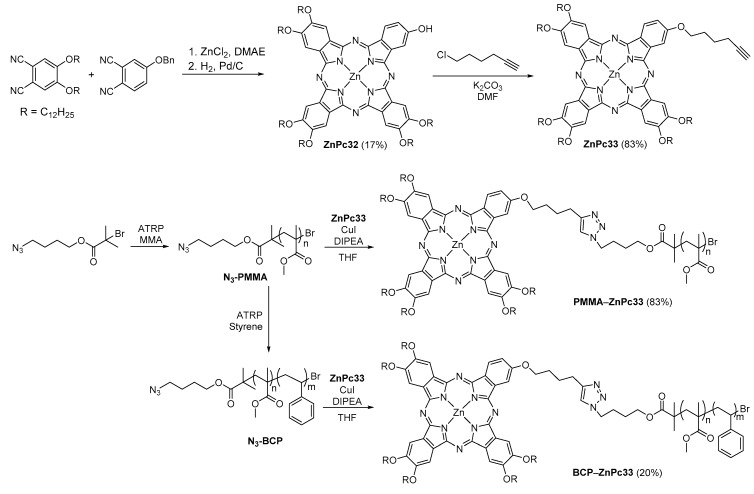
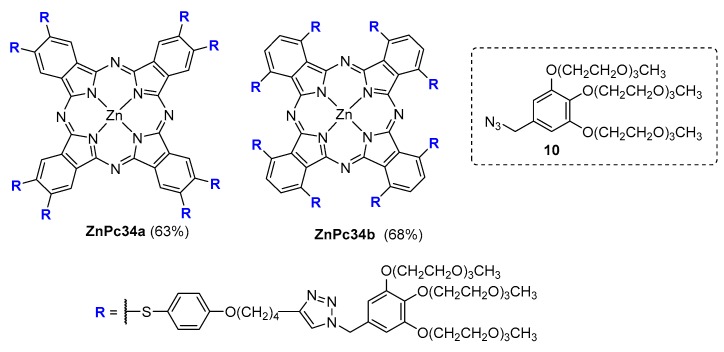
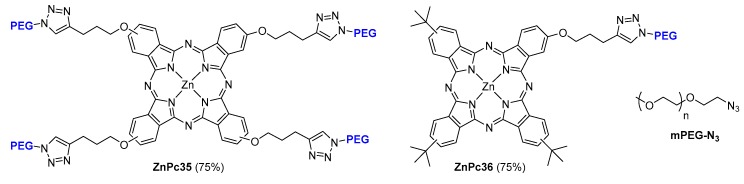
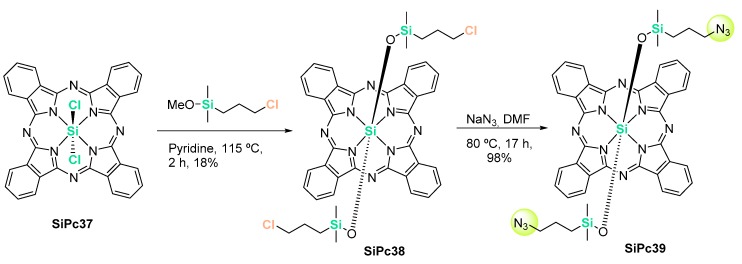
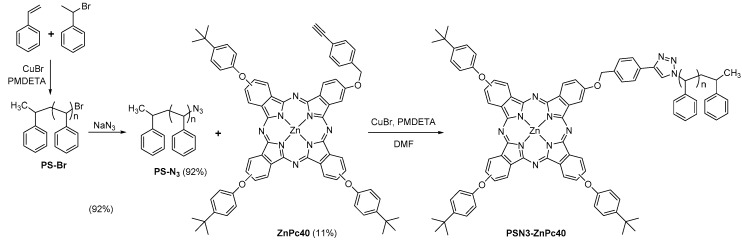
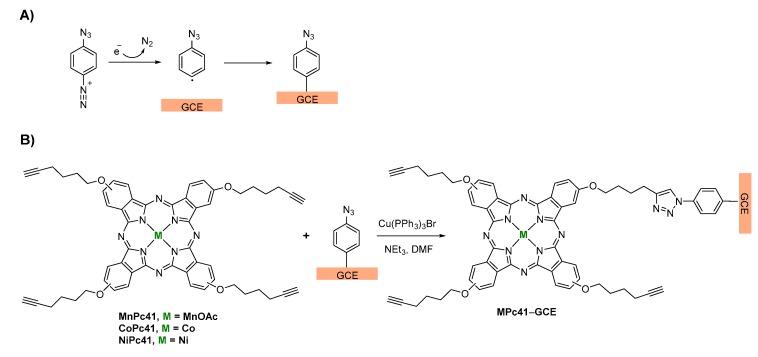
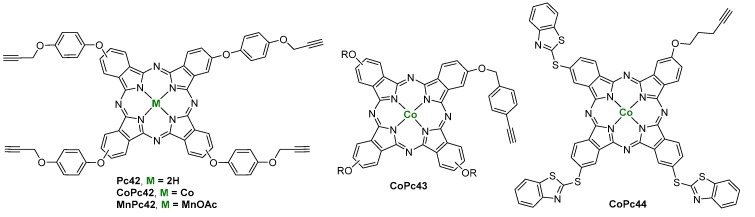
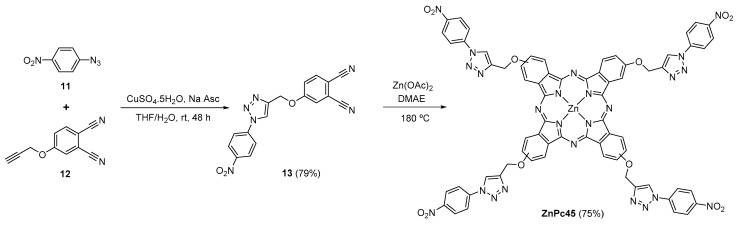
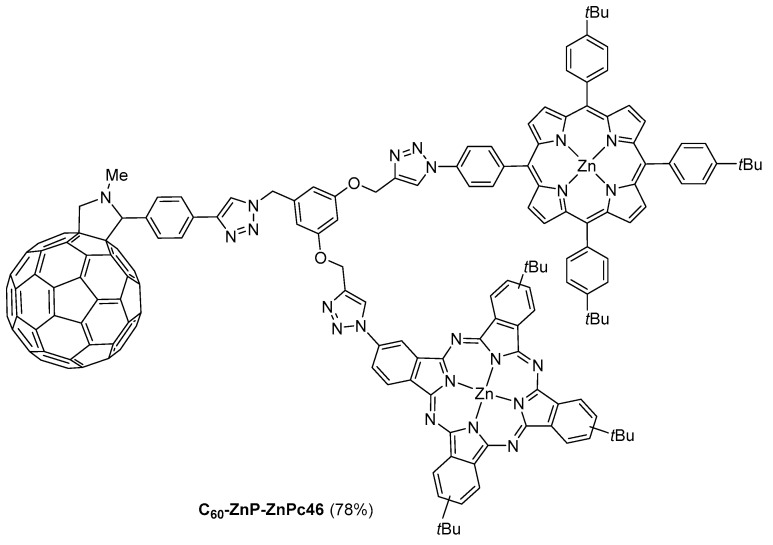
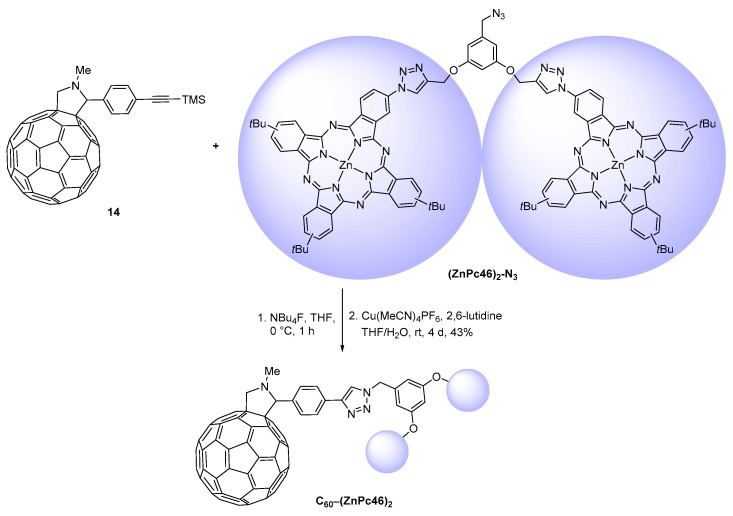
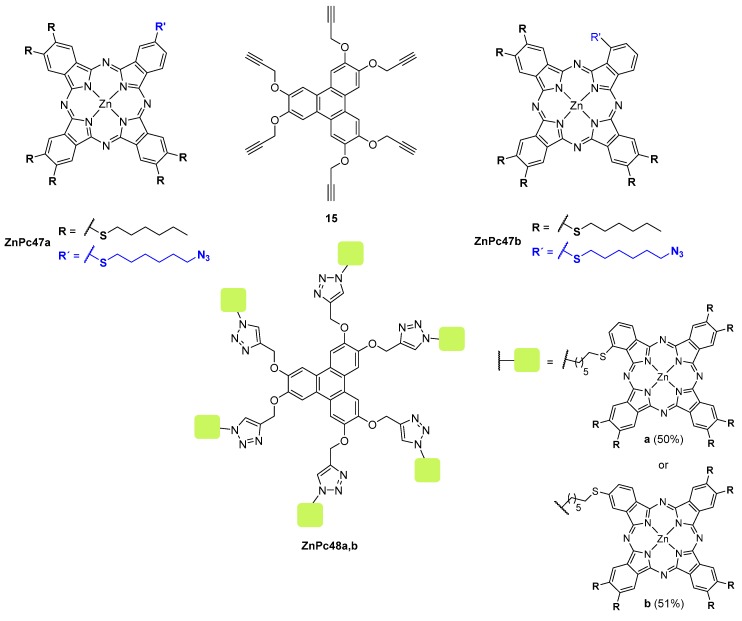
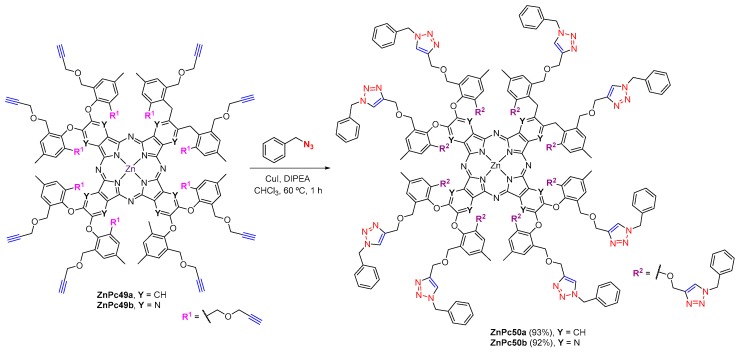
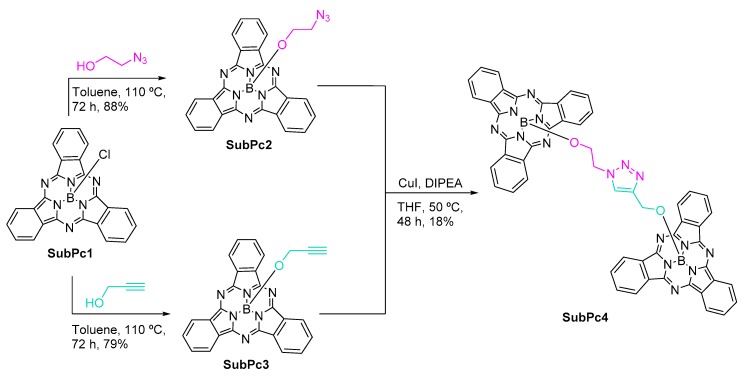
The reaction between organic azides and alkyne derivatives via the Cu(I)-catalyzed azide-alkyne cycloaddition (CuAAC) is an efficient strategy to combine phthalocyanines and analogues with different materials. As examples of such materials, it can be considered the following ones: graphene oxide, carbon nanotubes, silica nanoparticles, gold nanoparticles, and quantum dots. This approach is also being relevant to conjugate phthalocyanines with carbohydrates and to obtain new sophisticated molecules; in such way, new systems with significant potential applications become available. This review highlights recent developments on the synthesis of phthalocyanine, subphthalocyanine, and porphyrazine derivatives where CuAAC reactions are the key synthetic step.
通过铜(I)催化的叠氮-炔环加成(CuAAC)反应,有机叠氮化物和炔烃衍生物之间的反应是将酞菁和类似物与不同材料结合的有效策略。作为此类材料的例子,可以考虑以下几种:氧化石墨烯、碳纳米管、硅纳米粒子、金纳米粒子和量子点。这种方法也与将酞菁与碳水化合物共轭并获得新的复杂分子有关;通过这种方式,可以获得具有重要潜在应用的新系统。这篇综述强调了最近在通过 CuAAC 反应作为关键合成步骤来合成酞菁、次酞菁和卟啉嗪衍生物方面的发展。