School of Chemical and Biological Engineering, Seoul National University, 1 Gwanak-ro, Gwanak-Gu, Seoul 08826, Korea.
Interdisciplinary Program in Bioengineering, Seoul National University, 1 Gwanak-ro, Gwanak-Gu, Seoul 08826, Korea.
Int J Mol Sci. 2020 Apr 11;21(8):2666. doi: 10.3390/ijms21082666.
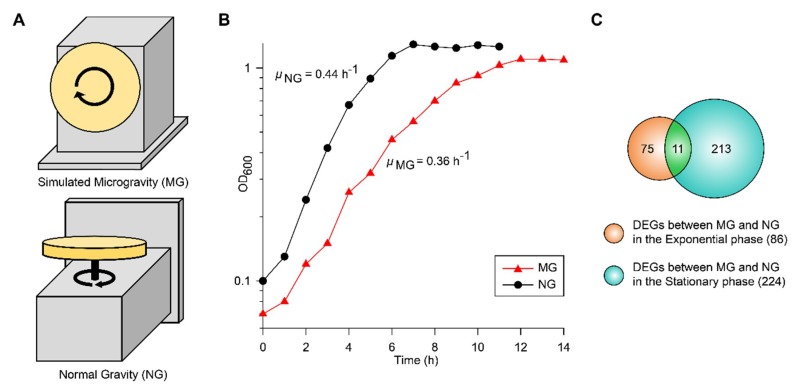
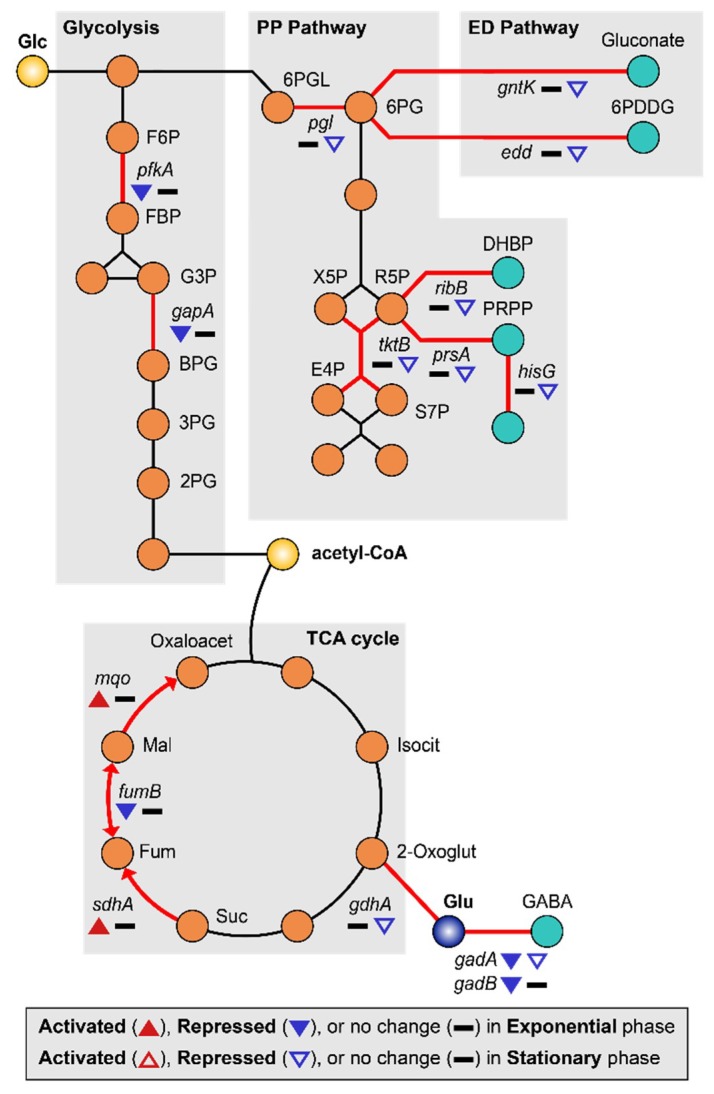
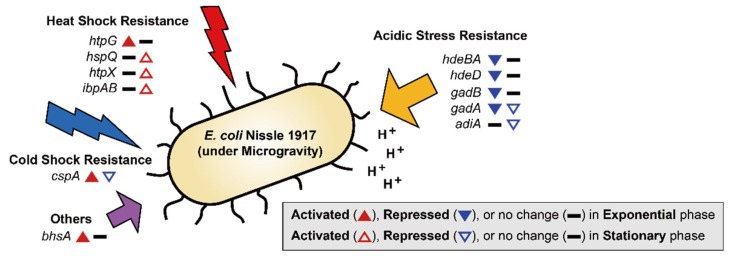
Long-term space missions affect the gut microbiome of astronauts, especially the viability of some pathogens. Probiotics may be an effective solution for the management of gut microbiomes, but there is a lack of studies regarding the physiology of probiotics in microgravity. Here, we investigated the effects of microgravity on the probiotic Nissle 1917 (EcN) by comparing transcriptomic data during exponential and stationary growth phases under simulated microgravity and normal gravity. Microgravity conditions affected several physiological features of EcN, including its growth profile, biofilm formation, stress responses, metal ion transport/utilization, and response to carbon starvation. We found that some changes, such as decreased adhesion ability and acid resistance, may be disadvantageous to EcN relative to gut pathogens under microgravity, indicating the need to develop probiotics optimized for space flight.
长期的太空任务会影响宇航员的肠道微生物组,特别是一些病原体的生存能力。益生菌可能是管理肠道微生物组的有效方法,但在微重力环境下益生菌的生理学特性研究还很缺乏。在这里,我们通过比较模拟微重力和正常重力下指数生长和静止生长阶段的转录组数据,研究了微重力对益生菌 Nissle 1917(EcN)的影响。微重力条件影响 EcN 的几个生理特征,包括其生长曲线、生物膜形成、应激反应、金属离子运输/利用以及对碳饥饿的反应。我们发现,一些变化,如粘附能力下降和耐酸性降低,在微重力下可能对 EcN 相对于肠道病原体不利,这表明需要开发针对太空飞行优化的益生菌。