Department of Infectious Diseases, J. Craig Venter Institute, Rockville, MD, USA.
NASA-Johnson Space Center, Houston, TX, USA.
Sci Rep. 2019 Jul 9;9(1):9911. doi: 10.1038/s41598-019-46303-8.
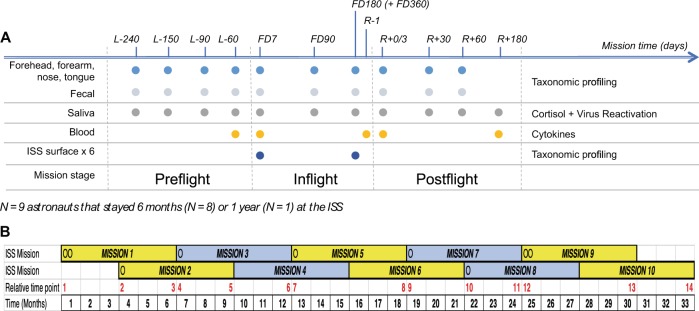
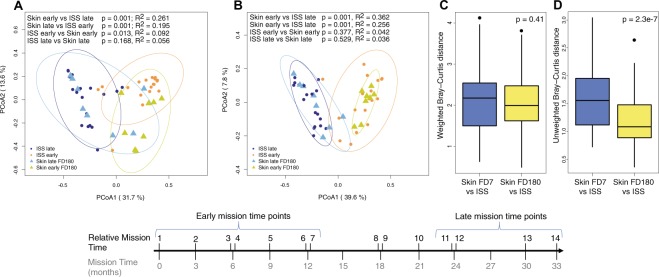
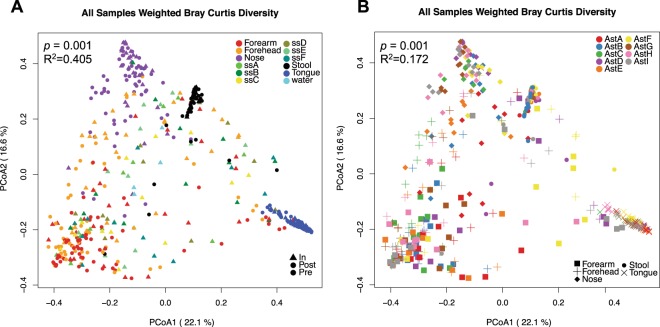
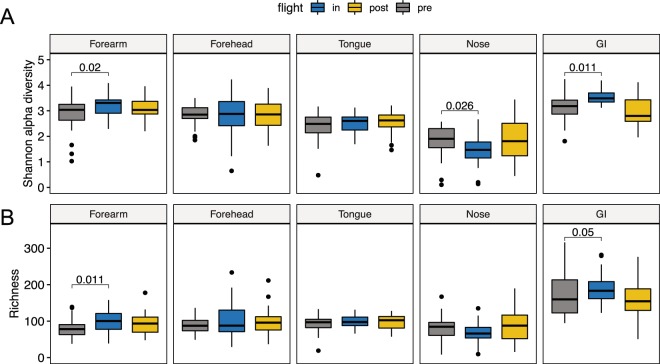
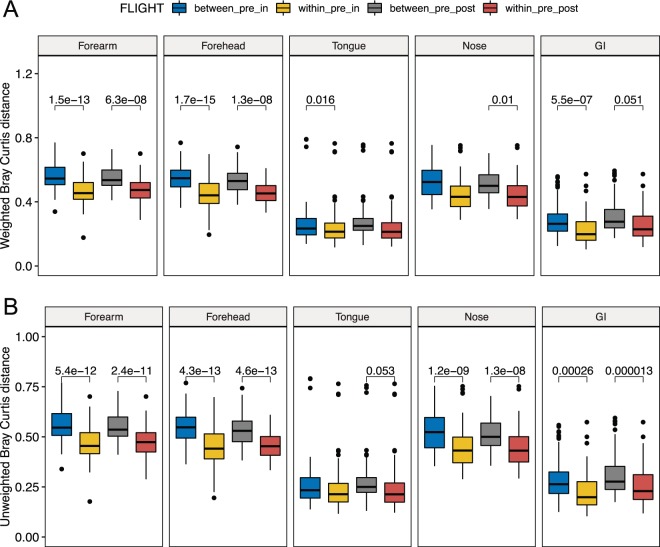
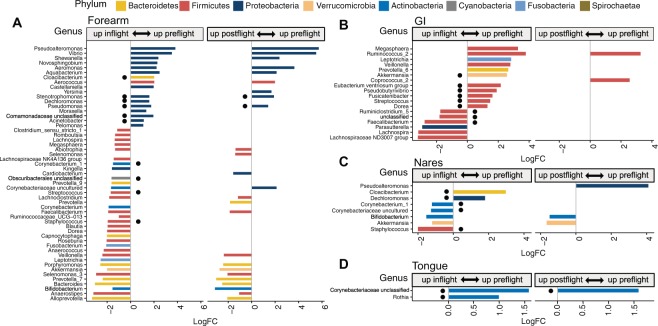
Over the course of a mission to the International Space Station (ISS) crew members are exposed to a number of stressors that can potentially alter the composition of their microbiomes and may have a negative impact on astronauts' health. Here we investigated the impact of long-term space exploration on the microbiome of nine astronauts that spent six to twelve months in the ISS. We present evidence showing that the microbial communities of the gastrointestinal tract, skin, nose and tongue change during the space mission. The composition of the intestinal microbiota became more similar across astronauts in space, mostly due to a drop in the abundance of a few bacterial taxa, some of which were also correlated with changes in the cytokine profile of crewmembers. Alterations in the skin microbiome that might contribute to the high frequency of skin rashes/hypersensitivity episodes experienced by astronauts in space were also observed. The results from this study demonstrate that the composition of the astronauts' microbiome is altered during space travel. The impact of those changes on crew health warrants further investigation before humans embark on long-duration voyages into outer space.
在国际空间站(ISS)的任务过程中,机组人员会接触到许多应激源,这些应激源可能会改变他们的微生物组组成,并对宇航员的健康产生负面影响。在这里,我们研究了长期太空探索对九名在 ISS 上度过六到十二个月的宇航员微生物组的影响。我们提供的证据表明,在太空任务期间,胃肠道、皮肤、鼻子和舌头的微生物群落发生了变化。肠道微生物群的组成在太空中的宇航员之间变得更加相似,这主要是由于少数细菌分类群的丰度下降所致,其中一些分类群与乘员细胞因子谱的变化也相关。还观察到皮肤微生物组的改变,这可能导致宇航员在太空中皮肤疹/过敏发作的高频率。这项研究的结果表明,在太空旅行期间,宇航员的微生物组组成发生了改变。在人类进行长时间的外层空间航行之前,需要进一步研究这些变化对机组人员健康的影响。