Laboratory of Molecular Cell Biology, Graduate School of Medicines, Korea University College of Medicine, Korea University, Seoul, Republic of Korea.
Department of Biosystems and Biotechnology, College of Life Sciences and Biotechnology, Korea University, Seoul, Republic of Korea.
mBio. 2020 Apr 14;11(2):e03258-19. doi: 10.1128/mBio.03258-19.
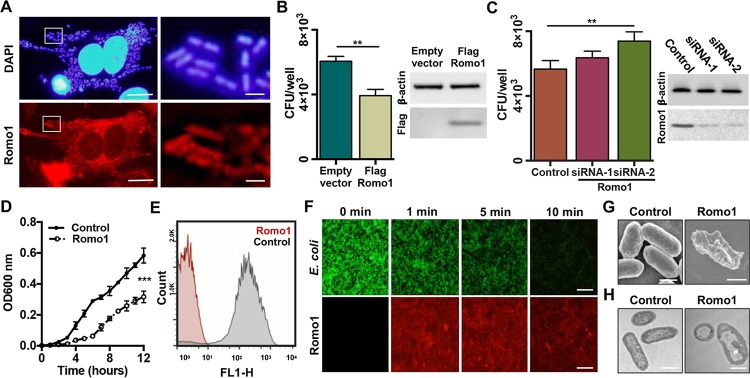
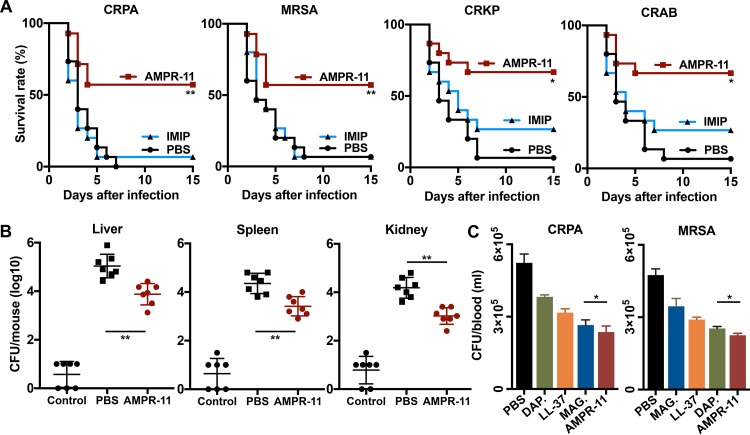
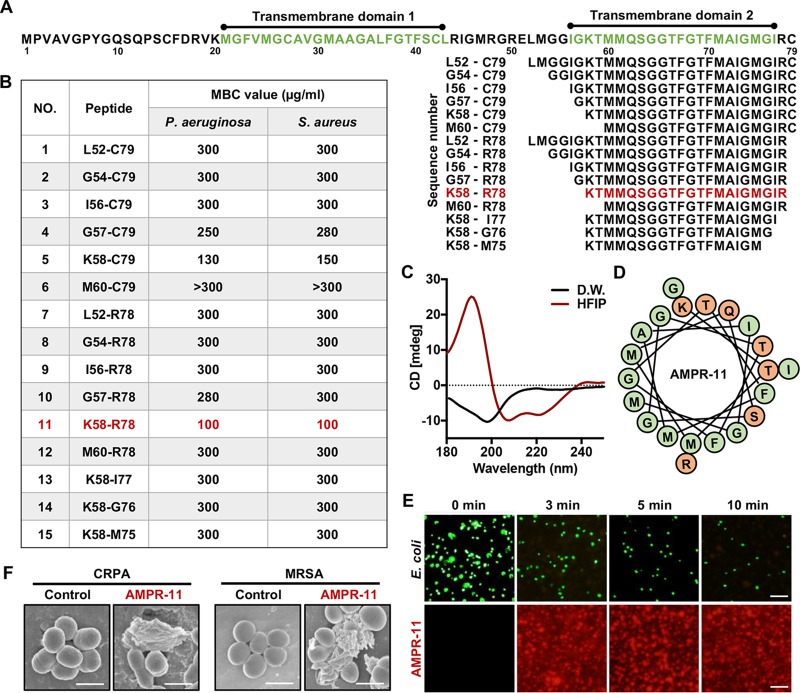
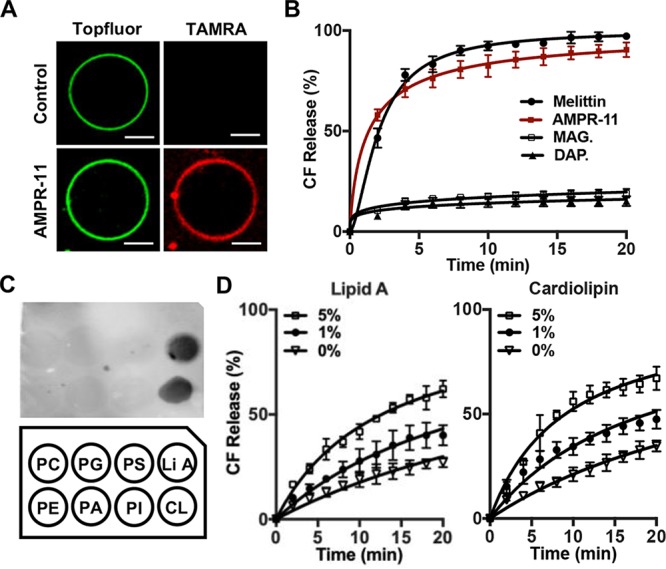
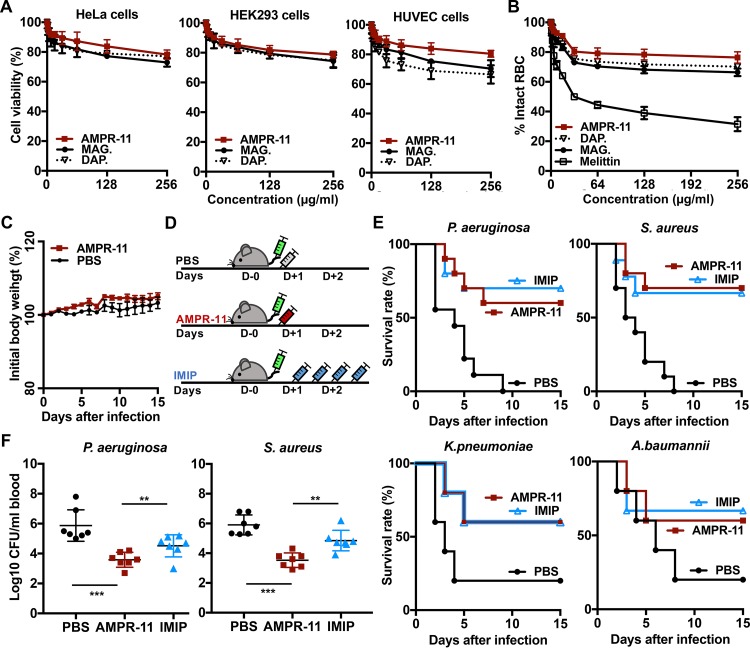
To overcome increasing bacterial resistance to conventional antibiotics, many antimicrobial peptides (AMPs) derived from host defense proteins have been developed. However, there are considerable obstacles to their application to systemic infections because of their low bioavailability. In the present study, we developed an AMP derived from Romo1 (AMPR-11) that exhibits a broad spectrum of antimicrobial activity. AMPR-11 showed remarkable efficacy against sepsis-causing bacteria, including multidrug-resistant strains, with low toxicity in a murine model of sepsis after intravenous administration. It seems that AMPR-11 disrupts bacterial membranes by interacting with cardiolipin and lipid A. From the results of this study, we suggest that AMPR-11 is a new class of agent for overcoming low efficacy in the intravenous application of AMPs and is a promising candidate to overcome multidrug resistance. Abuse of antibiotics often leads to increase of multidrug-resistant (MDR) bacteria, which threatens the life of human beings. To overcome threat of antibiotic resistance, scientists are developing a novel class of antibiotics, antimicrobial peptides, that can eradicate MDR bacteria. Unfortunately, these antibiotics have mainly been developed to cure bacterial skin infections rather than others, such as life-threatening sepsis. Major pharmaceutical companies have tried to develop antiseptic drugs; however, they have not been successful. Here, we report that AMPR-11, the antimicrobial peptide (AMP) derived from mitochondrial nonselective channel Romo1, has antimicrobial activity against Gram-positive and Gram-negative bacteria comprising many clinically isolated MDR strains. Moreover, AMPR-11 increased the survival rate in a murine model of sepsis caused by MDR bacteria. We propose that AMPR-11 could be a novel antiseptic drug candidate with a broad antimicrobial spectrum to overcome MDR bacterial infection.
为了克服细菌对抗生素的耐药性日益增强的问题,许多源自宿主防御蛋白的抗菌肽 (AMPs) 已经被开发出来。然而,由于其生物利用度低,将它们应用于全身感染仍然存在相当大的障碍。在本研究中,我们开发了一种源自 Romo1 的 AMP(AMPR-11),它具有广谱的抗菌活性。AMPR-11 对引起败血症的细菌(包括多药耐药菌株)表现出显著的疗效,在败血症的小鼠模型中经静脉给药后毒性较低。它似乎通过与心磷脂和脂质 A 相互作用来破坏细菌膜。根据这项研究的结果,我们认为 AMPR-11 是一种克服 AMP 静脉应用疗效低的新型药物,是克服多药耐药性的有前途的候选药物。抗生素的滥用常常导致多药耐药 (MDR) 细菌的增加,这威胁着人类的生命。为了克服抗生素耐药性的威胁,科学家们正在开发一种新型抗生素,即抗菌肽,可以消灭 MDR 细菌。不幸的是,这些抗生素主要是为了治疗细菌皮肤感染而开发的,而不是其他的,如危及生命的败血症。大制药公司曾试图开发抗菌药物;然而,他们并没有成功。在这里,我们报告说,源自线粒体非选择性通道 Romo1 的抗菌肽 (AMP) AMPR-11 对包括许多临床分离的多药耐药菌株在内的革兰氏阳性和革兰氏阴性细菌具有抗菌活性。此外,AMPR-11 提高了 MDR 细菌引起的败血症小鼠模型的存活率。我们提出,AMPR-11 可以成为一种新型的广谱抗菌候选药物,以克服 MDR 细菌感染。