Garvey Myles D, Carnovale Steven
Department of Marketing and Management Science, Cotsakos College of Business, William Paterson University, 1600 Valley Road, Room 3070, Wayne, NJ, United States of America.
Department of Management,Saunders College of Business, Rochester Institute of Technology, 108 Lomb Memorial Drive, Bldg. 12, Room 3336, Rochester, NY 14623, United States of America.
Int J Prod Econ. 2020 Oct;228:107752. doi: 10.1016/j.ijpe.2020.107752. Epub 2020 Apr 3.
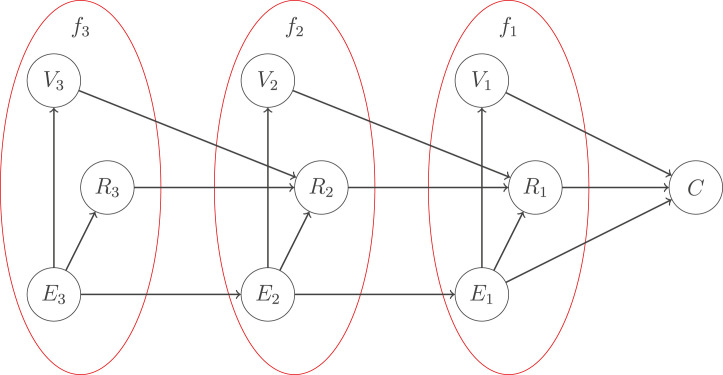
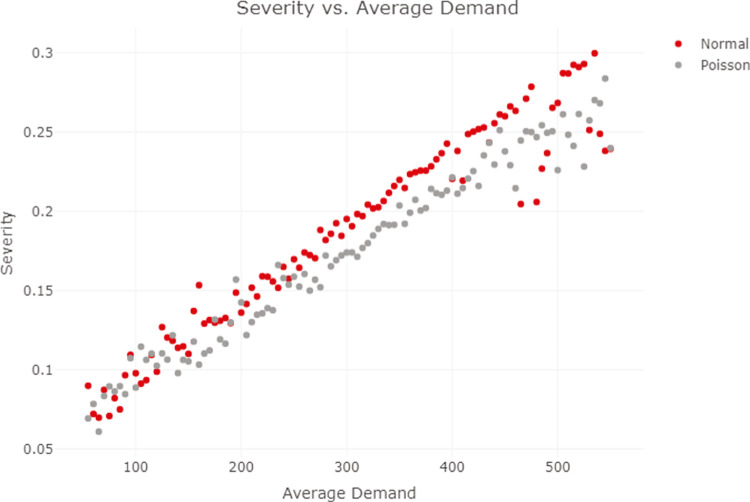
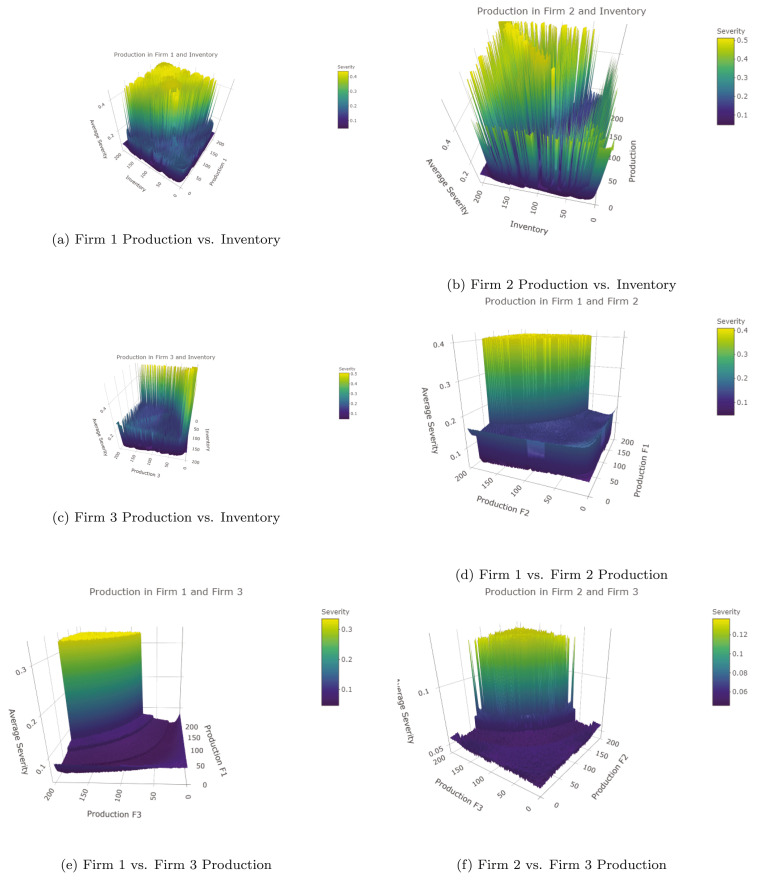
How should managers take into account the propagation of supply chain disruptions and risks (i.e. the ripple effect) when they design their inventory policies? For over 60 years, various extensions and applications to the popular newsvendor model have been suggested, where cost/profit are often the focal objective. We propose a new version of the traditional single-period newsvendor model - the "Rippled Newsvendor" - with supply chain severity (i.e. risk propagation) as the primary objective while taking into account network structure. Our model considers exogenous and endogenous risk(s) of disruption while exploring the tension between under-supply and "wear-and-tear" (i.e system breakdown). To model the intricacies of this trade-off whilst minimizing the potential spread of risk, we leverage a Bayesian Network whereby the conditional probability distributions are functions of the inventory ordering decisions. We use a simulation study to understand the nature of our objective function as well as to gain insight into the potential optimal ordering policies of this new model. Furthermore, the simulation seeks to understand how the various factors in our system impact total risk severity, and if they do so in different ways. Our simulations indicate that local exogenous risk is of greater importance than non-local exogenous risk. Furthermore, we show that the type of risk, as well as the structural characteristics of the supply chain and inventory system, impact risk severity differently.
在设计库存策略时,管理者应如何考虑供应链中断和风险的传播(即涟漪效应)?六十多年来,人们针对流行的报童模型提出了各种扩展和应用,其中成本/利润通常是核心目标。我们提出了传统单周期报童模型的一个新版本——“涟漪报童模型”,将供应链严重程度(即风险传播)作为主要目标,同时考虑网络结构。我们的模型在探讨供应不足与“损耗”(即系统故障)之间的矛盾时,考虑了中断的外生和内生风险。为了在最小化风险潜在传播的同时对这种权衡的复杂性进行建模,我们利用了贝叶斯网络,其中条件概率分布是库存订购决策的函数。我们通过模拟研究来了解目标函数的性质,并深入了解这种新模型的潜在最优订购策略。此外,该模拟旨在了解系统中的各种因素如何影响总风险严重程度,以及它们的影响方式是否不同。我们的模拟表明,局部外生风险比非局部外生风险更为重要。此外,我们还表明,风险类型以及供应链和库存系统的结构特征对风险严重程度的影响各不相同。