Ivanov Dmitry, Dolgui Alexandre
Berlin School of Economics and Law, Supply Chain and Operations Management, 10825, Berlin, Germany.
IMT Atlantique, LS2N - CNRS, La Chantrerie, 4 rue Alfred Kastler, 44307, Nantes, France.
Int J Prod Econ. 2021 Feb;232:107921. doi: 10.1016/j.ijpe.2020.107921. Epub 2020 Sep 15.
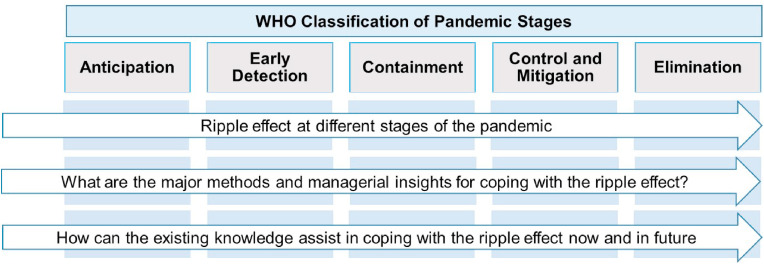
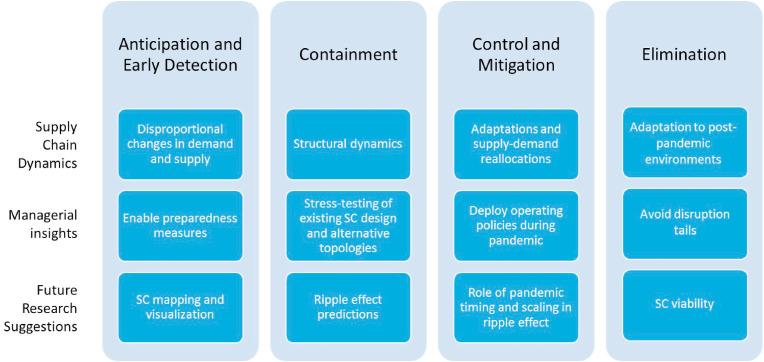
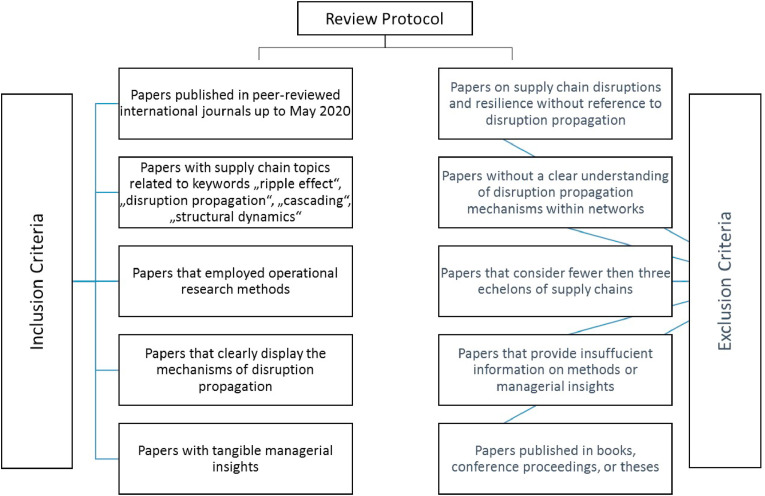
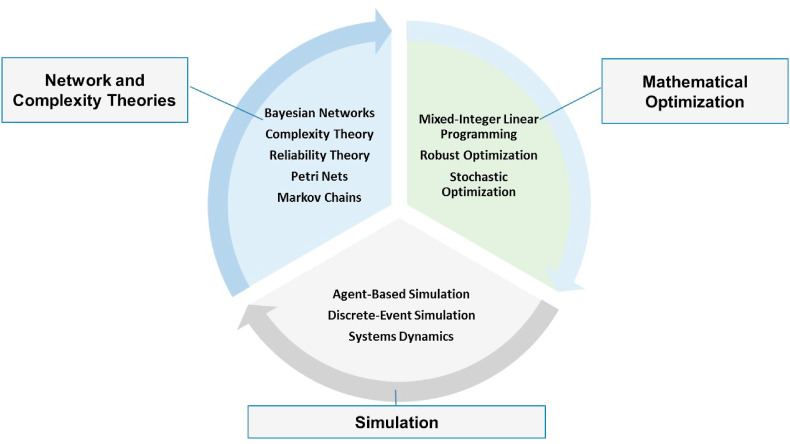
The COVID-19 pandemic unveils unforeseen and unprecedented fragilities in supply chains (SC). A primary stressor of SCs and their subsequent shocks derives from disruption propagation (i.e., the ripple effect) through related networks. In this paper, we conceptualize current state and future research directions on the ripple effect for pandemic context. We scrutinize the existing OR (Operational Research) studies published in international journals dealing with disruption propagation and structural dynamics in SCs. Our study pursues two major contributions in relation to two research questions. First, we collate state-of-the-art research on disruption propagation in SCs and identify a methodical taxonomy along with theories displaying their value and applications for coping with the impacts of pandemics on SCs. Second, we reveal and systemize managerial insights from theory used for operating (adapting) amid a pandemic and during times of recovery, along with becoming more resistant to future pandemics. Streamlining the literature allowed us to reveal several new research tensions and novel categorizations and classifications. The outcomes of our study show that methodical contributions and the resulting managerial insights can be categorized into three levels, i.e., network, process, and control. Our analysis reveals that adaptation capabilities play the most crucial role in managing the SCs under pandemic disruptions. Our findings depict how the existing OR methods can help coping with the ripple effect at five pandemic stages (i.e., Anticipation; Early Detection; Containment; Control and Mitigation; and Elimination) following the WHO classification. The outcomes and findings of our study can be used by industry and researchers alike to progress the decision-support systems guiding SCs amid the COVID-19 pandemic and toward recovery. Suggestions for future research directions are offered and discussed.
新冠疫情揭示了供应链中意想不到且前所未有的脆弱性。供应链的一个主要压力源及其后续冲击源于通过相关网络的干扰传播(即连锁反应)。在本文中,我们对疫情背景下连锁反应的当前状态和未来研究方向进行了概念化。我们仔细审查了国际期刊上发表的关于供应链中干扰传播和结构动态的现有运筹学研究。我们的研究针对两个研究问题做出了两项主要贡献。首先,我们整理了关于供应链中干扰传播的前沿研究,并确定了一个系统的分类法以及展示其在应对疫情对供应链影响方面的价值和应用的理论。其次,我们揭示并系统化了在疫情期间及恢复期间用于运营(适应)以及增强对未来疫情抵御能力的理论中的管理见解。对文献的梳理使我们揭示了几个新的研究张力以及新颖的分类和类别。我们的研究结果表明,系统性贡献及由此产生的管理见解可分为三个层面,即网络、流程和控制。我们的分析表明,适应能力在疫情干扰下管理供应链方面起着最关键的作用。我们的研究结果描述了现有运筹学方法如何有助于应对世界卫生组织分类下的五个疫情阶段(即预期;早期检测;遏制;控制与缓解;以及消除)的连锁反应。我们研究的结果和发现可供行业和研究人员用于推进在新冠疫情期间及走向恢复过程中指导供应链的决策支持系统。我们还提供并讨论了未来研究方向的建议。