Zhu Na, Li Jiang, Li Yongli, Zhang Yuwei, Du Qiubo, Hao Peiyuan, Li Jinying, Cao Xueming, Li Li
Department of Health Management, Henan Provincial People's Hospital, People's Hospital of Zhengzhou University, School of Clinical Medicine, Henan University, Zhengzhou, China.
Henan Provincial Research Center of Natural Medicine Extraction and Medical Technology Application Engineering, Zhengzhou Railway Vocational Technical College, Zhengzhou, China.
Front Pharmacol. 2020 Mar 27;11:367. doi: 10.3389/fphar.2020.00367. eCollection 2020.
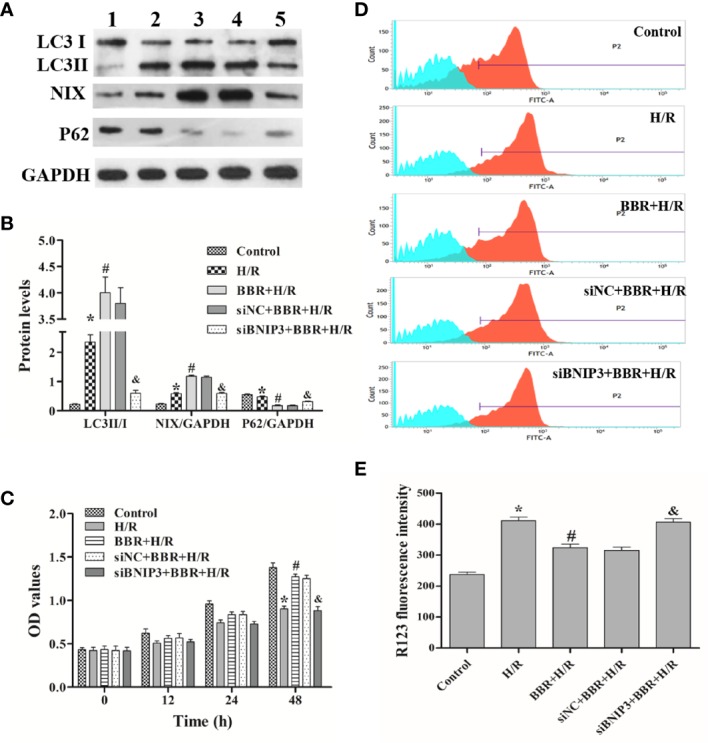
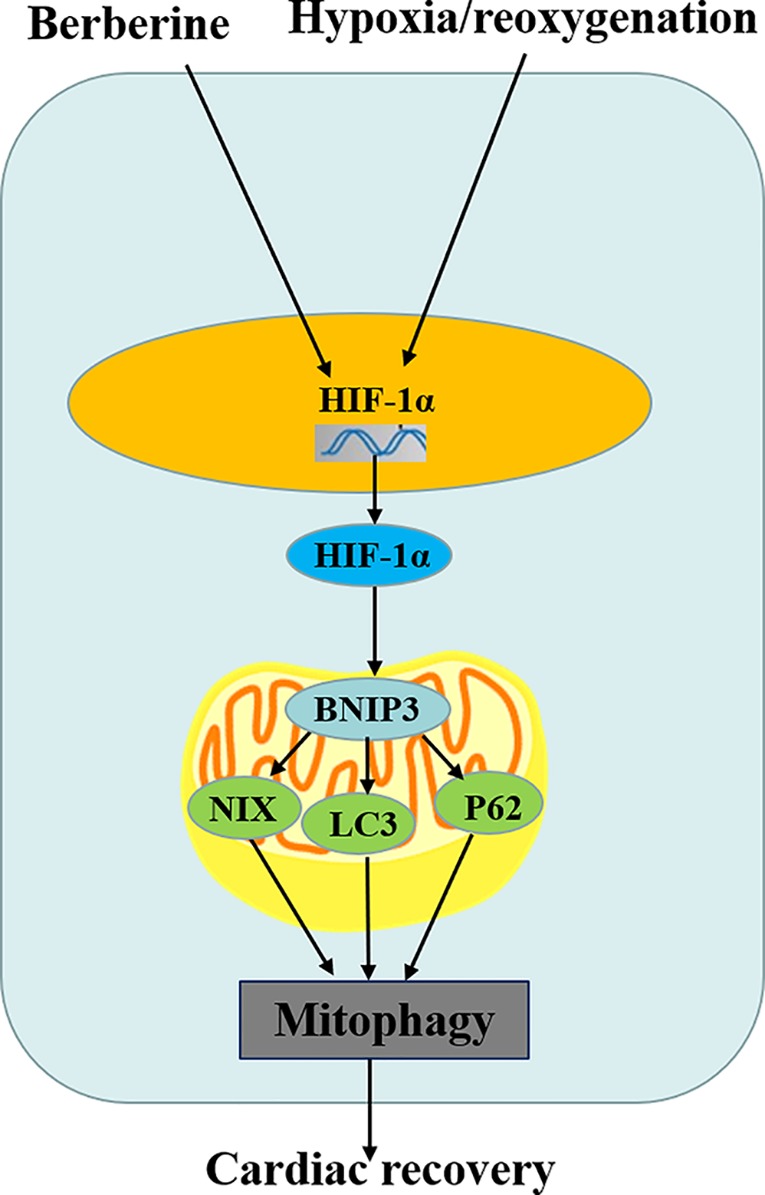
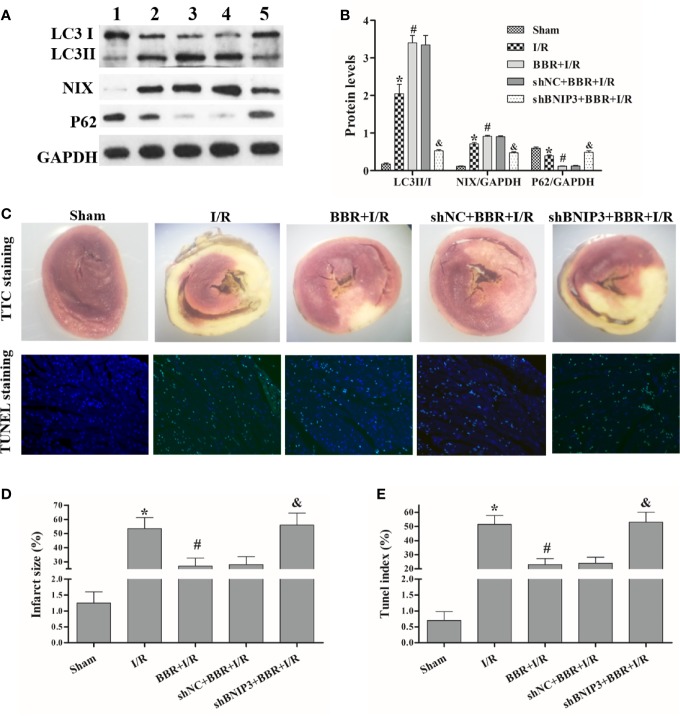
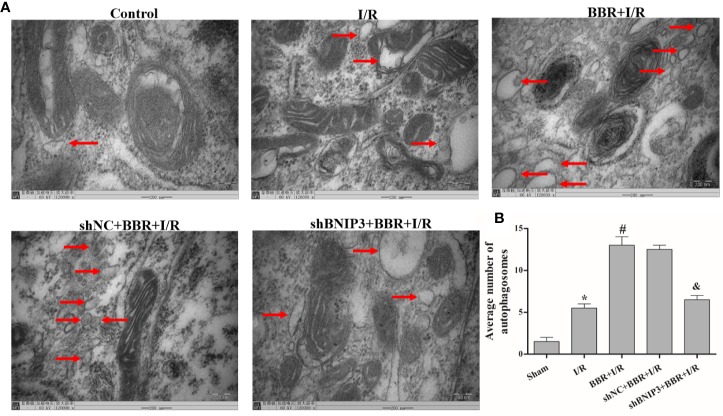
Berberine (BBR) has a variety of pharmacological activities and is widely used in Asian countries. However, the clinical application of BBR still lacks scientific basis, what protective mechanism of BBR against myocardial ischemia-reperfusion injury (MIRI). experiments, BBR pretreatment regulated autophagy-related protein expression, induced cell proliferation and autophagosome formation, and reduced the mitochondrial membrane potential (ΔΨm) increase in H9C2 cells. experiments, BBR reduced the myocardial infarct size, decreased cardiomyocyte apoptosis, and markedly decreased myocardial enzyme (CK-MB, LDH, and AST) activity-induced I/R. In addition, upon BNIP3 knockdown, the regulatory effects of BBR on the above indicators were weakened both in H9C2 cells and . Luciferase reporter and ChIP assays indicated that BBR mediated BNIP3 expression by enhancing the binding of HIF-1α to the BNIP3 promoter. BBR protects against myocardial I/R injury by inducing cardiomyocytes proliferation, inhibiting cardiomyocytes apoptosis, and inducing the mitophagy-mediated HIF-1α/BNIP3 pathway. Thus, BBR may serve as a novel therapeutic drug for myocardial I/R injury.
黄连素(BBR)具有多种药理活性,在亚洲国家广泛使用。然而,BBR的临床应用仍缺乏科学依据,其对心肌缺血再灌注损伤(MIRI)的保护机制是什么。实验中,BBR预处理可调节自噬相关蛋白表达,诱导细胞增殖和自噬体形成,并减少H9C2细胞中线粒体膜电位(ΔΨm)的升高。实验中,BBR可减小心肌梗死面积,减少心肌细胞凋亡,并显著降低缺血/再灌注诱导的心肌酶(CK-MB、LDH和AST)活性。此外,在敲低BNIP3后,BBR对上述指标的调节作用在H9C2细胞和……中均减弱。荧光素酶报告基因和染色质免疫沉淀实验表明,BBR通过增强HIF-1α与BNIP3启动子的结合来介导BNIP3表达。BBR通过诱导心肌细胞增殖、抑制心肌细胞凋亡以及诱导线粒体自噬介导的HIF-1α/BNIP3通路来保护心肌免受缺血/再灌注损伤。因此,BBR可能成为治疗心肌缺血/再灌注损伤的新型治疗药物。