Department of gastroenterology, The Children's Hospital, Zhejiang University School of Medicine, National Clinical Research Center for Child Health, 3333 Bin Sheng Road, Hangzhou, 310052, Zhejiang Province, China.
BMC Pediatr. 2020 Mar 23;20(1):133. doi: 10.1186/s12887-020-1999-0.
Congenital tufting enteropathy (CTE) is a rare disease that manifests as intractable diarrhea during the neonatal period which is associated with mutations of the epithelial cell adhesion molecule (EpCAM) gene.
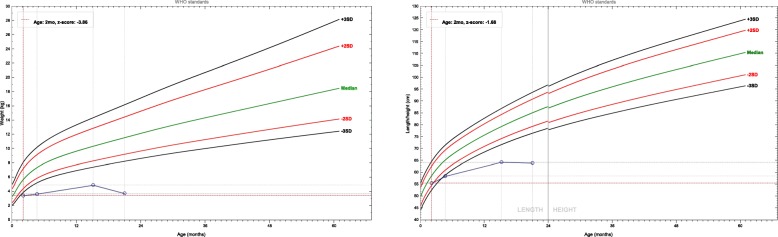
A male infant who presented with vomiting, diarrhea, abdominal distention, malnutrition and growth failure was admitted to our department when he was 2 months old. His parents were healthy and nonconsanguineous. Etiologic examinations of stool, inflammatory markers, blood gas and electrolytes levels, serum albumin level, serum immunoglobin levels were all normal. And there was no indication for metabolic diseases. Additionally, gastrointestinal contrast did not reveal abnormality of gastrointestinal. The patient was diagnosed with intestinal malabsorptive syndrome and severe malnutrition without definite cause. He was on supportive treatment and nutritional therapy for 13 months. However, he did not gain weight obviously. He was discharged at the age of 15 months and was fed with partial hydrolyzed formula and rice paste at home. Three months later he developed hypoglycemia and severe respiratory infection. Finally, he died due to sepsis and multiple organs failure. The next generation sequencing revealed one homozygous mutation of EpCAM gene and one complex heterozygous mutation of TTC7A gene. He was diagnosed CTE according to the genetic results and clinical manifestations.
CTE is rarely reported in Asia. Patients present with congenital diarrhea, poor weight gain and growth failure are recommended to perform endoscopy examination with proper immunohistochemistry study as early as possible, and genetic testing is necessary when suspecting congenital diarrhea and enteropathy.
先天性簇状肠病(CTE)是一种罕见疾病,表现为新生儿期的难治性腹泻,与上皮细胞黏附分子(EpCAM)基因突变有关。
一名 2 个月大的男性婴儿因呕吐、腹泻、腹胀、营养不良和生长发育迟缓而入住我科。患儿父母健康且非近亲结婚。大便、炎症标志物、血气电解质水平、血清白蛋白水平、血清免疫球蛋白水平等病因检查均正常,无代谢性疾病迹象。此外,胃肠道对比检查未发现胃肠道异常。患儿被诊断为肠吸收不良综合征和严重营养不良,但病因不明。他接受了 13 个月的支持治疗和营养治疗,但体重增长不明显。15 个月时出院,在家中喂食部分水解配方奶粉和米糊。3 个月后,他出现低血糖和严重呼吸道感染。最终,他因败血症和多器官衰竭而死亡。下一代测序显示 EpCAM 基因存在一个纯合突变和 TTC7A 基因一个复杂的杂合突变。根据基因结果和临床表现,诊断为 CTE。
CTE 在亚洲很少见。对于有先天性腹泻、体重增长不良和生长发育迟缓的患者,建议尽早进行内镜检查并进行适当的免疫组织化学研究,对于怀疑先天性腹泻和肠病的患者,需要进行基因检测。