Department of Chemistry and Biochemistry, Faculty of Chemistry and Chemical Technology, University of Ljubljana, SI-1000 Ljubljana, Slovenia.
Department of Biochemistry, Molecular and Structural Biology, Jožef Stefan Institute, SI-1000 Ljubljana, Slovenia.
Cells. 2020 May 31;9(6):1361. doi: 10.3390/cells9061361.
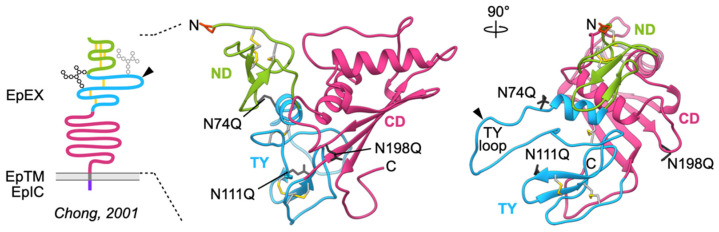
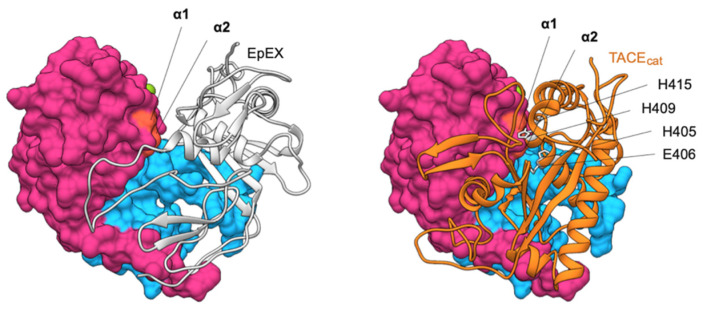
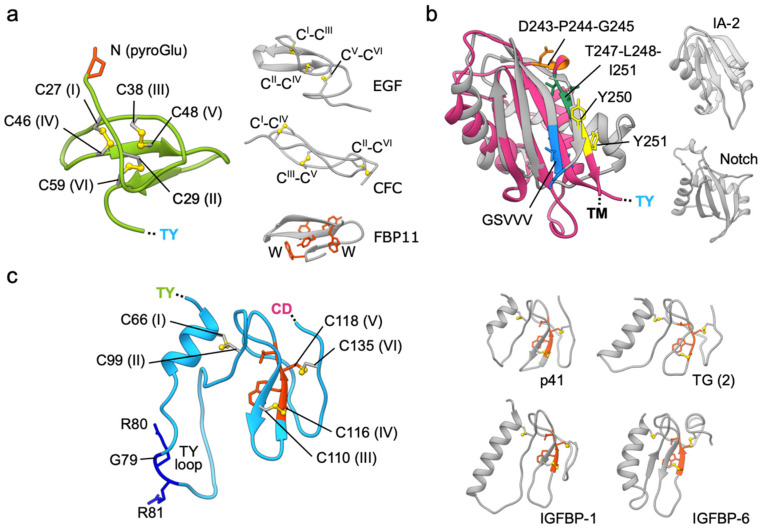
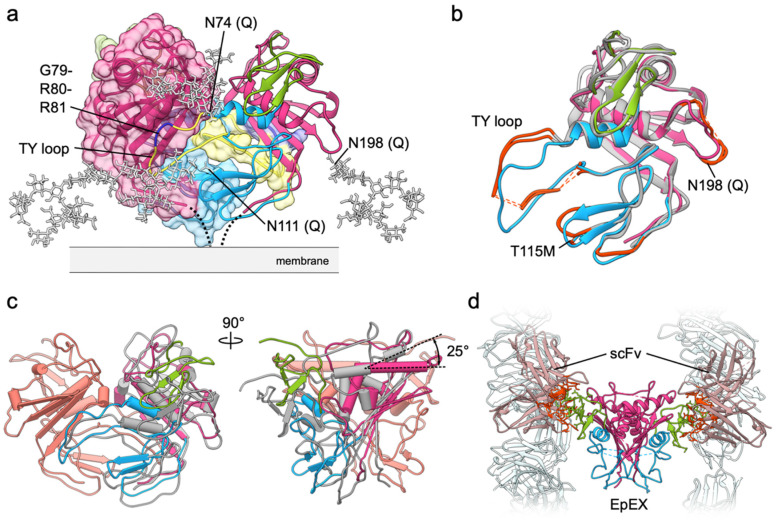
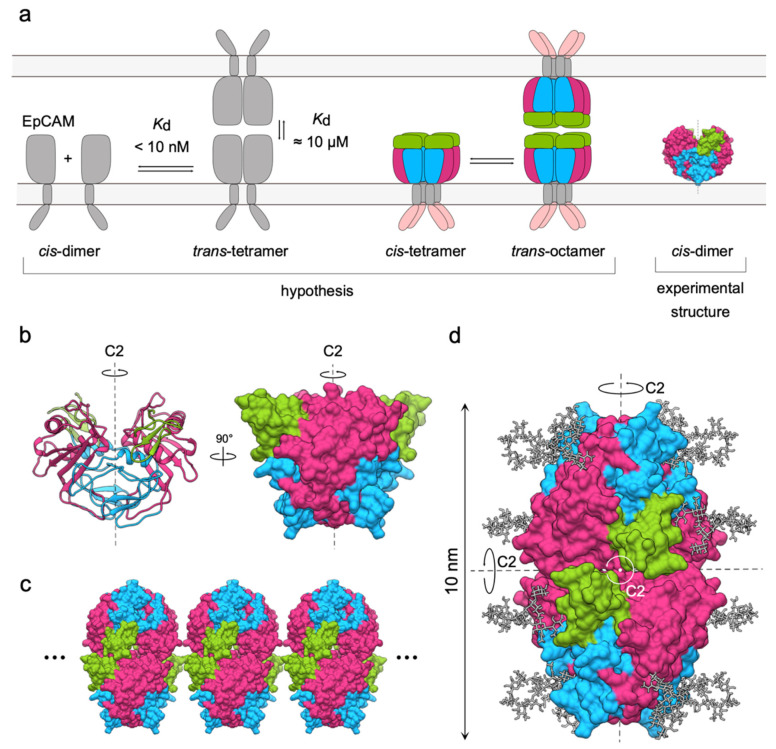
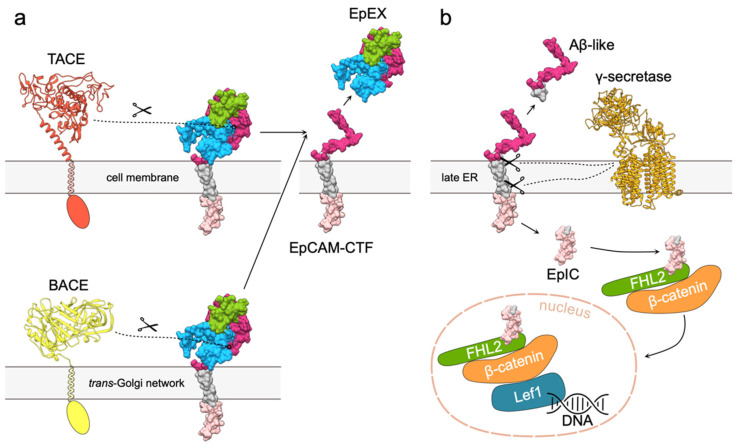
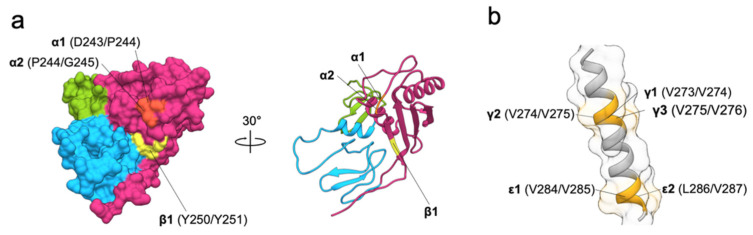
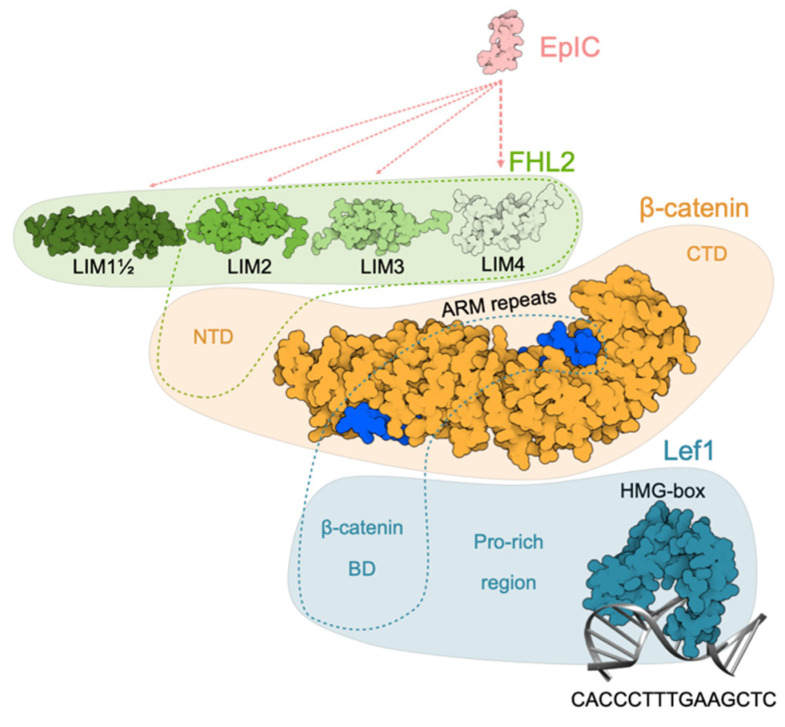
EpCAM, a carcinoma cell-surface marker protein and a therapeutic target, has been primarily addressed as a cell adhesion molecule. With regard to recent discoveries of its role in signaling with implications in cell proliferation and differentiation, and findings contradicting a direct role in mediating adhesion contacts, we provide a comprehensive and updated overview on the available structural data on EpCAM and interpret it in the light of recent reports on its function. First, we describe the structure of extracellular part of EpCAM, both as a subunit and part of a cis-dimer which, according to several experimental observations, represents a biologically relevant oligomeric state. Next, we provide a thorough evaluation of reports on EpCAM as a homophilic cell adhesion molecule with a structure-based explanation why direct EpCAM participation in cell-cell contacts is highly unlikely. Finally, we review the signaling aspect of EpCAM with focus on accessibility of signaling-associated cleavage sites.
EpCAM,一种癌细胞膜表面标记蛋白和治疗靶点,主要被认为是一种细胞黏附分子。鉴于最近发现它在信号转导中具有细胞增殖和分化的作用,以及与介导黏附接触的直接作用相矛盾的发现,我们提供了关于 EpCAM 的可用结构数据的全面和最新概述,并根据最近关于其功能的报告对其进行了解释。首先,我们描述了 EpCAM 细胞外部分的结构,包括亚基和部分顺式二聚体,根据一些实验观察,顺式二聚体代表了一种具有生物学意义的寡聚状态。接下来,我们对 EpCAM 作为同亲性细胞黏附分子的报告进行了彻底评估,并基于结构解释了为什么 EpCAM 直接参与细胞-细胞接触的可能性非常低。最后,我们回顾了 EpCAM 的信号转导方面,重点是信号相关的切割位点的可及性。