Berry Corbett T, Liu Xiaohong, Myles Arpita, Nandi Satabdi, Chen Youhai H, Hershberg Uri, Brodsky Igor E, Cancro Michael P, Lengner Christopher J, May Michael J, Freedman Bruce D
Department of Pathobiology, School of Veterinary Medicine, University of Pennsylvania, Philadelphia, PA 19104, USA; School of Biomedical Engineering, Science and Health Systems, Drexel University, PA 19104, USA.
Department of Pathobiology, School of Veterinary Medicine, University of Pennsylvania, Philadelphia, PA 19104, USA.
Cell Rep. 2020 Apr 14;31(2):107474. doi: 10.1016/j.celrep.2020.03.038.
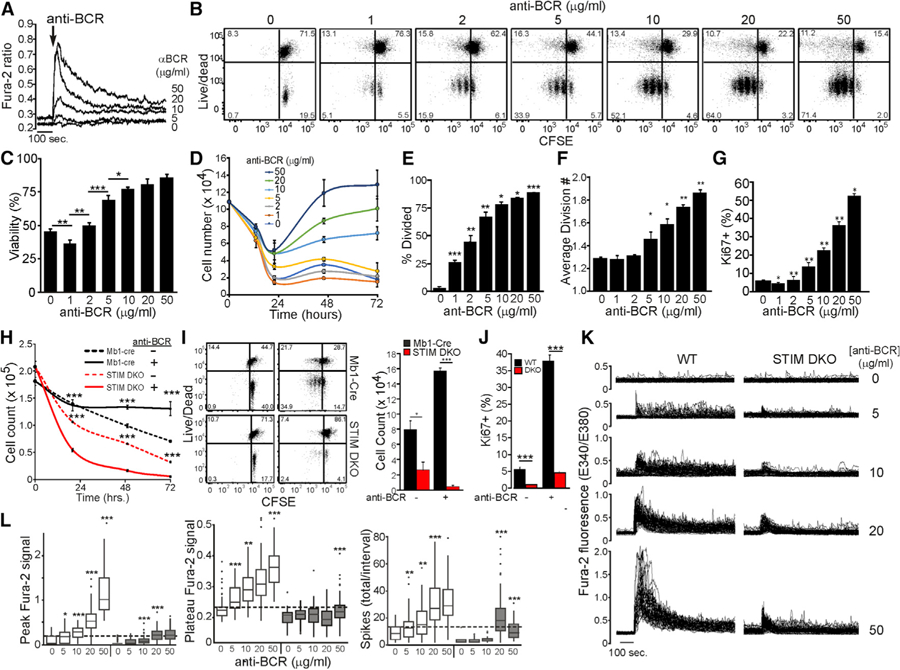
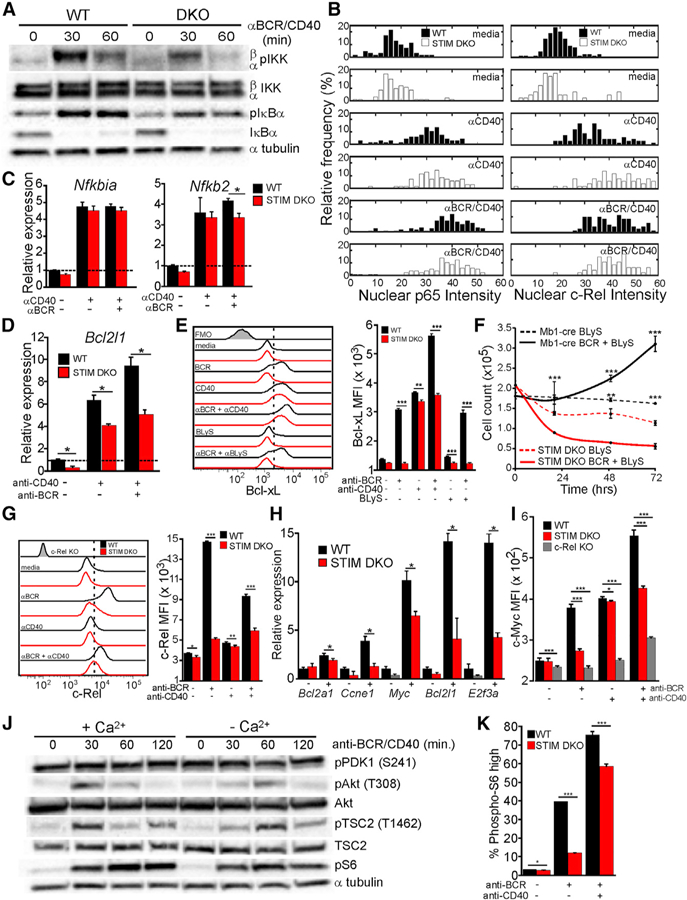
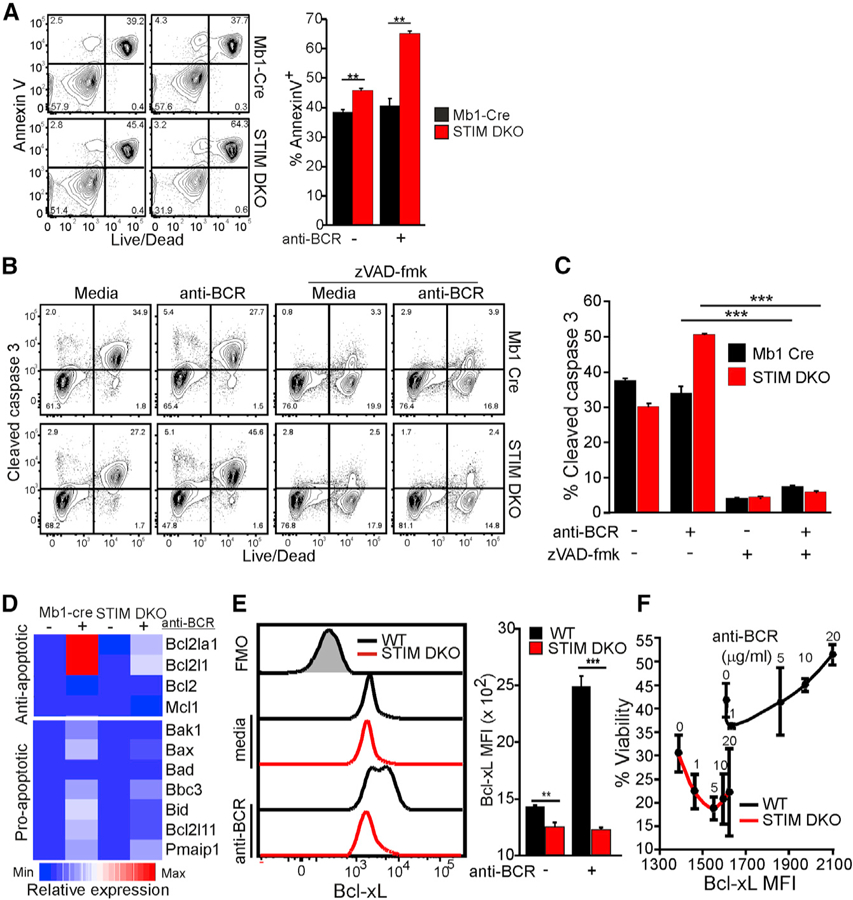
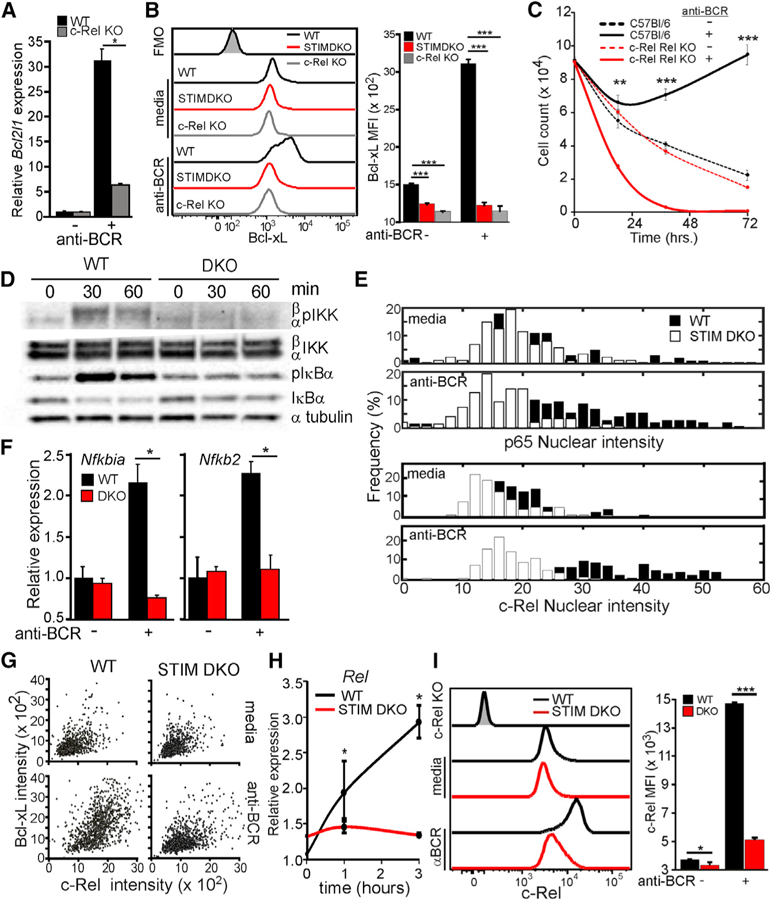
B cell receptor (BCR) engagement induces naive B cells to differentiate and perform critical immune-regulatory functions. Acquisition of functional specificity requires that a cell survive, enter the cell cycle, and proliferate. We establish that quantitatively distinct Ca signals triggered by variations in the extent of BCR engagement dynamically regulate these transitions by controlling nuclear factor κB (NF-κB), NFAT, and mTORC1 activity. Weak BCR engagement induces apoptosis by failing to activate NF-κB-driven anti-apoptotic gene expression. Stronger signals that trigger more robust Ca signals promote NF-κB-dependent survival and NFAT-, mTORC1-, and c-Myc-dependent cell-cycle entry and proliferation. Finally, we establish that CD40 or TLR9 costimulation circumvents these Ca-regulated checkpoints of B cell activation and proliferation. As altered BCR signaling is linked to autoimmunity and B cell malignancies, these results have important implications for understanding the pathogenesis of aberrant B cell activation and differentiation and therapeutic approaches to target these responses.
B细胞受体(BCR)的激活可诱导初始B细胞分化并发挥关键的免疫调节功能。获得功能特异性要求细胞存活、进入细胞周期并增殖。我们发现,由BCR激活程度变化引发的数量上不同的钙信号,通过控制核因子κB(NF-κB)、活化T细胞核因子(NFAT)和雷帕霉素复合物1(mTORC1)的活性,动态调节这些转变。弱BCR激活因未能激活NF-κB驱动的抗凋亡基因表达而诱导细胞凋亡。触发更强钙信号的更强信号促进NF-κB依赖的存活以及NFAT、mTORC1和c-Myc依赖的细胞周期进入和增殖。最后,我们发现CD40或Toll样受体9(TLR9)共刺激可绕过这些钙调节的B细胞激活和增殖检查点。由于BCR信号改变与自身免疫和B细胞恶性肿瘤相关,这些结果对于理解异常B细胞激活和分化的发病机制以及针对这些反应的治疗方法具有重要意义。