Institute of Biomedical Sciences, Academia Sinica, 128 Sec. 2, Academia Rd, Taipei, 11529, Taiwan.
Department of Physiology, School of Medicine, College of Medicine, Taipei Medical University, Taipei, 11031, Taiwan.
J Biomed Sci. 2020 Apr 15;27(1):52. doi: 10.1186/s12929-020-00643-0.
Alveologenesis is the final stage of lung development to form air-exchanging units between alveoli and blood vessels. Genetic susceptibility or hyperoxic stress to perturb this complicated process can cause abnormal enlargement of alveoli and lead to bronchopulmonary dysplasia (BPD)-associated emphysema. Platelet-derived growth factor receptor α (PDGFRα) signaling is crucial for alveolar myofibroblast (MYF) proliferation and its deficiency is associated with risk of BPD, but posttranscriptional mechanisms regulating PDGFRα synthesis during lung development remain largely unexplored. Cytoplasmic polyadenylation element-binding protein 2 (CPEB2) is a sequence-specific RNA-binding protein and translational regulator. Because CPEB2-knockout (KO) mice showed emphysematous phenotypes, we investigated how CPEB2-controlled translation affects pulmonary development and function.
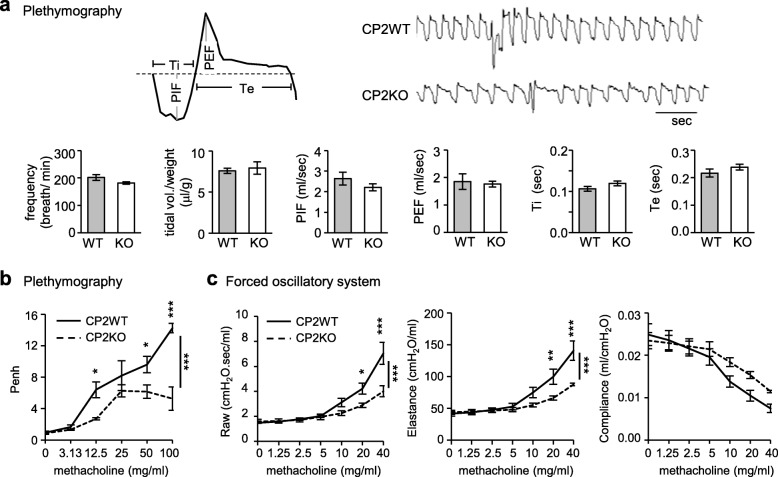
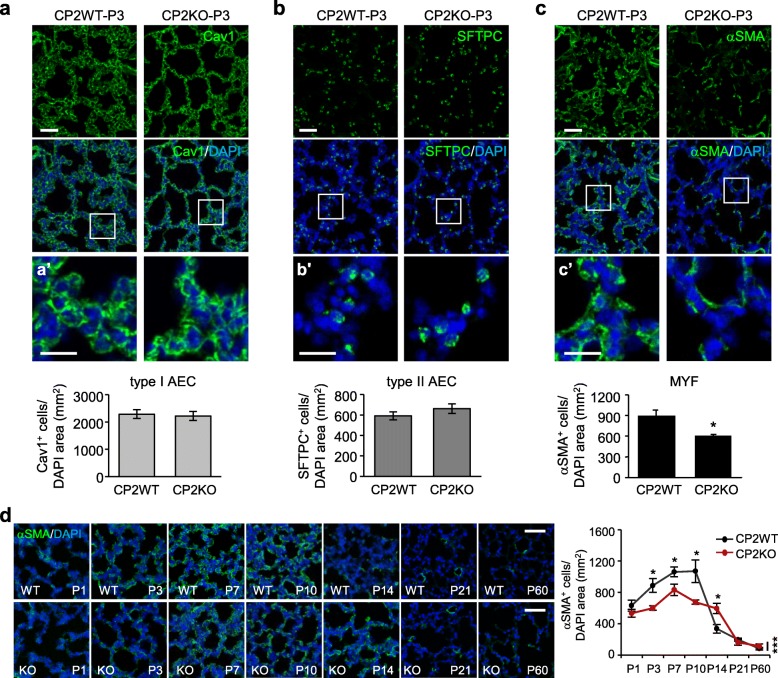
Respiratory and pulmonary functions were measured by whole-body and invasive plethysmography. Histological staining and immunohistochemistry were used to analyze morphology, proliferation, apoptosis and cell densities from postnatal to adult lungs. Western blotting, RNA-immunoprecipitation, reporter assay, primary MYF culture and ectopic expression rescue were performed to demonstrate the role of CPEB2 in PDGFRα mRNA translation and MYF proliferation.
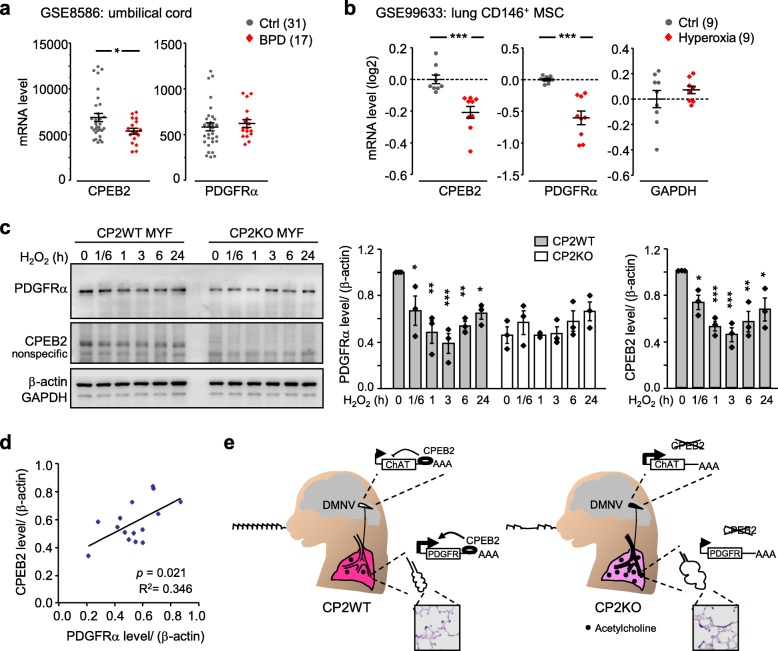
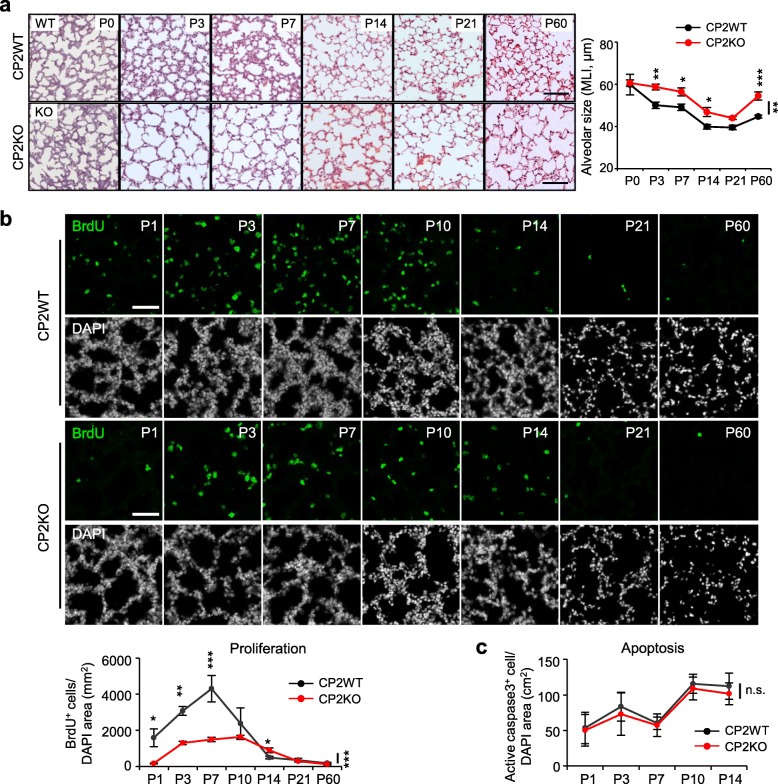
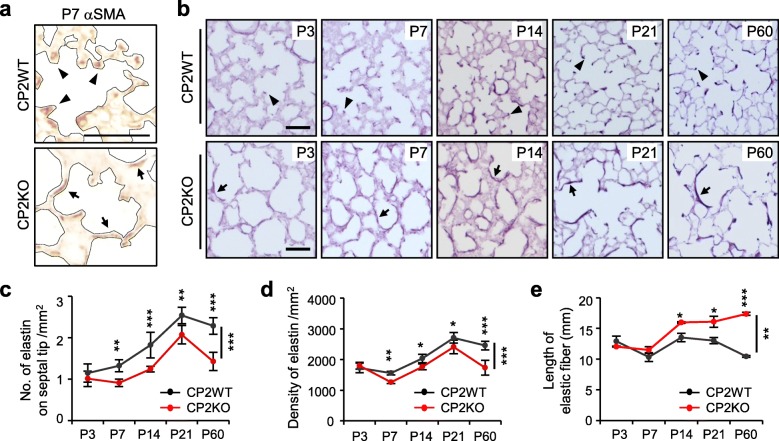
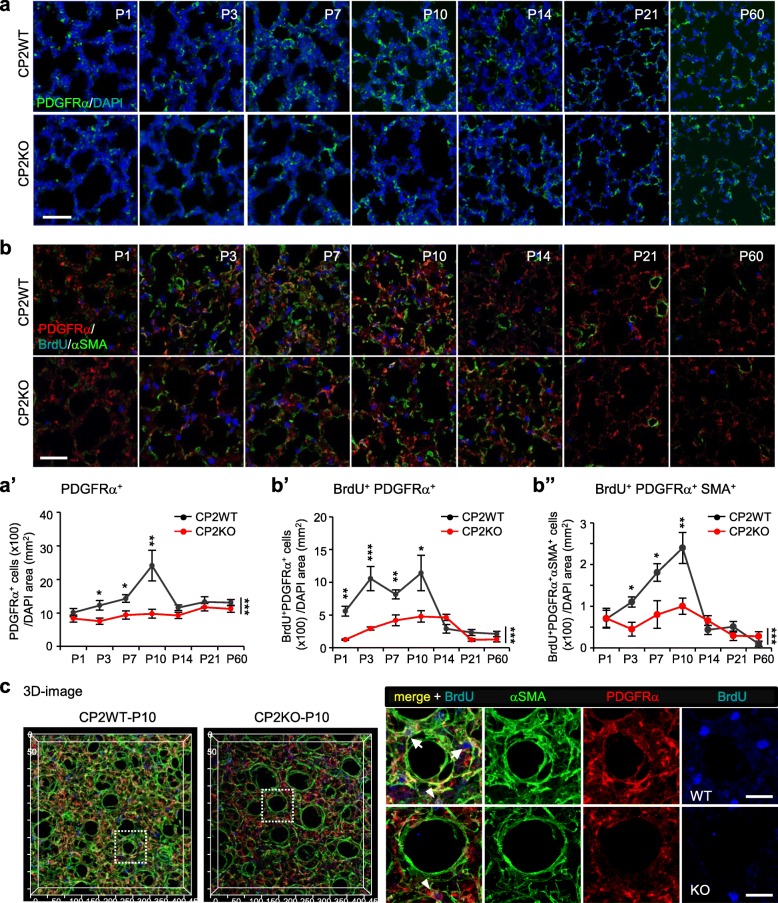
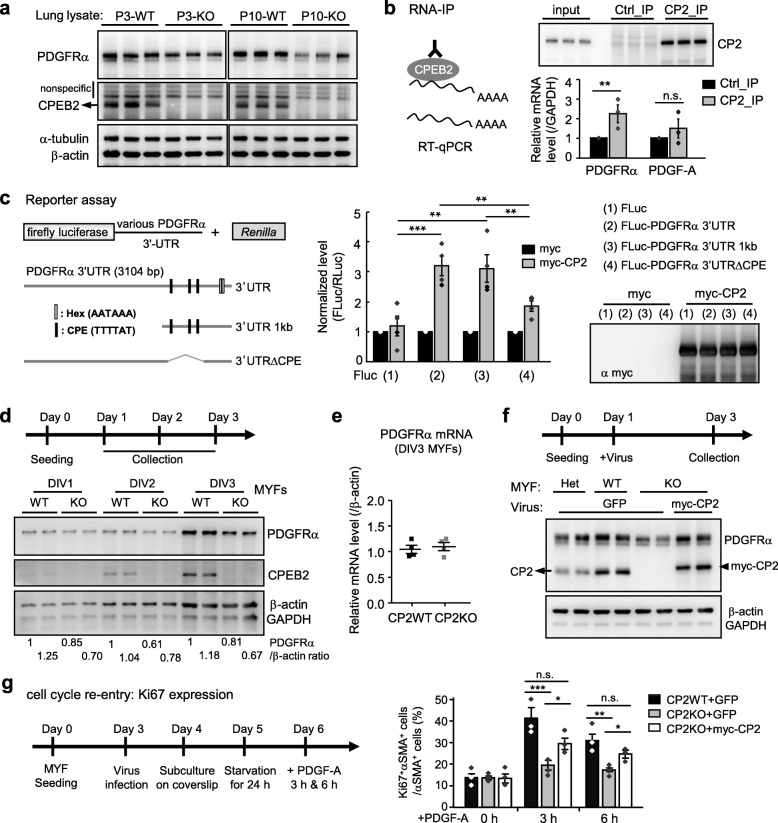
Adult CPEB2-KO mice showed emphysema-like dysfunction. The alveolar structure in CPEB2-deficient lungs appeared normal at birth but became simplified through the alveolar stage of lung development. In CPEB2-null mice, we found reduced proliferation of MYF progenitors during alveolarization, abnormal deposition of elastin and failure of alveolar septum formation, thereby leading to enlarged pulmonary alveoli. We identified that CPEB2 promoted PDGFRα mRNA translation in MYF progenitors and this positive regulation could be disrupted by HO, a hyperoxia-mimetic treatment. Moreover, decreased proliferating ability in KO MYFs due to insufficient PDGFRα expression was rescued by ectopic expression of CPEB2, suggesting an important role of CPEB2 in upregulating PDGFRα signaling for pulmonary alveologenesis.
CPEB2-controlled translation, in part through promoting PDGFRα expression, is indispensable for lung development and function. Since defective pulmonary PDGFR signaling is a key feature of human BPD, CPEB2 may be a risk factor for BPD.
肺泡发生是肺发育的最后阶段,形成肺泡与血管之间的换气单位。遗传易感性或高氧应激扰乱这一复杂过程可导致肺泡异常增大,并导致与支气管肺发育不良(BPD)相关的肺气肿。血小板衍生生长因子受体α(PDGFRα)信号对于肺泡肌成纤维细胞(MYF)的增殖至关重要,其缺乏与 BPD 的风险相关,但在肺发育过程中调节 PDGFRα 合成的转录后机制在很大程度上仍未得到探索。细胞质多聚腺苷酸化元件结合蛋白 2(CPEB2)是一种序列特异性 RNA 结合蛋白和翻译调节因子。由于 CPEB2 敲除(KO)小鼠表现出肺气肿表型,我们研究了 CPEB2 控制的翻译如何影响肺发育和功能。
通过全身和侵入性测功计测量呼吸和肺功能。组织学染色和免疫组织化学用于分析出生后至成年期肺的形态、增殖、凋亡和细胞密度。进行 Western blot、RNA-免疫沉淀、报告基因测定、原代 MYF 培养和异位表达挽救实验,以证明 CPEB2 在 PDGFRα mRNA 翻译和 MYF 增殖中的作用。
成年 CPEB2-KO 小鼠表现出类似肺气肿的功能障碍。出生时 CPEB2 缺陷肺的肺泡结构正常,但在肺泡发育阶段变得简化。在 CPEB2 缺失的小鼠中,我们发现肺泡化过程中 MYF 祖细胞的增殖减少,弹性蛋白异常沉积,肺泡隔形成失败,导致肺大泡增大。我们发现 CPEB2 促进 MYF 祖细胞中 PDGFRα mRNA 的翻译,这种正调控可被高氧,一种高氧模拟处理所破坏。此外,由于 PDGFRα 表达不足,KO MYFs 的增殖能力下降可通过异位表达 CPEB2 得到挽救,表明 CPEB2 在上调 PDGFRα 信号传导以促进肺肺泡发生中起重要作用。
CPEB2 控制的翻译,部分通过促进 PDGFRα 表达,对于肺发育和功能是必不可少的。由于肺 PDGFR 信号传导缺陷是人类 BPD 的一个关键特征,CPEB2 可能是 BPD 的一个危险因素。