Institute for Diabetes Research and Metabolic Diseases of the Helmholtz Center Munich at the University of Tübingen, Otfried-Müller-Str. 10, 72076, Tübingen, Germany.
German Center for Diabetes Research (DZD e.V.), Ingolstädter Landstraße 1, 85764, Neuherberg, Germany.
Nat Commun. 2020 Apr 15;11(1):1841. doi: 10.1038/s41467-020-15686-y.
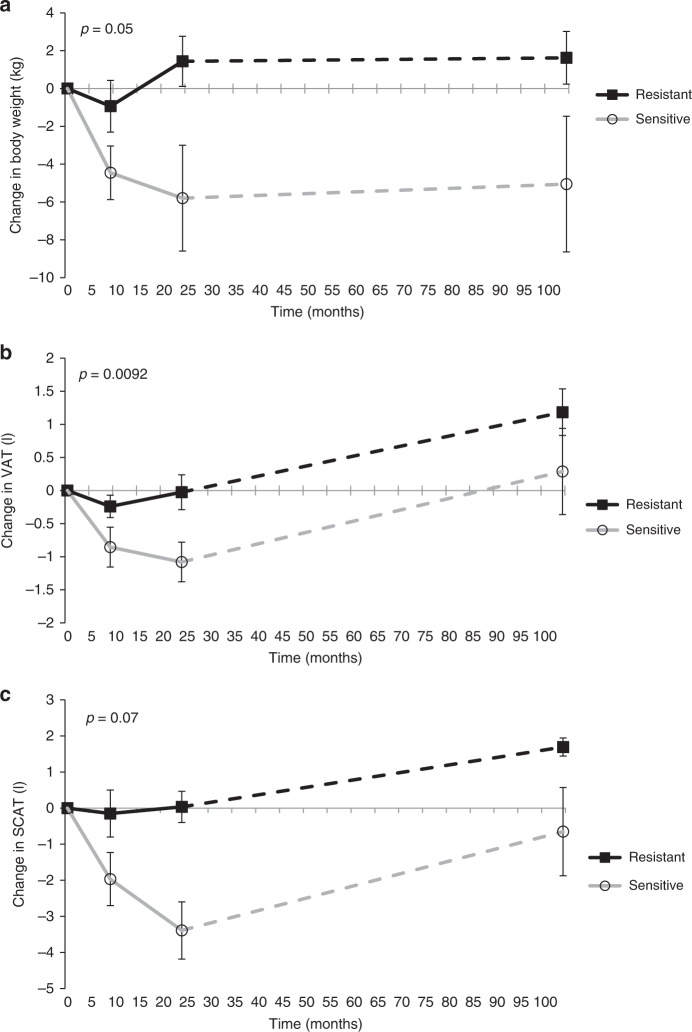
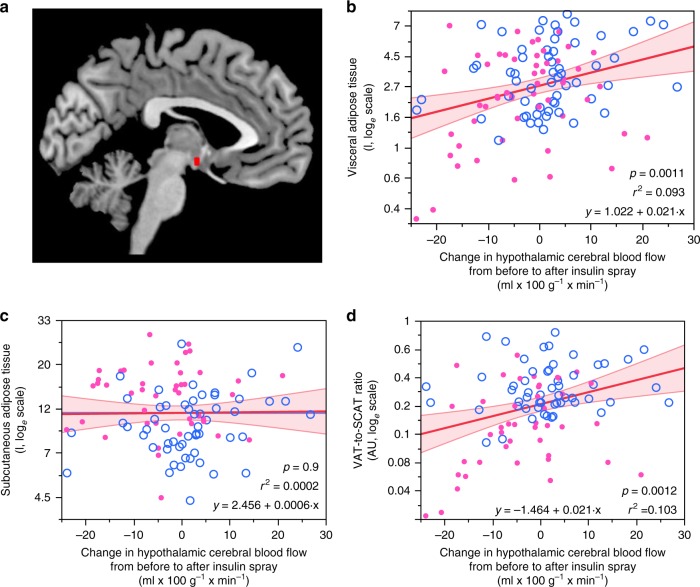
Brain insulin action regulates eating behavior and energy fluxes throughout the body. However, numerous people are brain insulin resistant. How brain insulin responsiveness affects long-term weight and body fat composition in humans is still unknown. Here we show that high brain insulin sensitivity before lifestyle intervention associates with a more pronounced reduction in total and visceral fat during the program. High brain insulin sensitivity is also associated with less regain of fat mass during a nine year follow-up. Cross-sectionally, strong insulin responsiveness of the hypothalamus associates with less visceral fat, while subcutaneous fat is unrelated. Our results demonstrate that high brain insulin sensitivity is linked to weight loss during lifestyle intervention and associates with a favorable body fat distribution. Since visceral fat is strongly linked to diabetes, cardiovascular risk and cancer, these findings have implications beyond metabolic diseases and indicate the necessity of strategies to resolve brain insulin resistance.
大脑胰岛素作用调节全身的进食行为和能量通量。然而,许多人存在大脑胰岛素抵抗。大脑胰岛素反应性如何影响人类的长期体重和体脂肪组成仍不清楚。在这里,我们发现生活方式干预前大脑胰岛素敏感性高与该计划期间总脂肪和内脏脂肪减少更为明显相关。大脑胰岛素敏感性高也与 9 年随访期间脂肪量的恢复较少有关。横断面研究表明,下丘脑的胰岛素反应性越强与内脏脂肪越少相关,而与皮下脂肪无关。我们的研究结果表明,大脑胰岛素敏感性高与生活方式干预期间的体重减轻有关,并与有利的体脂肪分布相关。由于内脏脂肪与糖尿病、心血管风险和癌症密切相关,这些发现超出了代谢疾病的范围,并表明有必要采取策略来解决大脑胰岛素抵抗。