Weigl Tobias, Schneider Nora, Stein Anja, Felderhoff-Müser Ursula, Schedlowski Manfred, Engler Harald
Institute of Medical Psychology and Behavioral Immunobiology, University Hospital Essen, University of Duisburg-Essen, Essen, Germany.
Psychology School, Fresenius University of Applied Sciences Düsseldorf, Düsseldorf, Germany.
Front Psychiatry. 2020 Apr 1;11:251. doi: 10.3389/fpsyt.2020.00251. eCollection 2020.
During the postpartum period, new parents frequently experience emotional stress and exhibit symptoms of depression and anxiety, accompanied by substantial endocrine changes. However, evidence predominantly exists from parents of full-term infants, while data on parents of preterm infants are scarce. In this exploratory, cross-sectional study, we compared psychological well-being and endocrine parameters in parents of very preterm and term born infants.
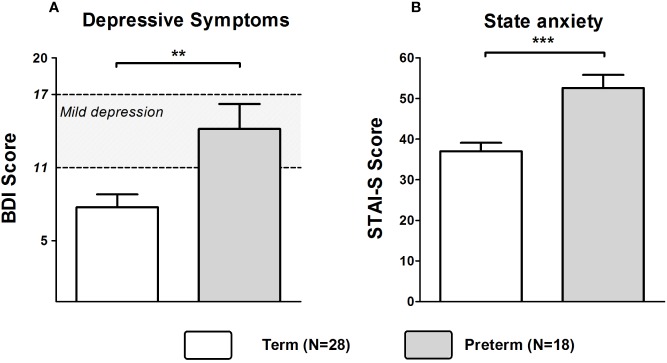
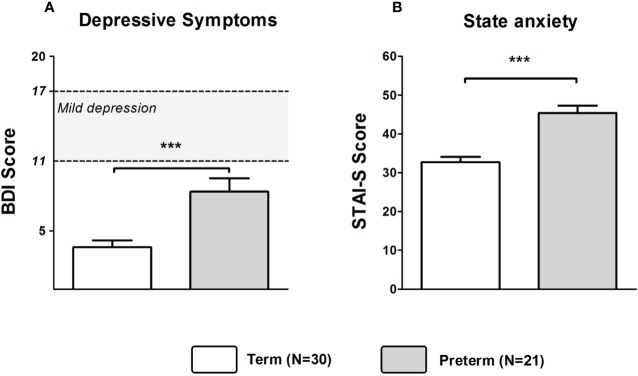
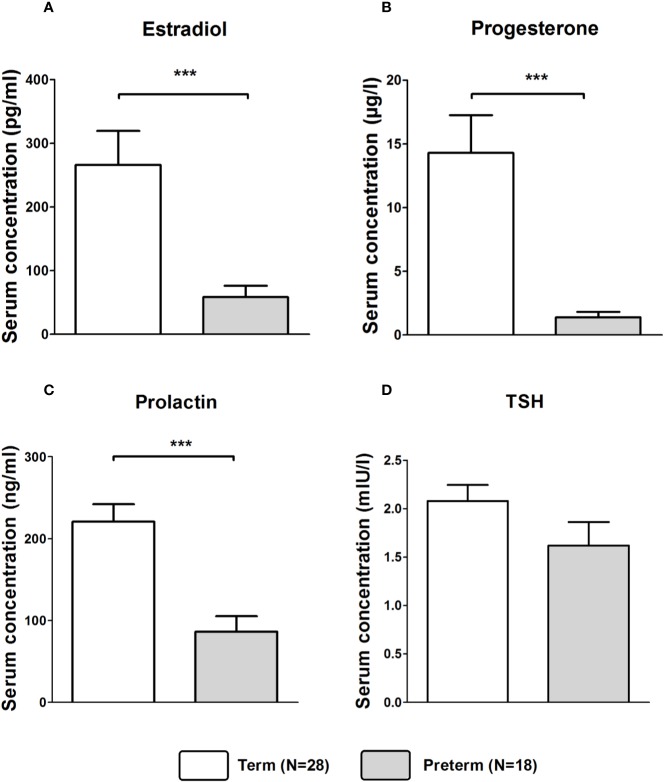
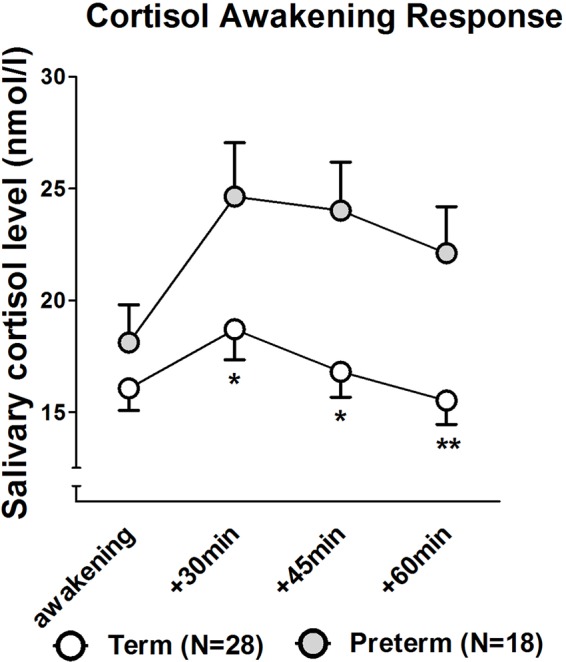
Mothers (N = 28) and fathers (N = 30) of full-term infants as well as mothers (N = 18) and fathers (N = 21) of very or extreme preterm infants (< 32 gestational week) were recruited in the days following birth. Anxiety, depression, and perceived stress were assessed with the State-Trait Anxiety Inventory (STAI), the Beck Depression Inventory (BDI), and the Perceived Stress Questionnaire (PSQ), respectively. Physiological measures included serum levels of estradiol, progesterone, prolactin, and thyroid-stimulating hormone (mothers only), as well as the salivary cortisol awakening response (mothers and fathers).
New mothers and fathers of very preterm infants exhibited higher scores of depression, anxiety and stress than parents of term infants. Besides, mothers of very preterm infants showed lower levels of estradiol, progesterone, and prolactin, as well as a heightened post-awakening cortisol response compared to mothers of term infants. Furthermore, in mothers of preterm infants we found significant negative associations between serum prolactin levels and BDI and STAI scores, respectively.
Parents of very preterm infants suffered from a higher burden of psychological distress than parents of full-term infants. The affective symptoms in preterm mothers were accompanied by altered endocrine profiles that, at least to some extent, may contribute to the psychological changes. The profound psychological and physiological disturbances in mothers of preterm infants may have an impact on long-term mental health and early pharmacological and psychological interventions may help to ameliorate postpartum affective symptoms.
在产后期间,初为人父母者经常经历情绪压力,并表现出抑郁和焦虑症状,同时伴有大量内分泌变化。然而,证据主要来自足月儿的父母,而关于早产儿父母的数据很少。在这项探索性横断面研究中,我们比较了极早产儿和足月儿父母的心理健康状况和内分泌参数。
在婴儿出生后的几天内,招募了足月儿的母亲(N = 28)和父亲(N = 30)以及极早产儿(孕周<32周)的母亲(N = 18)和父亲(N = 21)。分别使用状态-特质焦虑量表(STAI)、贝克抑郁量表(BDI)和感知压力问卷(PSQ)评估焦虑、抑郁和感知压力。生理指标包括雌二醇、孕酮、催乳素和促甲状腺激素(仅母亲)的血清水平,以及唾液皮质醇觉醒反应(母亲和父亲)。
极早产儿的新妈妈和新爸爸比足月儿的父母表现出更高的抑郁、焦虑和压力得分。此外,与足月儿的母亲相比,极早产儿的母亲雌二醇、孕酮和催乳素水平较低,觉醒后皮质醇反应增强。此外,在早产儿母亲中,我们分别发现血清催乳素水平与BDI和STAI得分之间存在显著负相关。
极早产儿的父母比足月儿的父母承受着更高的心理困扰负担。早产母亲的情感症状伴随着内分泌特征的改变,这至少在一定程度上可能导致心理变化。早产母亲严重的心理和生理紊乱可能会影响长期心理健康,早期药物和心理干预可能有助于改善产后情感症状。