Department of Pediatric Oncology and Hematology, Berlin Institute of Health, Charité-Universitätsmedizin Berlin, Corporate Member of Freie Universität Berlin, Humboldt-Universität zu Berlin, Berlin, Germany.
Berlin Institute of Health (BIH), Berlin, Germany.
Front Immunol. 2020 Mar 31;11:531. doi: 10.3389/fimmu.2020.00531. eCollection 2020.
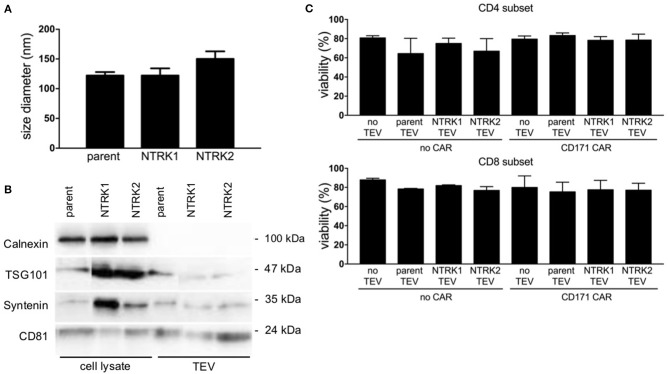
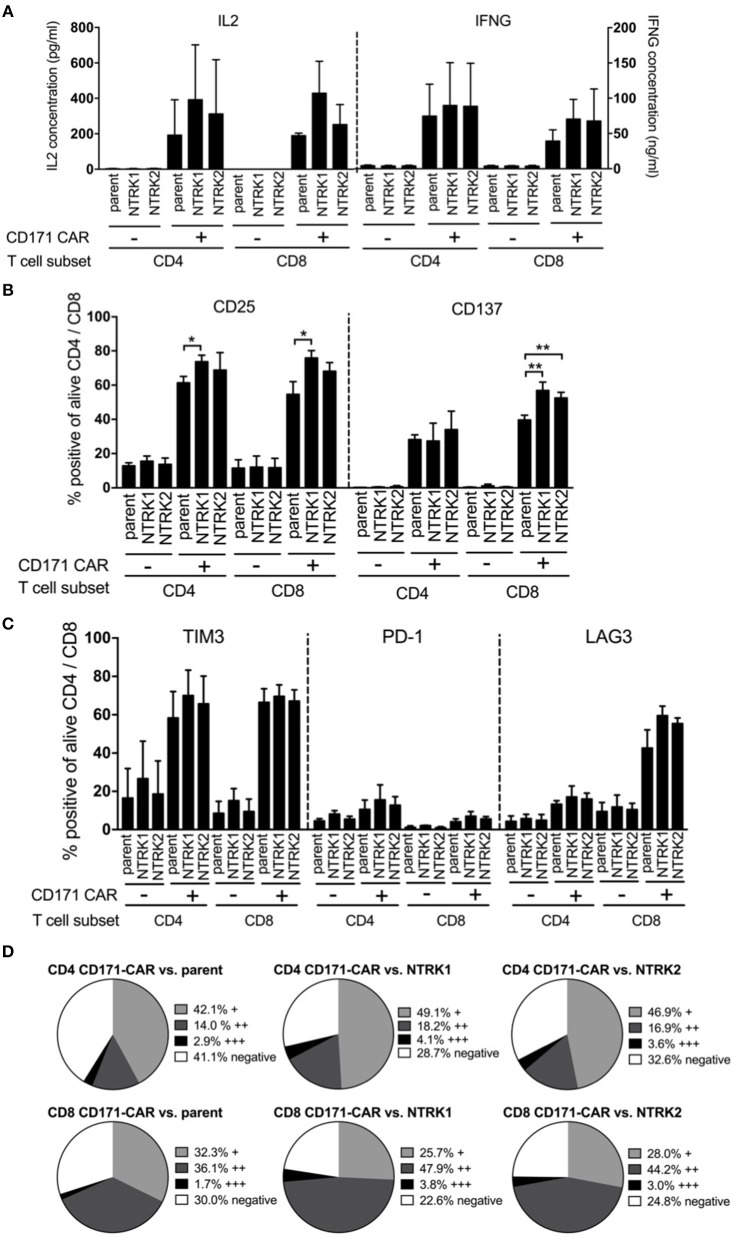
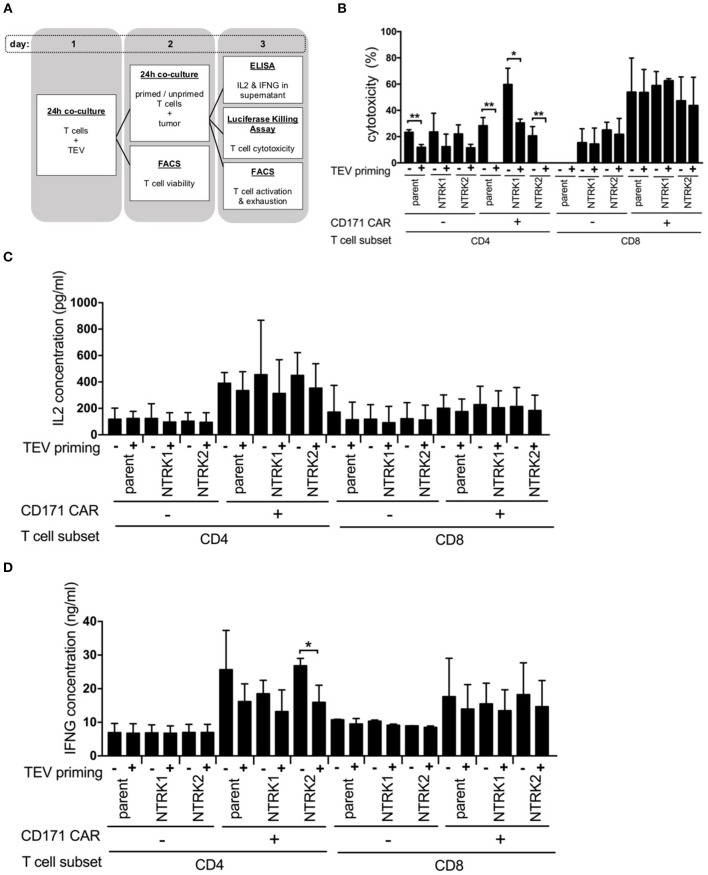
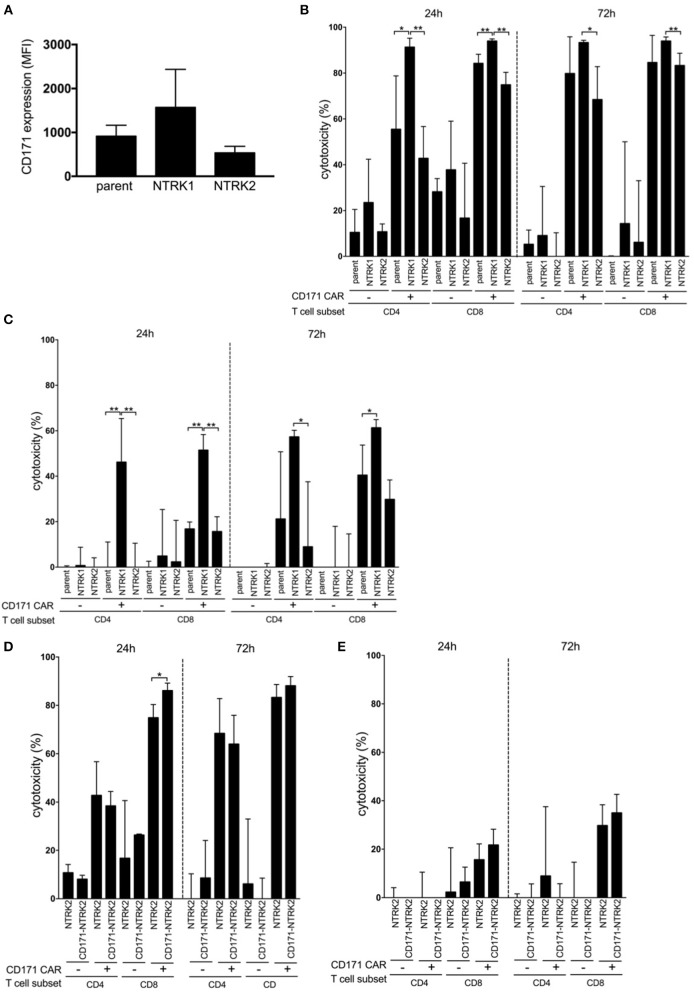
Chimeric antigen receptor (CAR) T cell efficacy against solid tumors is currently limited by several immune escape mechanisms, which may include tumor-derived extracellular vesicles. Advanced neuroblastoma is an aggressive childhood tumor without curative treatment options for most relapsed patients today. We here evaluated the role of tumor-derived extracellular vesicles on the efficacy of CAR T cells targeting the neuroblastoma-specific antigen, CD171. For this purpose, CAR T cell activation, cytokine production, exhaustion, and tumor cell-directed cytotoxicity upon co-culture was evaluated. Tumor-derived extracellular vesicles isolated from SH-SY5Y neuroblastoma cells neither affected CAR T cell activation nor expression of inhibitory markers. Importantly, exposure of CD4 CD171-specific CAR T cells to tumor-derived extracellular vesicles significantly impaired tumor cytotoxicity of CAR T cells. This effect was independent of neurotrophic receptor tyrosine kinases 1 or 2 (NTRK1, NTRK2) expression, which is known to impact immune responses against neuroblastoma. Our results demonstrate for the first time the impact of tumor-derived extracellular vesicles and non-cell-mediated tumor-suppressive effects on CD4 CAR T cell efficacy in a preclinical setting. We conclude that these factors should be considered for any CAR T cell-based therapy to make CAR T cell therapy successful against solid tumors.
嵌合抗原受体 (CAR) T 细胞对实体瘤的疗效目前受到几种免疫逃逸机制的限制,其中可能包括肿瘤衍生的细胞外囊泡。高级神经母细胞瘤是一种侵袭性儿童肿瘤,目前大多数复发患者都没有治愈的治疗选择。我们在此评估了针对神经母细胞瘤特异性抗原 CD171 的 CAR T 细胞的疗效中肿瘤衍生的细胞外囊泡的作用。为此,评估了共培养时 CAR T 细胞的激活、细胞因子产生、耗竭和对肿瘤细胞的细胞毒性。从 SH-SY5Y 神经母细胞瘤细胞中分离出的肿瘤衍生的细胞外囊泡既不影响 CAR T 细胞的激活,也不影响抑制性标志物的表达。重要的是,将 CD4 CD171 特异性 CAR T 细胞暴露于肿瘤衍生的细胞外囊泡会显著损害 CAR T 细胞对肿瘤的细胞毒性。这种效应独立于神经营养受体酪氨酸激酶 1 或 2(NTRK1、NTRK2)的表达,已知其会影响针对神经母细胞瘤的免疫反应。我们的研究结果首次证明了肿瘤衍生的细胞外囊泡和非细胞介导的肿瘤抑制作用对 CD4 CAR T 细胞在临床前环境中的疗效的影响。我们得出结论,在任何基于 CAR T 细胞的治疗中都应考虑这些因素,以使 CAR T 细胞治疗能够成功对抗实体瘤。