Gogoularadja Avinash, Bakshi Satvinder Singh
Mahatma Gandhi Medical College and Research Institute (MGMCRI), Sri Balaji Vidyapeeth, Pillaiyarkuppam, Pondicherry, India.
Department of Ear, Nose and Throat and Head & Neck Surgery, All India Institute of Medical Sciences (AIIMS), Mangalagiri, Guntur, Andhra Pradesh, India.
Int Arch Otorhinolaryngol. 2020 Apr;24(2):e232-e236. doi: 10.1055/s-0039-3402438. Epub 2020 Feb 27.
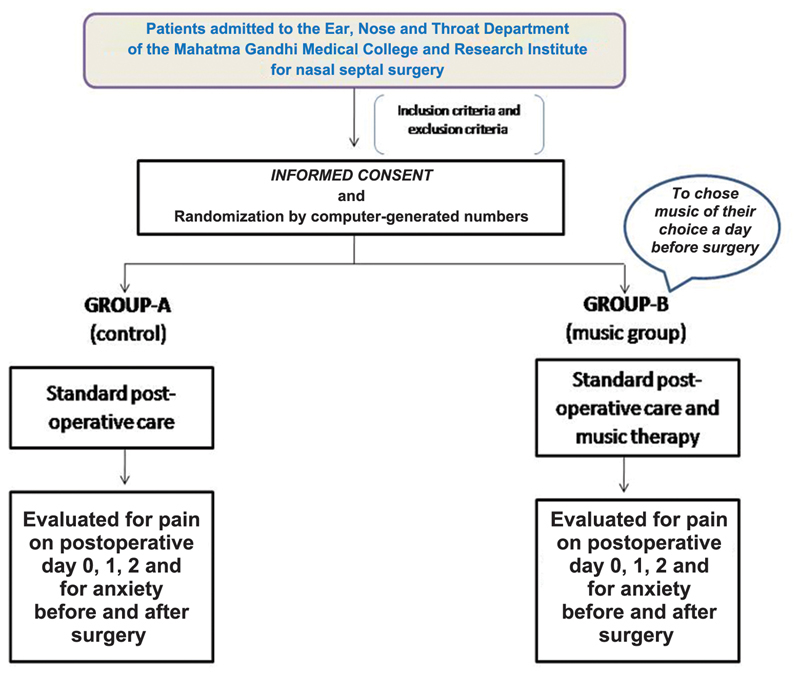
Nasal septal surgery is one of the most common surgeries performed by otolaryngology surgeons; however, anxiety before surgery and postoperative pain remain a significant cause of morbidity. The search for a complimentary modality to reduce the symptoms and side effects has gained momentum in recent years. Music therapy is an exciting and inexpensive modality in this regard, but scientific evidence in terms of randomized clinical trials is still lacking for common otolaryngology surgeries. Hence, we performed the present study. The sample of our study was composed of 59 patients, 30 of which were submitted to conventional medicine, while the remaining 29 were submitted to both conventional medicine and music therapy with music of their own choice, with 2 sessions per day, each lasting 30 minutes. This was performed using the generalized anxiety disorder-7 scale and the pain visual analogue scale until postoperative day 2, when the patients were discharged from the hospital. On comparing the anxiety and pain scores between the two groups, the group who underwent music therapy showed a statistically significant reduction in anxiety both preoperatively ( < 0.0001) and postoperatively ( < 0.0001), as well as reduced postoperative pain starting from day 0 ( < 0.001), which continued until postoperative day 2 ( < 0.001). Music therapy is an effective adjunct in the control of anxiety and postoperative pain following nasal septal surgery.
鼻中隔手术是耳鼻喉科医生进行的最常见手术之一;然而,手术前的焦虑和术后疼痛仍然是发病的重要原因。近年来,寻找一种辅助方法来减轻症状和副作用的研究势头越来越强劲。在这方面,音乐疗法是一种令人兴奋且成本低廉的方法,但对于常见的耳鼻喉科手术,随机临床试验方面的科学证据仍然不足。因此,我们开展了本研究。我们的研究样本由59名患者组成,其中30名接受传统医学治疗,其余29名在接受传统医学治疗的同时,还接受了他们自己选择的音乐疗法,每天2次,每次持续30分钟。使用广泛性焦虑障碍-7量表和疼痛视觉模拟量表进行评估,直到术后第2天患者出院。比较两组患者的焦虑和疼痛评分后发现,接受音乐疗法的组在术前(<0.0001)和术后(<0.0001)焦虑均有统计学意义的显著降低,并且从术后第0天开始术后疼痛减轻(<0.001),这种情况一直持续到术后第2天(<0.001)。音乐疗法是控制鼻中隔手术后焦虑和术后疼痛的一种有效辅助方法。