Yunnan Institute of Parasitic Diseases, Yunnan Provincial Key Laboratory of Vector-borne Diseases Control and Research, Yunnan Provincial Collaborative Innovation Center for Public Health and Disease Prevention and Control, Pu'er City, 665000, China.
Institute of Pathogens and Vectors, Dali University, Xiaguang, 671000, China.
BMC Health Serv Res. 2020 Apr 16;20(1):318. doi: 10.1186/s12913-020-05163-z.
Dengue fever (DF) is a rapidly spreading mosquito-borne disease along the China-Myanmar border. Understanding treatment-seeking behaviors (TSBs) and associated factors of suspected DF patients in local communities helps to improve health services via promoting prompt treatment, improving patients' prognosis, finding DF information and timely response to DF foci.
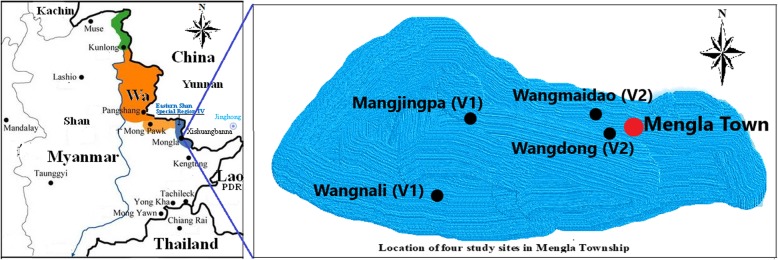
A combination of qualitative semi-structured in-depth interview (SDIs) included 18 key-informants, and quantitative household questionnaire survey (HHSs) involved 259 households was carried out to investigate TSBs and associated factors of suspected DF patients in the Eastern Shan Special Region IV (ESSR4), Myanmar.
The key informants mentioned that most of their fellow villagers did not seek treatment in public health facilities first. The HHS questionnaires were distributed to household heads, and 241 of the 259 HHS respondents were valid after data auditing. Only 102 (43.2%) household heads reported that their family sought treatment for suspected DF at a public health facility immediately; 111 (46.1%) respondents said that they chose self-medication first. The adjusted odds ratio of multivariate logistic analysis (MLA) predicting household heads' first seeking healthcare at a public hospital were 1.91 (95%CI: 1.03-3.53) for those who knew DF and 5.11 (95%CI: 2.08-12.58) for those who regarded DF as a deadly disease, indicating that families who knew DF and regarded DF as a deadly disease were more likely to seek treatment for suspected DF at a public health facility immediately.
The inappropriateness of treatment-seeking behaviors for suspected DF hinders the improvement of the patient prognosis and dengue control in ESSR4, Myanmar. People's awareness of the potential seriousness of DF is a factor influencing appropriate healthcare-seeking behavior among Shan People.
登革热(DF)是一种沿中缅边境迅速传播的蚊媒疾病。了解当地社区疑似登革热患者的治疗寻求行为(TSB)及其相关因素有助于通过促进及时治疗、改善患者预后、发现登革热信息和及时应对登革热疫情来改善卫生服务。
采用定性半结构式深入访谈(SDI)与定量家庭问卷调查(HHS)相结合的方法,对缅甸掸邦东部特别第四区(ESSR4)的疑似登革热患者的 TSB 及其相关因素进行了调查。共访谈了 18 名关键知情人,对 259 户家庭进行了 HHS。
关键知情人表示,大多数村民不会首先到公共卫生机构就医。家庭调查问卷发放给户主,经数据审核后,259 份 HHS 问卷中有 241 份有效。仅有 102 户(43.2%)户主报告其家人因疑似登革热立即到公共卫生机构就诊;111 户(46.1%)报告选择了自我医疗。多变量逻辑分析(MLA)预测户主首诊于公立医院的调整比值比(OR)为:知晓登革热的患者为 1.91(95%CI:1.03-3.53);认为登革热是致命疾病的患者为 5.11(95%CI:2.08-12.58),表明知晓登革热和认为登革热是致命疾病的家庭更有可能立即到公共卫生机构就诊治疗疑似登革热。
疑似登革热患者的治疗寻求行为不当,阻碍了缅甸掸邦东部第四特别区患者预后的改善和登革热的控制。人们对登革热潜在严重性的认识是影响掸族居民寻求适当医疗服务行为的一个因素。