Wang Pengfei, Chen Kaiyu, Zhu Shengqiang, Wang Peng, Zhang Hongliang
Department of Environmental Science and Engineering, Fudan University, Shanghai 200438, China.
Department of Civil and Environmental Engineering, Louisiana State University, Baton Rouge, LA 70803, USA.
Resour Conserv Recycl. 2020 Jul;158:104814. doi: 10.1016/j.resconrec.2020.104814. Epub 2020 Mar 23.
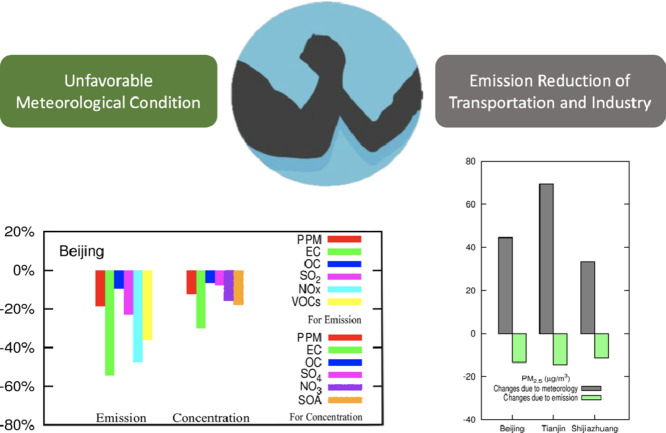
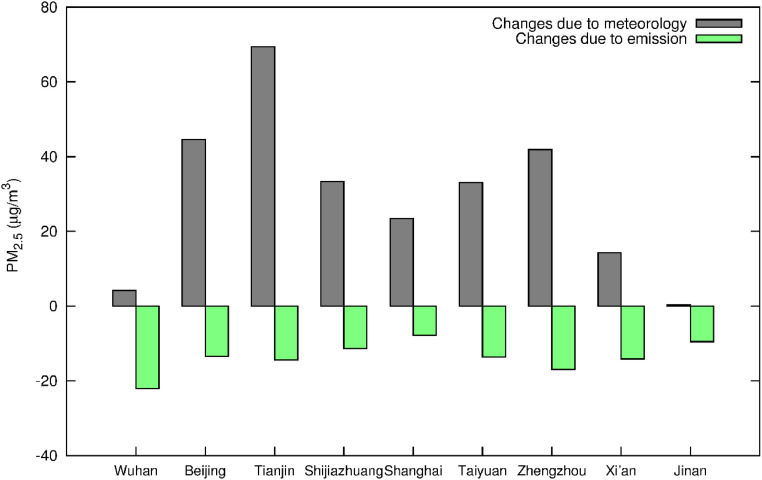
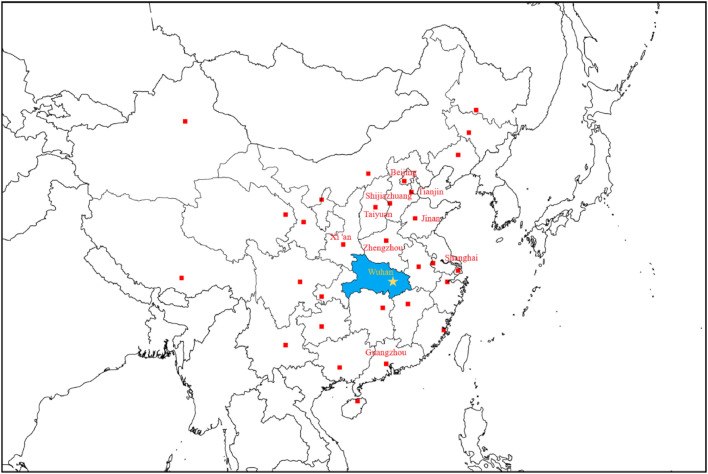
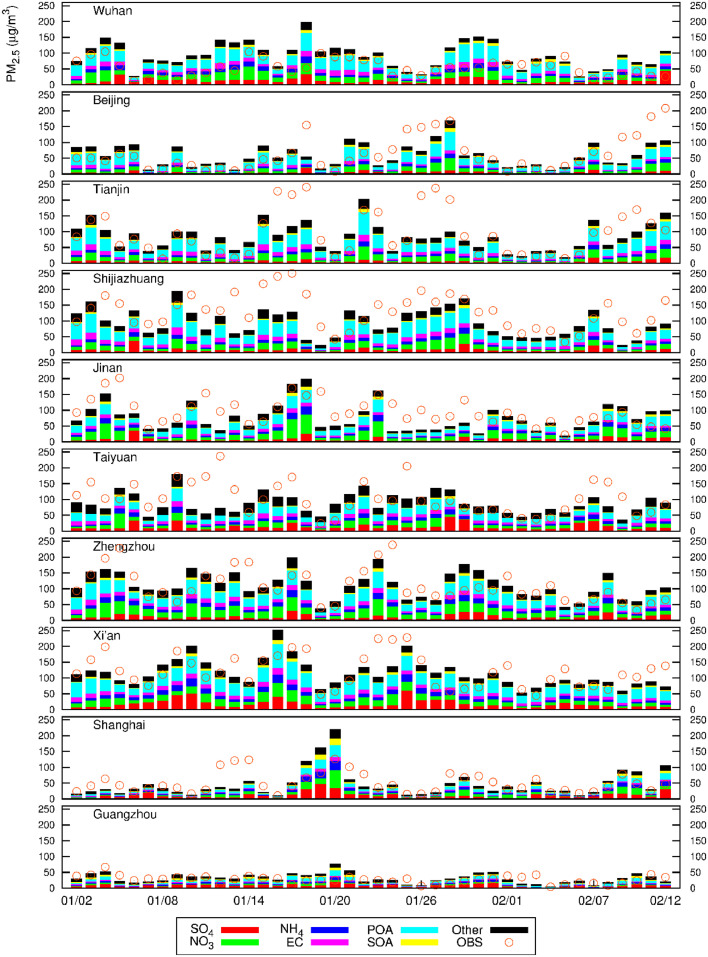
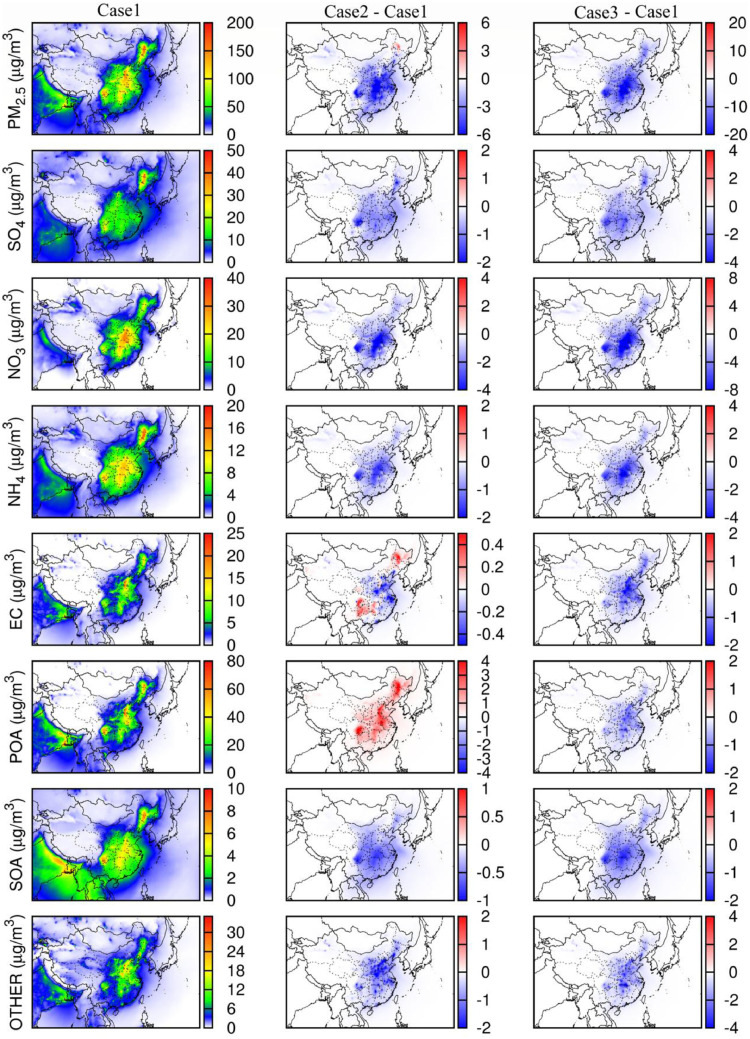
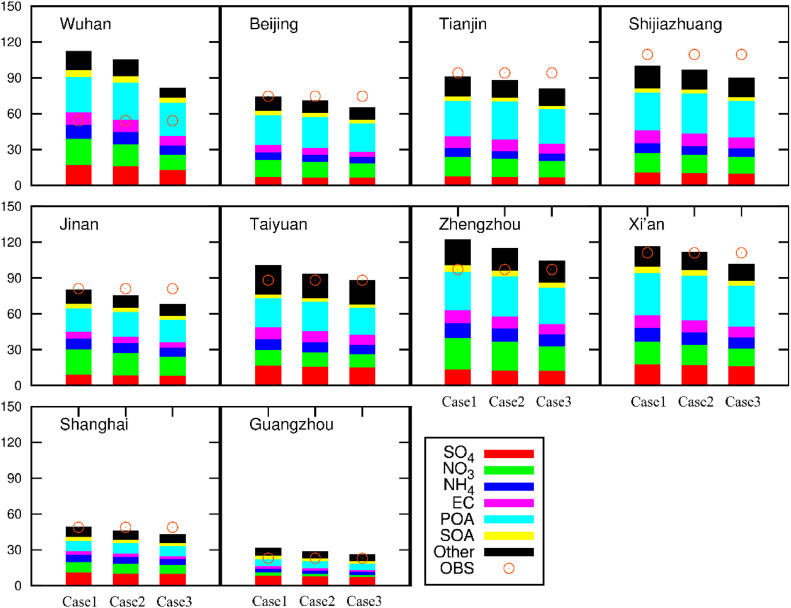
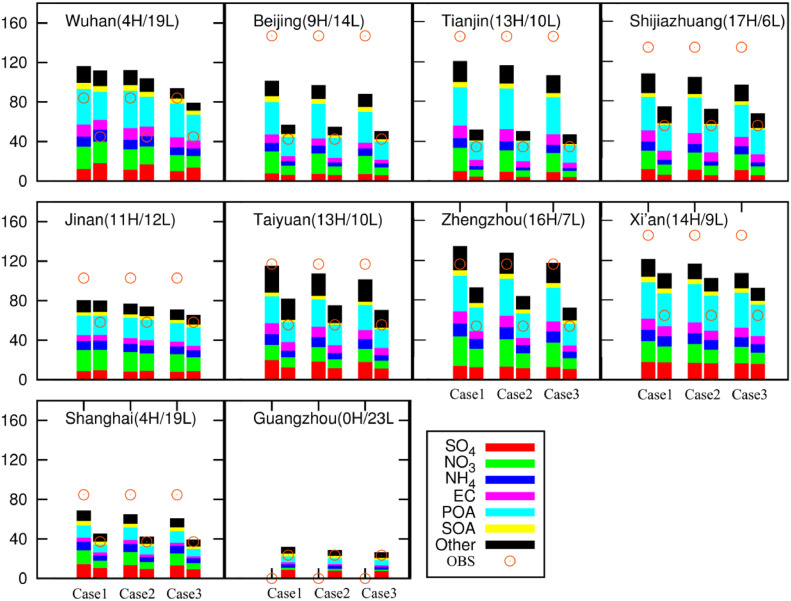
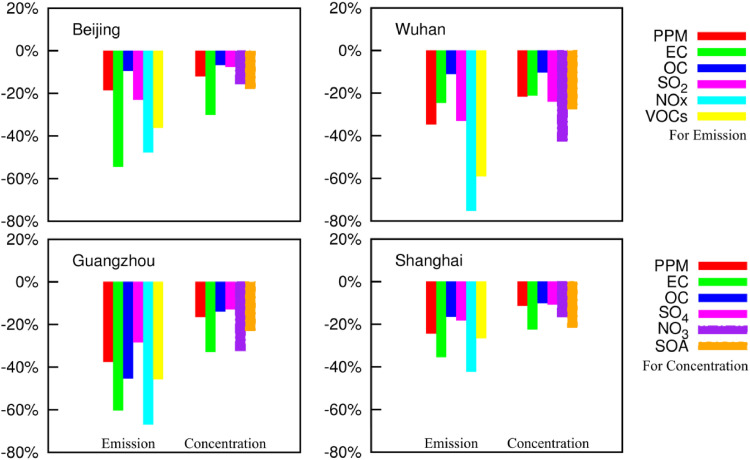
Due to the pandemic of coronavirus disease 2019 in China, almost all avoidable activities in China are prohibited since Wuhan announced lockdown on January 23, 2020. With reduced activities, severe air pollution events still occurred in the North China Plain, causing discussions regarding why severe air pollution was not avoided. The Community Multi-scale Air Quality model was applied during January 01 to February 12, 2020 to study PM changes under emission reduction scenarios. The estimated emission reduction case (Case 3) better reproduced PM. Compared with the case without emission change (Case 1), Case 3 predicted that PM concentrations decreased by up to 20% with absolute decreases of 5.35, 6.37, 9.23, 10.25, 10.30, 12.14, 12.75, 14.41, 18.00 and 30.79 μg/m in Guangzhou, Shanghai, Beijing, Shijiazhuang, Tianjin, Jinan, Taiyuan, Xi'an, Zhengzhou, Wuhan, respectively. In high-pollution days with PM greater than 75 μg/m, the reductions of PM in Case 3 were 7.78, 9.51, 11.38, 13.42, 13.64, 14.15, 14.42, 16.95 and 22.08 μg/m in Shanghai, Jinan, Shijiazhuang, Beijing, Taiyuan, Xi'an, Tianjin, Zhengzhou and Wuhan, respectively. The reductions in emissions of PM precursors were ~2 times of that in concentrations, indicating that meteorology was unfavorable during simulation episode. A further analysis shows that benefits of emission reductions were overwhelmed by adverse meteorology and severe air pollution events were not avoided. This study highlights that large emissions reduction in transportation and slight reduction in industrial would not help avoid severe air pollution in China, especially when meteorology is unfavorable. More efforts should be made to completely avoid severe air pollution.
由于2019年冠状病毒病在中国大流行,自2020年1月23日武汉宣布封城以来,中国几乎所有可避免的活动都被禁止。随着活动减少,华北平原仍发生了严重空气污染事件,引发了关于为何未能避免严重空气污染的讨论。在2020年1月1日至2月12日期间应用了社区多尺度空气质量模型,以研究减排情景下的颗粒物(PM)变化。估计的减排情景(情景3)能更好地再现颗粒物情况。与无排放变化的情景(情景1)相比,情景3预测广州、上海、北京、石家庄、天津、济南、太原、西安、郑州、武汉的PM浓度分别下降高达20%,绝对下降量分别为5.35、6.37、9.23、10.25、10.30、12.14、12.75、14.41、18.00和30.79微克/立方米。在PM大于75微克/立方米的高污染日,情景3中上海、济南、石家庄、北京、太原、西安、天津、郑州和武汉的PM减少量分别为7.78、9.51、11.38、13.42、13.64、14.15、14.42、16.95和22.08微克/立方米。PM前体物排放的减少量约为浓度减少量的2倍,表明模拟期间气象条件不利。进一步分析表明,减排的益处被不利气象条件所抵消,严重空气污染事件未能避免。这项研究强调,交通运输领域的大幅减排和工业领域的小幅减排无助于在中国避免严重空气污染,尤其是在气象条件不利时。应做出更多努力以完全避免严重空气污染。