van 't Hoff Institute for Molecular Sciences, University of Amsterdam, Science Park 904, 1098 XH Amsterdam, The Netherlands.
J Am Chem Soc. 2020 May 13;142(19):8837-8847. doi: 10.1021/jacs.0c01869. Epub 2020 May 1.
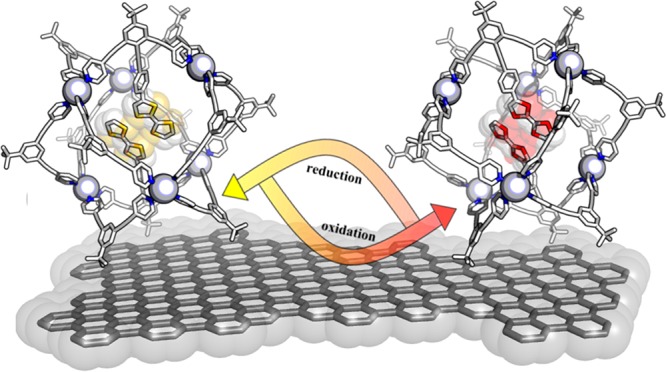
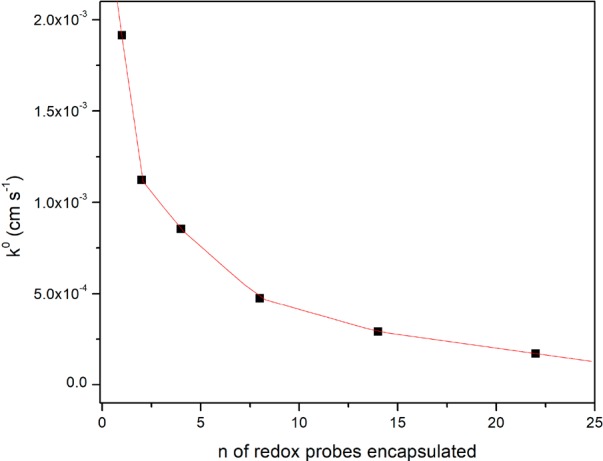
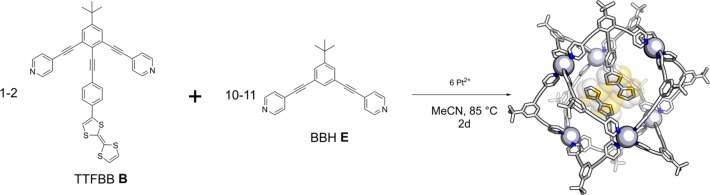
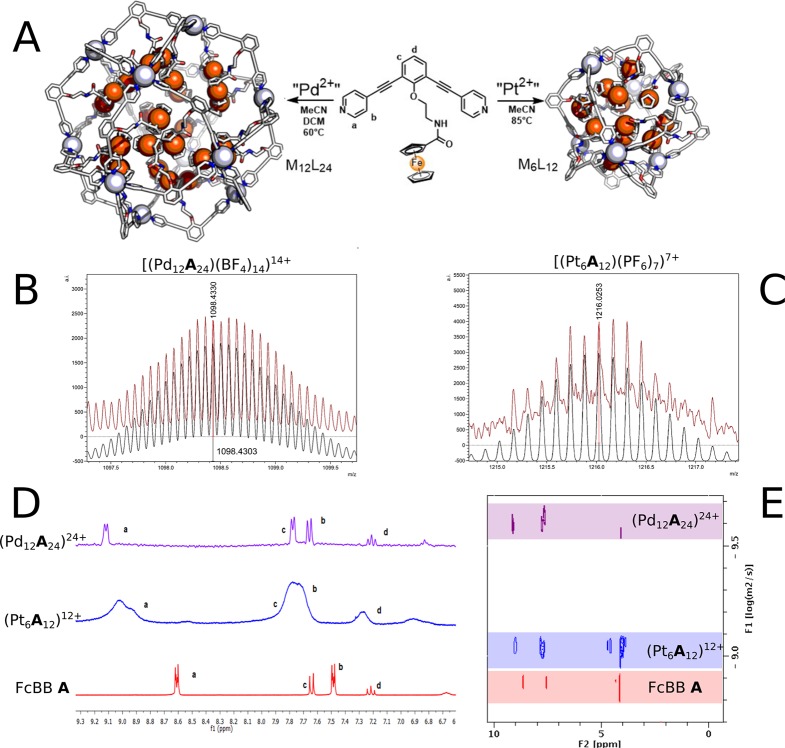
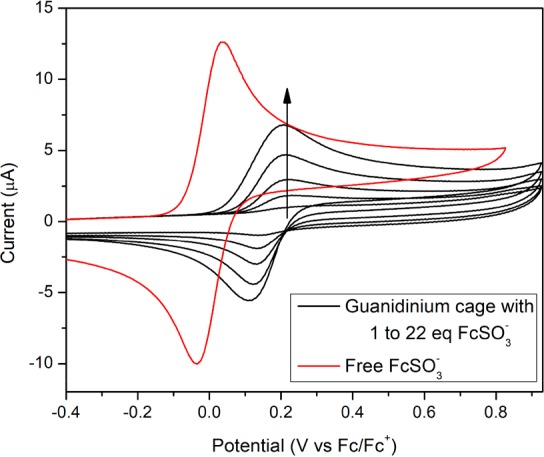
Catalysis in confined spaces, such as those provided by supramolecular cages, is quickly gaining momentum. It allows for second coordination sphere strategies to control the selectivity and activity of transition metal catalysts, beyond the classical methods like fine-tuning the steric and electronic properties of the coordinating ligands. Only a few electrocatalytic reactions within cages have been reported, and there is no information regarding the electron transfer kinetics and thermodynamics of redox-active species encapsulated into supramolecular assemblies. This contribution revolves around the preparation of ML and larger ML (M = Pd or Pt) nanospheres functionalized with different numbers of redox-active probes encapsulated within their cavity, either in a covalent fashion via different types of linkers (flexible, rigid and conjugated or rigid and nonconjugated) or by supramolecular hydrogen bonding interactions. The redox probes can be addressed by electrochemical electron transfer across the rim of nanospheres, and the thermodynamics and kinetics of this process are described. Our study identifies that the linker type and the number of redox probes within the cage are useful handles to fine-tune the electron transfer rates, paving the way for the encapsulation of electroactive catalysts and electrocatalytic applications of such supramolecular assemblies.
在受限空间中的催化作用,例如由超分子笼提供的催化作用,正在迅速发展。它允许通过第二配位球策略来控制过渡金属催化剂的选择性和活性,超越了精细调整配位配体的空间和电子性质等经典方法。只有少数笼内的电催化反应得到了报道,并且对于封装在超分子组装体中的氧化还原活性物质的电子转移动力学和热力学没有信息。本研究围绕着制备具有不同数量的氧化还原活性探针的 ML 和更大的 ML(M = Pd 或 Pt)纳米球的功能化,这些探针通过不同类型的连接物(柔性、刚性和共轭或刚性和非共轭)或以超分子氢键相互作用共价方式封装在其空腔内。可以通过纳米球边缘的电化学电子转移来寻址氧化还原探针,并且描述了这个过程的热力学和动力学。我们的研究表明,笼内的连接物类型和氧化还原探针的数量是精细调整电子转移速率的有用手段,为封装电活性催化剂和这种超分子组装体的电催化应用铺平了道路。