Translational Medicine Institute, Semmelweis University Budapest, Budapest, Hungary.
Division of Pediatric Nephrology and Gastroenterology, Department of Pediatrics and Adolescent Medicine, Medical University of Vienna, Vienna, Austria.
PLoS One. 2020 Apr 17;15(4):e0231898. doi: 10.1371/journal.pone.0231898. eCollection 2020.
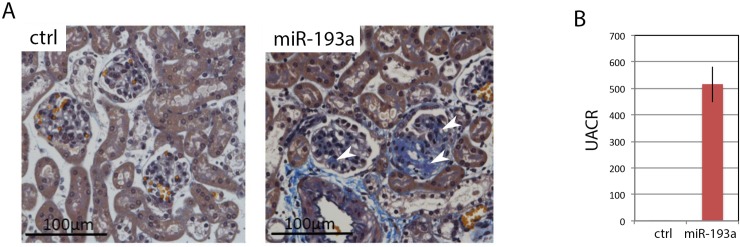
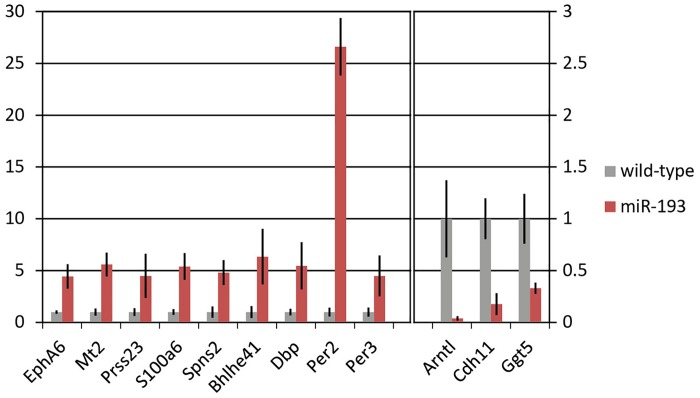
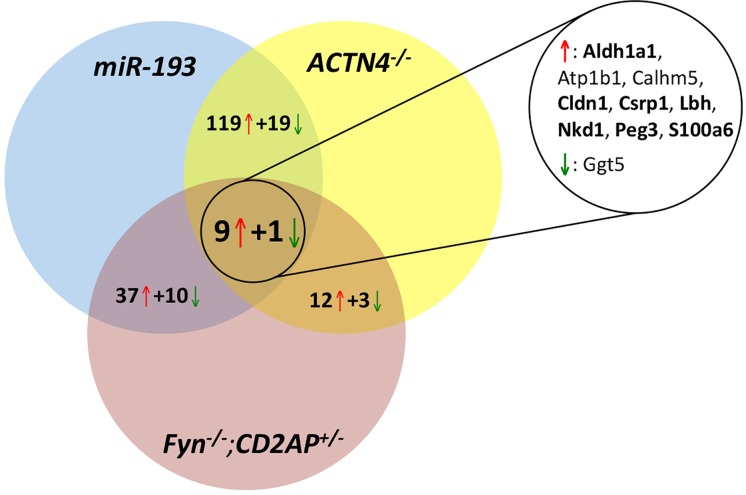
Loss of podocyte differentiation can cause nephrotic-range proteinuria and Focal and Segmental Glomerulosclerosis (FSGS). As specific therapy is still lacking, FSGS frequently progresses to end-stage renal disease. The exact molecular mechanisms of FSGS and gene expression changes in podocytes are complex and widely unknown as marker changes have mostly been assessed on the glomerular level. To gain a better insight, we isolated podocytes of miR-193a overexpressing mice, which suffer from FSGS due to suppression of the podocyte master regulator Wt1. We characterised the podocytic gene expression changes by RNAseq and identified many novel candidate genes not linked to FSGS so far. This included strong upregulation of the receptor tyrosine kinase EphA6 and a massive dysregulation of circadian genes including the loss of the transcriptional activator Arntl. By comparison with podocyte-specific changes in other FSGS models we found a shared dysregulation of genes associated with the Wnt signaling cascade, while classical podocyte-specific genes appeared widely unaltered. An overlap with gene expression screens from human FSGS patients revealed a strong enrichment in genes associated with extra-cellular matrix (ECM) and metabolism. Our data suggest that FSGS progression might frequently depend on pathways that are often overlooked when considering podocyte homeostasis.
足细胞分化丧失可导致肾病范围蛋白尿和局灶节段性肾小球硬化症(FSGS)。由于缺乏特定的治疗方法,FSGS 常进展为终末期肾病。FSGS 的确切分子机制和足细胞中的基因表达变化很复杂,目前还知之甚少,因为标记物的变化主要在肾小球水平上进行评估。为了更好地了解这一点,我们分离了 miR-193a 过表达小鼠的足细胞,这些小鼠由于足细胞主调控因子 Wt1 的抑制而患有 FSGS。我们通过 RNAseq 对足细胞的基因表达变化进行了表征,并鉴定了许多迄今为止与 FSGS 无关的新候选基因。这包括受体酪氨酸激酶 EphA6 的强烈上调和昼夜节律基因的大量失调,包括转录激活因子 Arntl 的丧失。与其他 FSGS 模型中的足细胞特异性变化相比,我们发现与 Wnt 信号级联相关的基因存在共同的失调,而经典的足细胞特异性基因则广泛未改变。与人类 FSGS 患者的基因表达筛选结果的重叠显示,与细胞外基质(ECM)和代谢相关的基因明显富集。我们的数据表明,FSGS 的进展可能经常依赖于在考虑足细胞稳态时经常被忽视的途径。