Gunne-Braden Alexandra, Sullivan Adrienne, Gharibi Borzo, Sheriff Rahuman S M, Maity Alok, Wang Yi-Fang, Edwards Amelia, Jiang Ming, Howell Michael, Goldstone Robert, Wollman Roy, East Philip, Santos Silvia D M
The Francis Crick Institute, London, UK.
European Molecular Biology Laboratory - European Bioinformatics Institute (EMBL-EBI), Hinxton, Cambridgeshire, UK.
Cell Stem Cell. 2020 May 7;26(5):693-706.e9. doi: 10.1016/j.stem.2020.03.005. Epub 2020 Apr 16.
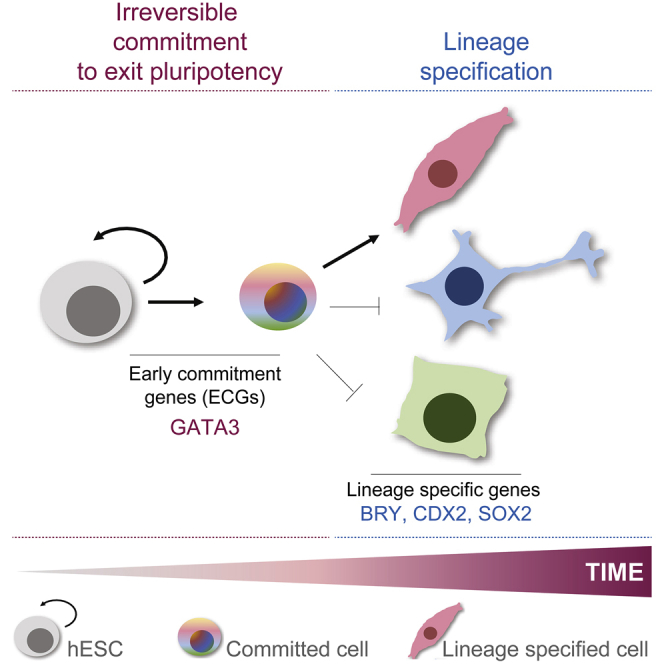
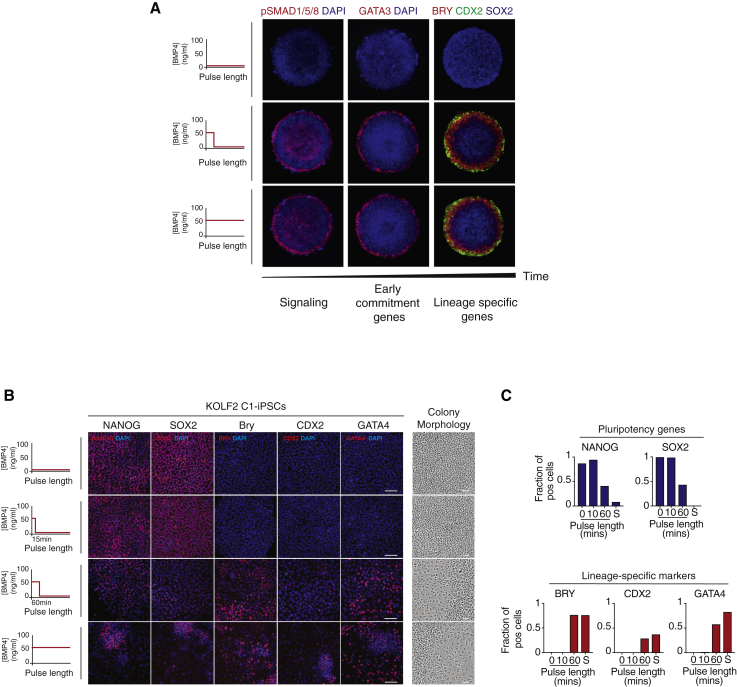
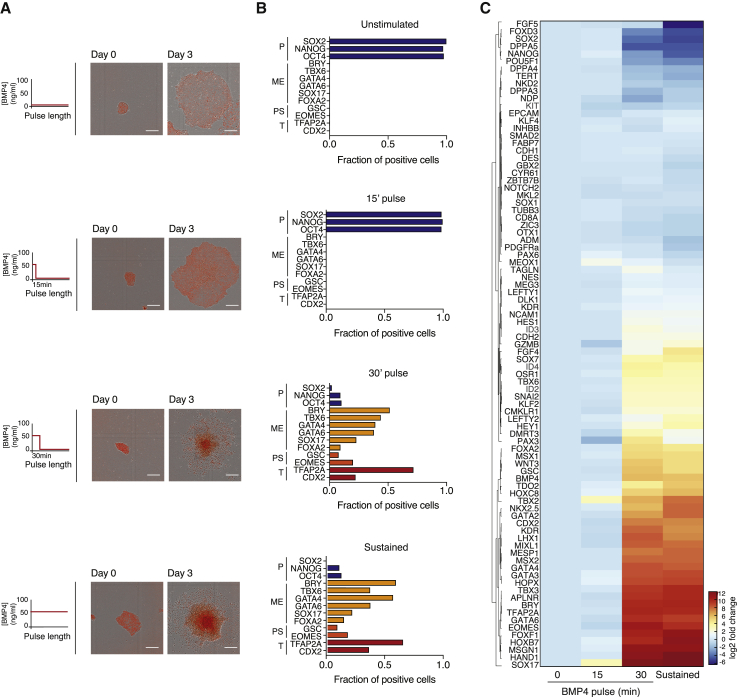
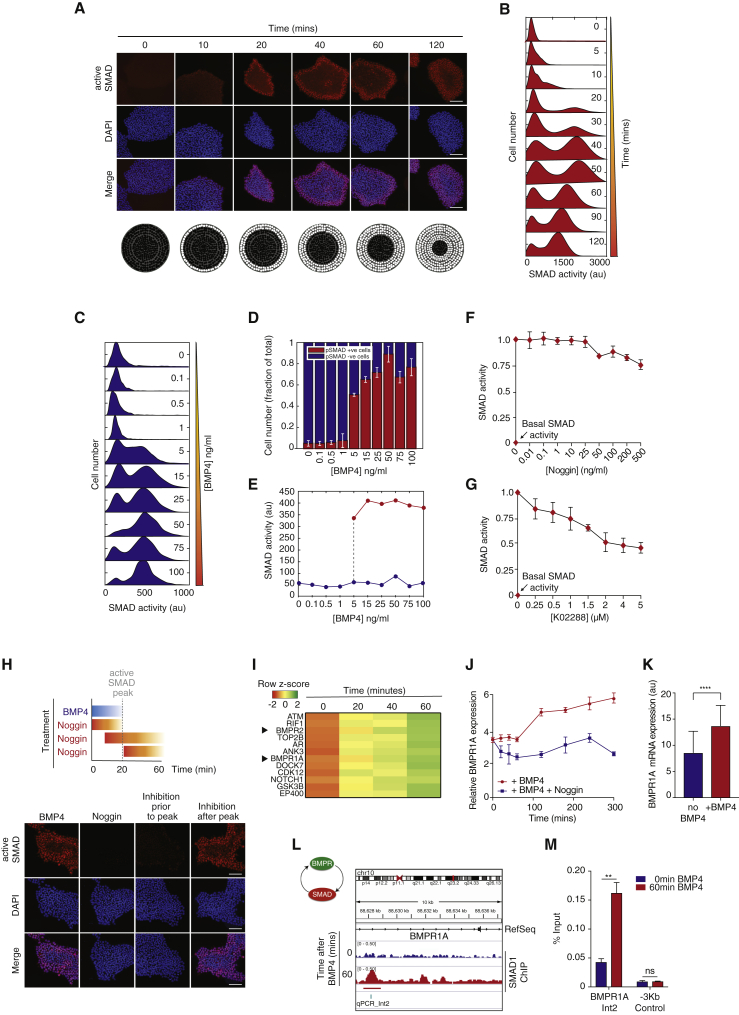
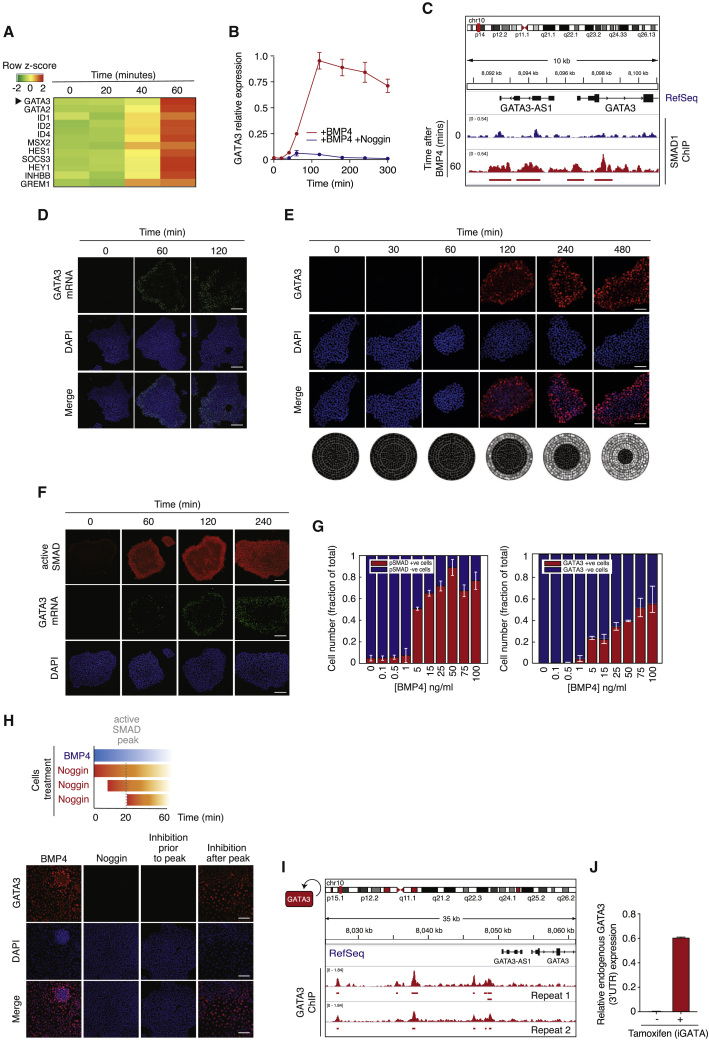
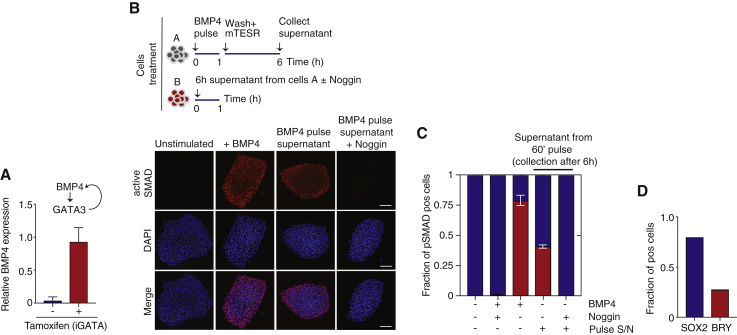
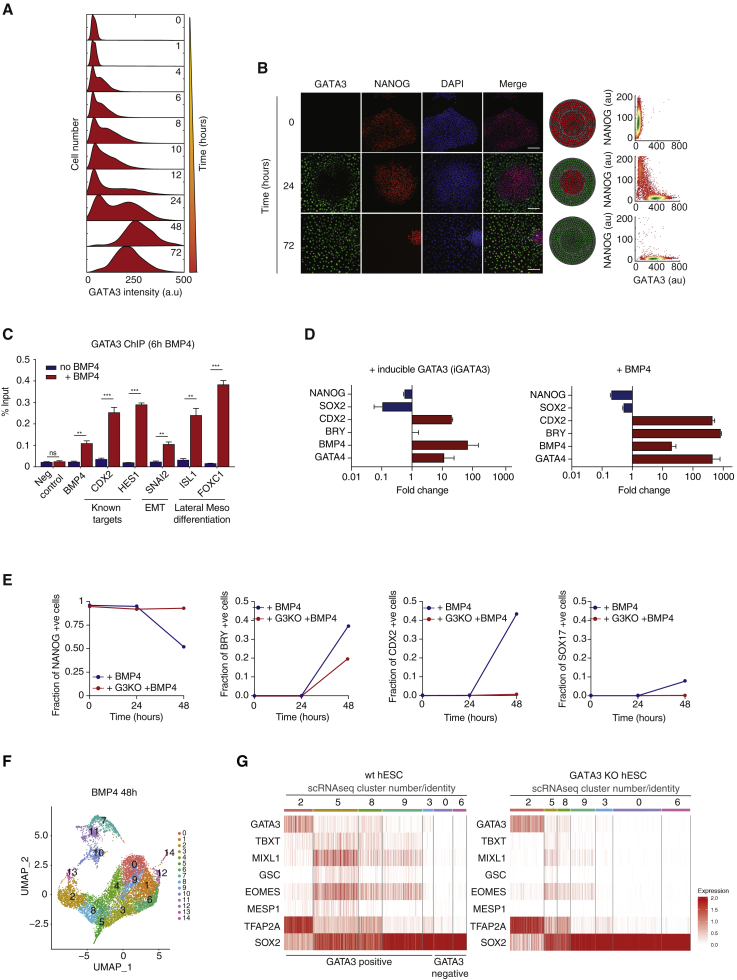
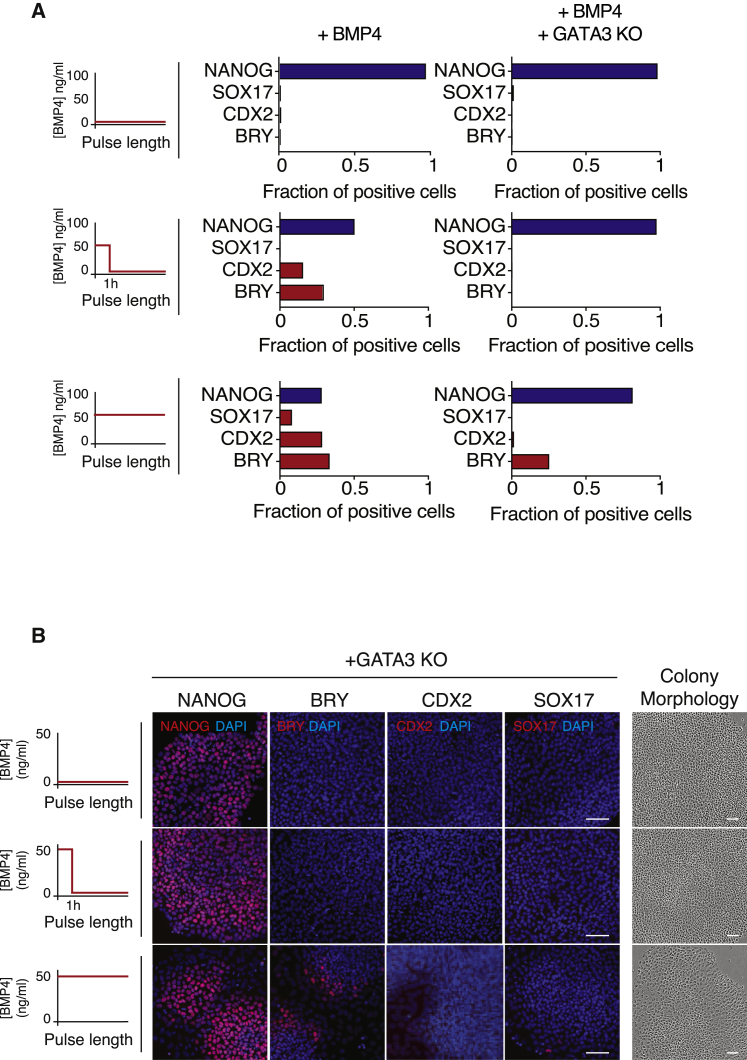
During early development, extrinsic triggers prompt pluripotent cells to begin the process of differentiation. When and how human embryonic stem cells (hESCs) irreversibly commit to differentiation is a fundamental yet unanswered question. By combining single-cell imaging, genomic approaches, and mathematical modeling, we find that hESCs commit to exiting pluripotency unexpectedly early. We show that bone morphogenetic protein 4 (BMP4), an important differentiation trigger, induces a subset of early genes to mirror the sustained, bistable dynamics of upstream signaling. Induction of one of these genes, GATA3, drives differentiation in the absence of BMP4. Conversely, GATA3 knockout delays differentiation and prevents fast commitment to differentiation. We show that positive feedback at the level of the GATA3-BMP4 axis induces fast, irreversible commitment to differentiation. We propose that early commitment may be a feature of BMP-driven fate choices and that interlinked feedback is the molecular basis for an irreversible transition from pluripotency to differentiation.
在早期发育过程中,外在触发因素促使多能细胞开始分化过程。人类胚胎干细胞(hESCs)何时以及如何不可逆地进入分化阶段是一个基本但尚未得到解答的问题。通过结合单细胞成像、基因组学方法和数学建模,我们发现hESCs出人意料地早早进入退出多能性的阶段。我们表明,骨形态发生蛋白4(BMP4)作为一种重要的分化触发因素,诱导一部分早期基因反映上游信号的持续双稳态动力学。这些基因之一GATA3的诱导在没有BMP4的情况下驱动分化。相反,GATA3基因敲除会延迟分化并阻止快速进入分化阶段。我们表明,GATA3 - BMP4轴水平的正反馈诱导快速、不可逆地进入分化阶段。我们提出,早期进入分化阶段可能是BMP驱动的命运选择的一个特征,并且相互关联的反馈是从多能性到分化的不可逆转变的分子基础。