Istituto Superiore di Sanità, Department of Food Safety, Nutrition and Veterinary Public Health, Rome, Italy.
Centre for Prions and Protein Folding Diseases and Department of Biochemistry, University of Alberta, Edmonton, Alberta, Canada.
Brain. 2020 May 1;143(5):1512-1524. doi: 10.1093/brain/awaa078.
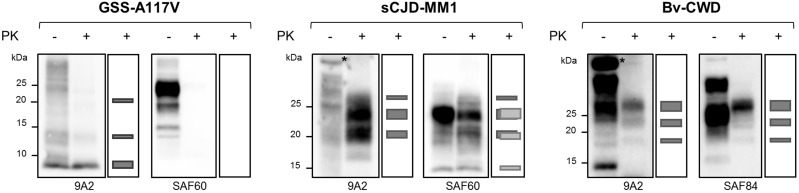
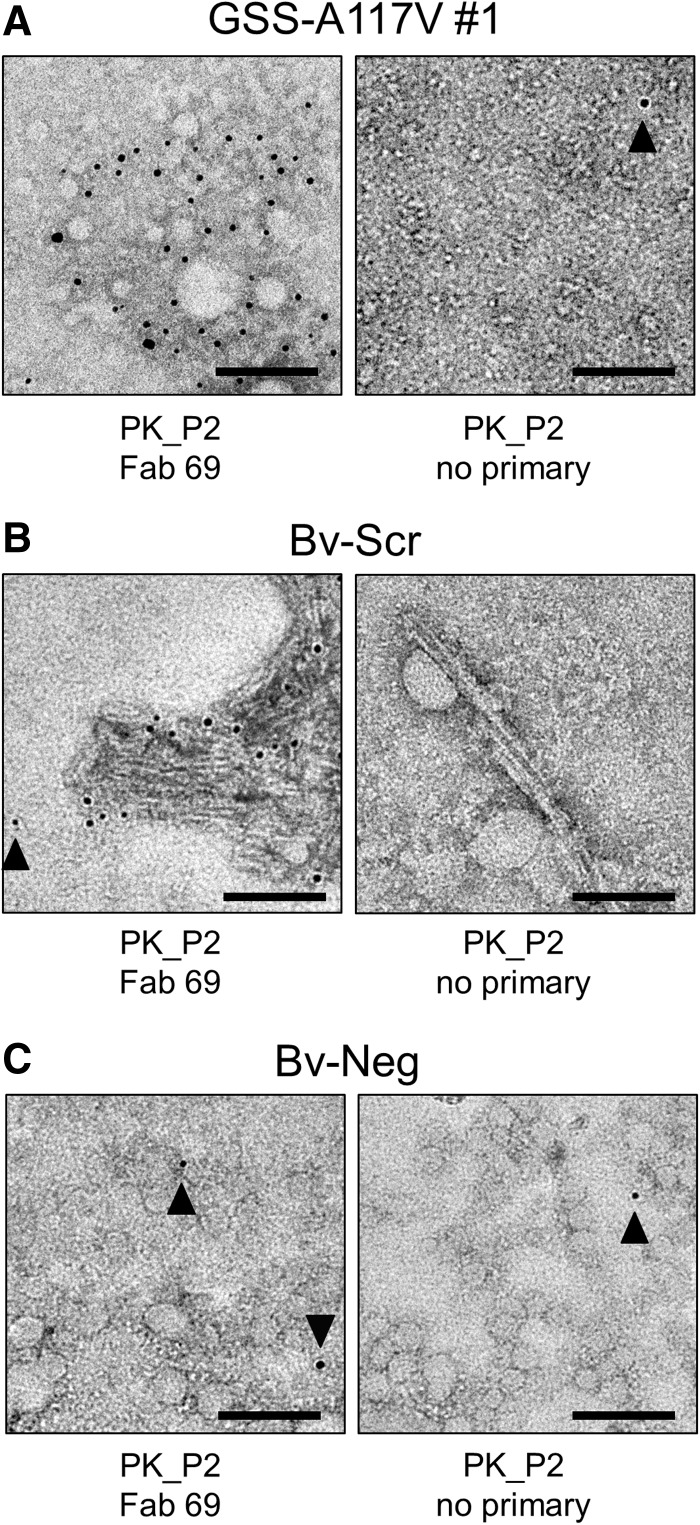
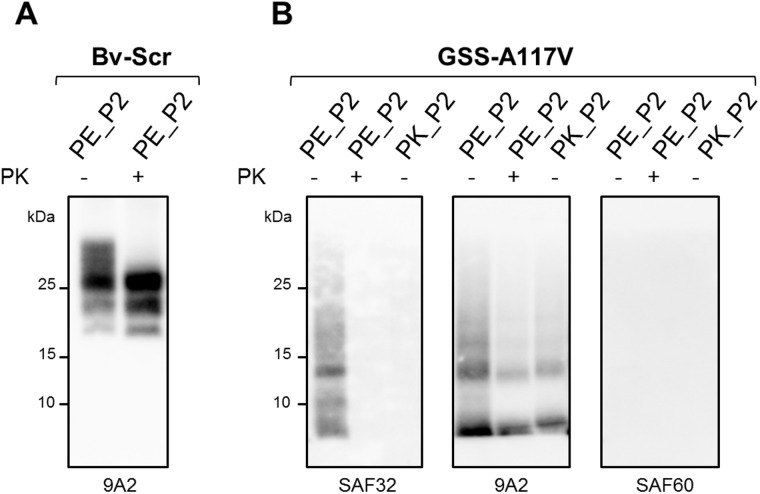
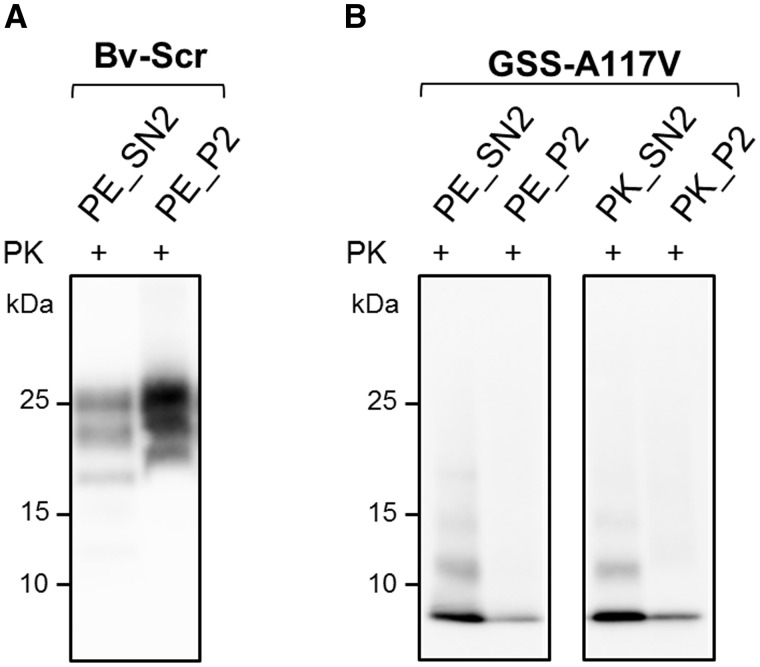
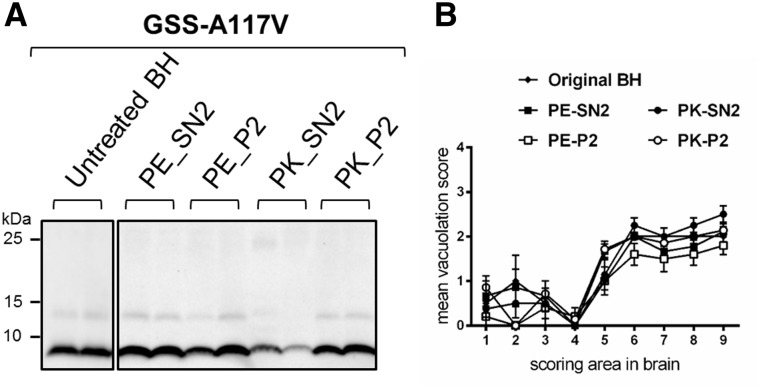
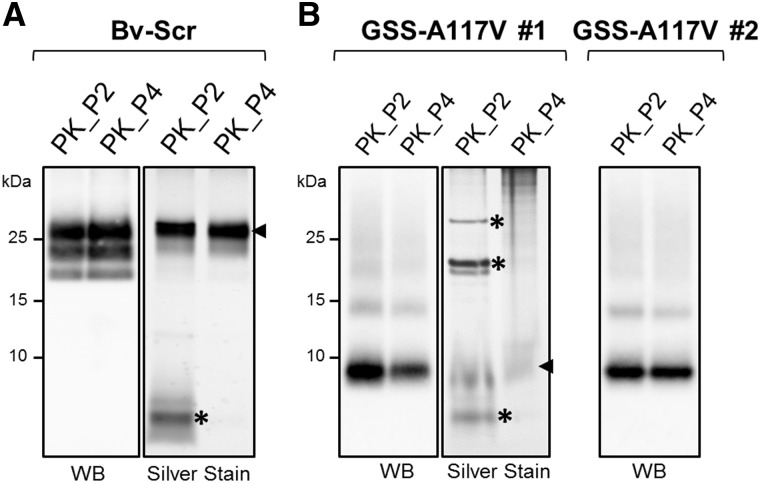
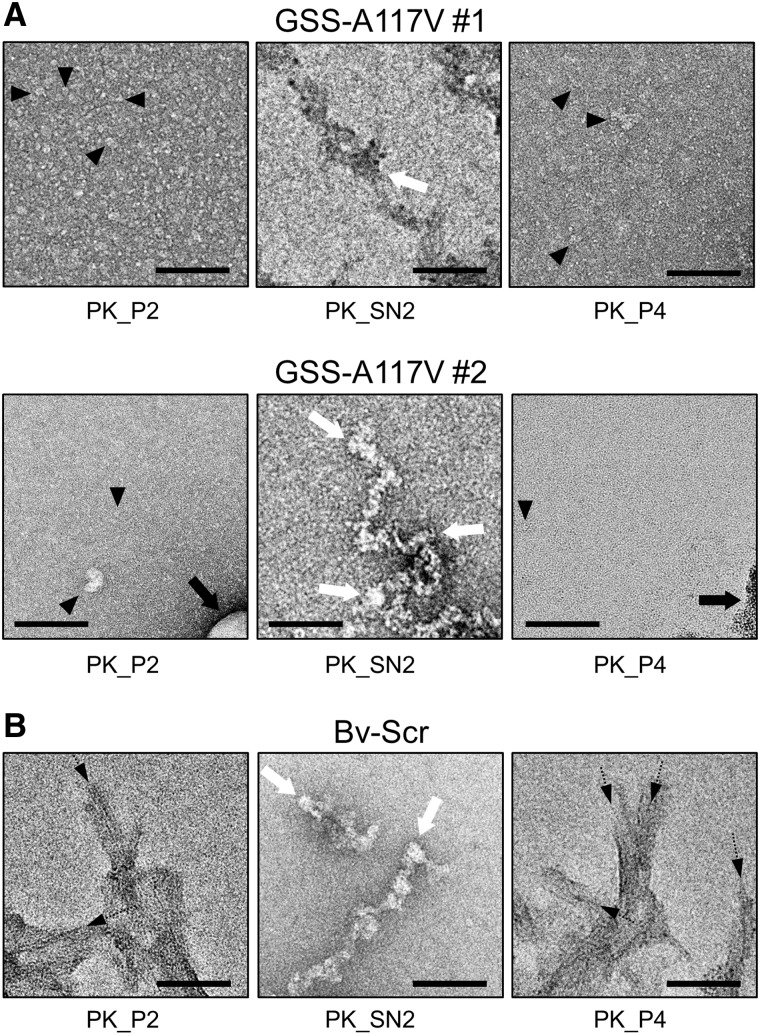
Prions are transmissible agents causing lethal neurodegenerative diseases that are composed of aggregates of misfolded cellular prion protein (PrPSc). Despite non-fibrillar oligomers having been proposed as the most infectious prion particles, prions purified from diseased brains usually consist of large and fibrillar PrPSc aggregates, whose protease-resistant core (PrPres) encompasses the whole C-terminus of PrP. In contrast, PrPSc from Gerstmann-Sträussler-Scheinker disease associated with alanine to valine substitution at position 117 (GSS-A117V) is characterized by a small protease-resistant core, which is devoid of the C-terminus. We thus aimed to investigate the role of this unusual PrPSc in terms of infectivity, strain characteristics, and structural features. We found, by titration in bank voles, that the infectivity of GSS-A117V is extremely high (109.3 ID50 U/g) and is resistant to treatment with proteinase K (109.0 ID50 U/g). We then purified the proteinase K-resistant GSS-A117V prions and determined the amount of infectivity and PrPres in the different fractions, alongside the morphological characteristics of purified PrPres aggregates by electron microscopy. Purified pellet fractions from GSS-A117V contained the expected N- and C-terminally cleaved 7 kDa PrPres, although the yield of PrPres was low. We found that this low yield depended on the low density/small size of GSS-A117V PrPres, as it was mainly retained in the last supernatant fraction. All fractions were highly infectious, thus confirming the infectious nature of the 7 kDa PrPres, with infectivity levels that directly correlated with the PrPres amount detected. Finally, electron microscopy analysis of these fractions showed no presence of amyloid fibrils, but only very small and indistinct, non-fibrillar PrPresparticles were detected and confirmed to contain PrP via immunogold labelling. Our study demonstrates that purified aggregates of 7 kDa PrPres, spanning residues ∼90-150, are highly infectious oligomers that encode the biochemical and biological strain features of the original sample. Overall, the autocatalytic behaviour of the prion oligomers reveals their role in the propagation of neurodegeneration in patients with Gerstmann-Sträussler-Scheinker disease and implies that the C-terminus of PrPSc is dispensable for infectivity and strain features for this prion strain, uncovering the central PrP domain as the minimal molecular component able to encode infectious prions. These findings are consistent with the hypothesis that non-fibrillar prion particles are highly efficient propagators of disease and provide new molecular and morphological constraints on the structure of infectious prions.
朊病毒是一种可传播的病原体,可导致致命的神经退行性疾病,其由错误折叠的细胞朊病毒蛋白 (PrPSc) 的聚集体组成。尽管已经提出非纤维状低聚物是最具传染性的朊病毒颗粒,但从患病大脑中纯化的朊病毒通常由大的纤维状 PrPSc 聚集体组成,其蛋白酶抗性核心 (PrPres) 包含 PrP 的整个 C 末端。相比之下,与丙氨酸到缬氨酸 117 位取代有关的格斯特曼-施特劳斯勒-谢因克病(Gerstmann-Sträussler-Scheinker disease,GSS)相关的 PrPSc 的特征是小的蛋白酶抗性核心,缺乏 C 末端。因此,我们旨在研究这种异常 PrPSc 在感染性、菌株特征和结构特征方面的作用。我们通过在 bank voles 中的滴定发现,GSS-A117V 的感染性极高(109.3 ID50 U/g),并且对蛋白酶 K 处理具有抗性(109.0 ID50 U/g)。然后,我们纯化了蛋白酶 K 抗性的 GSS-A117V 朊病毒,并确定了不同馏分中的感染性和 PrPres 量,以及电子显微镜下纯化的 PrPres 聚集体的形态特征。从 GSS-A117V 纯化的沉淀部分包含预期的 N-和 C-末端切割的 7 kDa PrPres,尽管 PrPres 的产量很低。我们发现,这种低产量取决于 GSS-A117V PrPres 的低密度/小尺寸,因为它主要保留在上清液的最后一个部分。所有馏分均具有高度感染性,从而证实了 7 kDa PrPres 的感染性质,其感染水平与检测到的 PrPres 量直接相关。最后,对这些馏分的电子显微镜分析显示没有淀粉样纤维的存在,但是仅检测到非常小且不明显的、非纤维状的 PrPres 颗粒,并通过免疫金标记证实其包含 PrP。我们的研究表明,跨越残基 ∼90-150 的纯化的 7 kDa PrPres 聚集体是高度感染性的低聚物,其编码原始样品的生化和生物学菌株特征。总体而言,朊病毒低聚物的自动催化行为揭示了它们在格斯特曼-施特劳斯勒-谢因克病患者神经退行性变中的传播作用,并意味着 PrPSc 的 C 末端对于感染性和菌株特征对于这种朊病毒株是可有可无的,揭示了中央 PrP 结构域是能够编码感染性朊病毒的最小分子成分。这些发现与非纤维状朊病毒颗粒是疾病的高效传播者的假说一致,并为感染性朊病毒的结构提供了新的分子和形态学限制。